
Hispaniolan amazon
The Hispaniolan amazon, scientifically known as Amazona ventralis, is a parrot species native to the island of Hispaniola in the Caribbean. It is distinguished by its white forehead, light beak, white eye-ring, blue ear patch, and a maroon belly patch, setting it apart from other amazons. Once widespread, its population experienced a significant decline throughout the 20th century, with its range now largely confined to inland mountains and increasingly observed in urban areas.
Key Facts
- ›Native to Hispaniola, comprising the Dominican Republic and Haiti.
- ›Distinctive features include a white forehead, light beak, and maroon belly.
- ›Inhabits various wooded environments, including savannas, palm groves, pine forests, and humid mountain forests.
- ›Feeds on seeds and fruits from plants like Caesalpinia, Psidium, and Ficus.
- ›Forms lifelong pair bonds and typically lays 2-4 eggs per clutch.
- ›Breeding season occurs between February and June.

Hispaniolan Parrot
Hispaniola
Wooded Environments, Arid Savanna Palm Groves, Pine Forests, Humid Mountain Forests, Cultivated Lands
White Forehead, Light Beak, White Eye-Ring, Blue Ear Patch, Maroon Belly Patch
Seeds, Fruits
Talkative, Noisy, Nervous, Restless, Irritable
- Very talkative when taught to speak human words
- Talkative in their own language
- Loud sound and deeper vocalizations
- Sharp and higher pitched vocalizations
Cavities In Trees, Rocky Ledges
About Hispaniolan amazon
The Hispaniolan Amazon
The Hispaniolan amazon, scientifically classified as Amazona ventralis, is a distinctive parrot species native to the Caribbean island of Hispaniola, which encompasses both the Dominican Republic and Haiti. This species is readily identifiable by several key physical characteristics, including a striking white forehead, a light-colored beak, a clear white ring surrounding its eyes, a notable blue patch on its ear coverts, and a prominent maroon patch on its abdomen. These features serve to differentiate it from other members of the Amazona genus.
Historically, the Hispaniolan amazon was widespread across its native island. However, the 20th century saw a significant decline in its population numbers. While its range was largely confined to inland mountains by the 1930s, recent observations indicate a growing presence in metropolitan areas such as Santo Domingo, suggesting an adaptation to urban environments.
Habitat and Diet
This parrot species thrives in a variety of wooded environments, typically found at elevations up to 1,500 meters above sea level. Its preferred habitats include arid savanna palm groves, pine forests, and humid mountain forests. The Hispaniolan amazon is also known to frequent cultivated lands, including banana plantations and cornfields, where it forages for food. Its diet primarily consists of seeds and fruits from various plants, with specific mention of Caesalpinia, Psidium, and Ficus species.
Reproduction and Social Behavior
Hispaniolan amazons are known to form lifelong pair bonds. Their breeding season generally occurs between February and June. They typically nest in cavities found within trees, with nests recorded at heights ranging from 1.5 to 20 meters above the ground. Nests have also been observed on rocky ledges. These parrots are social creatures, often found in flocks where they move together.
Conservation Concerns
The population of the Hispaniolan amazon has faced considerable threats. Trafficking, particularly the removal of chicks from nests, can lead to the destruction of nesting cavities, impacting future breeding success. The species is also subject to hunting for food and is trapped for both local and international trade as cage birds. Furthermore, it is sometimes viewed as a crop pest, leading to potential conflicts with agricultural interests.
Historical Accounts
Written descriptions of the Hispaniolan parrot date back to at least 1535, when Spanish historian Gonzalo Fernández de Oviedo documented them. He referred to them by the Taíno name "Higuacas." Oviedo noted variations in size among the parrots on the island and specifically described a type with a white forehead, distinguishing it from Cuban parrots that have red foreheads. He also mentioned their talkative nature when taught human words. Another type, called "xaxabis," was described as greener, more restless, and less inclined to learn human speech, though very vocal in their own language.
Source: Wikipedia ↗
Frequently Asked Questions
What are the key identifying features of the Hispaniolan amazon?
The Hispaniolan amazon is primarily identified by its white forehead, a light-colored beak, a distinct white ring around its eyes, a blue patch on its ear coverts, and a noticeable maroon patch on its belly. These features differentiate it from other parrot species within the Amazon genus.
Where in the world is the Hispaniolan amazon found?
This parrot species is endemic to the island of Hispaniola, which is divided between the Dominican Republic and Haiti in the Caribbean. Its natural habitat includes various wooded environments across the island.
What kind of environments does the Hispaniolan amazon inhabit?
The Hispaniolan amazon is found in a variety of wooded environments, typically up to 1,500 meters above sea level. This includes arid savanna palm groves, pine forests, and humid mountain forests. They are also known to forage in cultivated areas like banana plantations and cornfields.
What is the Hispaniolan amazon's diet?
The diet of the Hispaniolan amazon consists mainly of seeds and fruits. They are known to consume produce from plants such as Caesalpinia, Psidium, and Ficus. They also frequently forage on cultivated lands, indicating a varied food source.
How does the Hispaniolan amazon breed?
Hispaniolan amazons form lifelong pair bonds. They typically nest in tree cavities, which can be as high as 20 meters or as low as 1.5 meters above the ground, and occasionally on rocky ledges. The breeding season generally spans from February to June.
What are the main threats to the Hispaniolan amazon population?
Significant threats include habitat destruction caused by traffickers removing chicks from nests, hunting for food, and trapping for both local and international pet trade. They are also sometimes considered a crop pest.
Related Parrot species
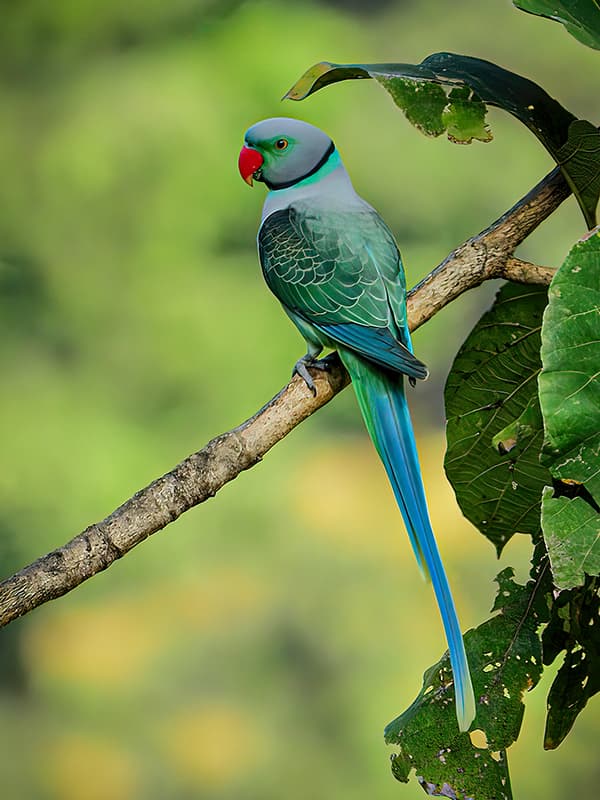
Blue-winged parakeet
The blue-winged parakeet, also known as the Malabar parakeet, is a species of parakeet native to the Western Ghats of southern India. This species is distinctive for its long blue tails tipped in yellow, contrasting with their dark wings and dull grey head and body. Adult males and females are easily differentiated by the color of their beaks.
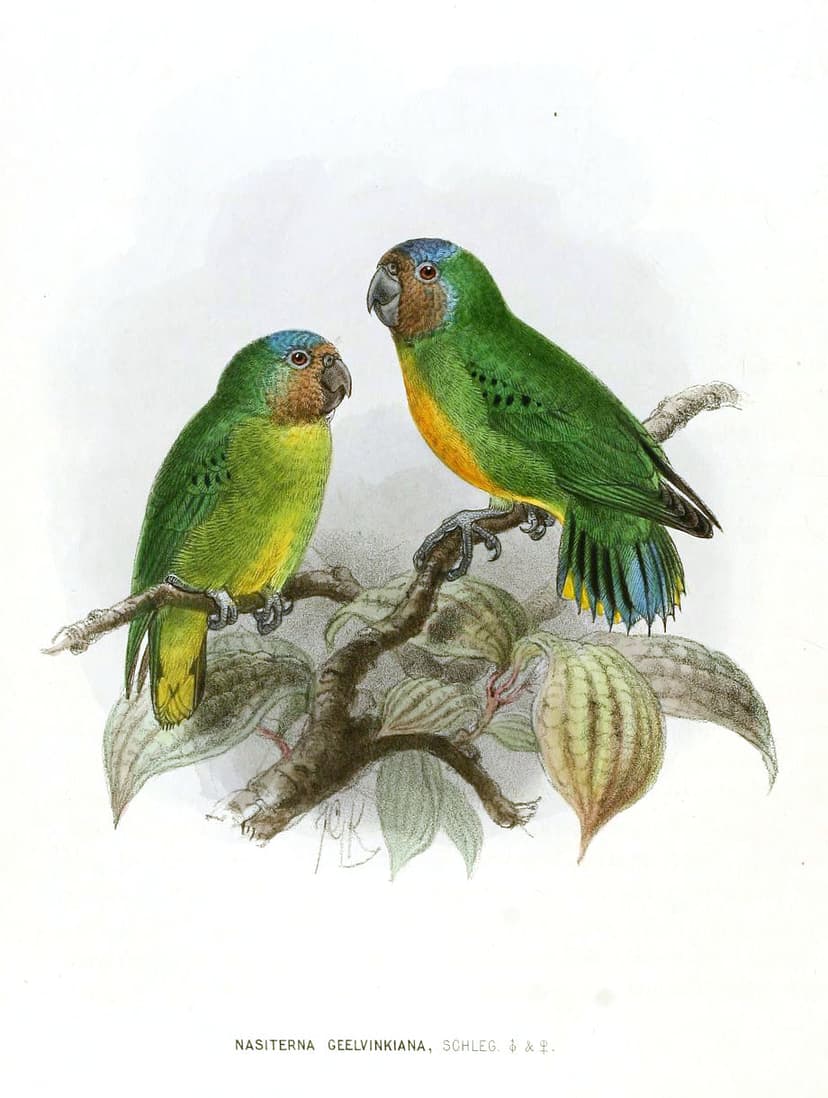
Geelvink pygmy parrot
The Geelvink pygmy parrot is a small parrot species found exclusively on Biak and Numfoor islands in Western New Guinea. Its distinctive plumage includes a brown head, blue crown, yellow breast, green body, and blue tail, with red eyes. The species is threatened by habitat loss in its natural lowland forest and garden environments.

Painted tiger parrot
The painted tiger parrot is a species of parrot native to Papua New Guinea, distinguished by its striking plumage featuring green wings and tail, a red cap, yellow eyes, a red rump, and distinctive tiger stripes on its back and belly. It inhabits montane and subalpine forests and shrublands at high elevations.