
Golden parakeet
The golden parakeet, also known as the Queen of Bavaria conure, is a striking, medium-sized parrot native to the Amazon Basin of northern Brazil. Its plumage is predominantly bright yellow with green wing feathers, making it highly distinctive. This species is sadly threatened by habitat loss due to deforestation and flooding, as well as the illegal pet trade.
Key Facts
- ›The golden parakeet is the only species in the genus Guaruba.
- ›It has predominantly golden-yellow plumage with green flight feathers and an all-yellow tail.
- ›Its natural range is restricted to the Amazon Basin in northern Brazil, south of the Amazon River.
- ›Golden parakeets live in drier, upland rainforests and utilize open forest edges during the breeding season.
- ›They are social birds that live, feed, sleep, and breed in groups, often with helpers assisting in raising young.
- ›Deforestation, flooding from dams, and trapping for the pet trade are major threats to their survival.

Golden Conure, Queen of Bavaria Conure
Brazil
Upland Rainforests, Forest Edges, Open Areas Used In Agriculture
Predominantly Golden-Yellow Plumage, Green Remiges, All-Yellow Tail, Pale-Pink Bare Eye Rings
Fruits, Flowers, Buds, Seeds, Maize
Social, Playful, Can Be Aggressive When Defending Nests
Nests In High Trees, Utilizes Deeper Than Average Nesting Cavities
About Golden parakeet
The Golden Parakeet
The golden parakeet, scientifically known as Guaruba guarouba, is a vibrant and distinctive parrot found exclusively in the Amazon Basin of northern Brazil. It is the sole member of the genus Guaruba and is easily identified by its predominantly golden-yellow plumage, accented by green on its outer wings and an entirely yellow tail. This striking coloration, along with its relative rarity, has unfortunately made it a target for the illegal pet trade.
Distribution and Habitat
The natural range of the golden parakeet is geographically restricted, estimated to cover about 174,000 km² between the Tocantins, lower Xingu, and Tapajós Rivers, south of the Amazon River in the state of Pará, northern Brazil, with some records extending into adjacent northern Maranhão. They inhabit drier, upland rainforests. During the non-breeding season, they favor tall forest canopies, but during the breeding season, they move to more open areas at the forest edges, such as fields used for agriculture.
Behavior and Ecology
Golden parakeets are a highly social species, living, feeding, sleeping, and breeding in communal groups. A unique aspect of their breeding system is the presence of 'helpers'—individuals who assist the breeding pair in raising the young. Their diet in the wild is varied, consisting of fruits such as mango, muruci, and açai, along with flowers, buds, and seeds. They are also known to consume crops, particularly maize, which can lead to them being considered pests by local farmers.
Breeding Habits
Sexual maturity is typically reached at three years of age. The breeding season commences in November and continues through February. Nests are constructed in high trees within deep cavities. A clutch usually contains an average of four white eggs, which are fiercely guarded by both parents. The incubation period lasts approximately 30 days, with both the male and female taking turns on the nest. Interestingly, in their first few years of sexual maturity, golden parakeets may lay infertile clutches, with fertile eggs becoming more common around the age of six to eight years.
Conservation Status
Sadly, the golden parakeet is listed as Vulnerable on the IUCN Red List. The primary threats to its survival are extensive deforestation and flooding, particularly from dam construction like the Tucuruí Dam, which has submerged vast areas of habitat and displaced numerous forest dwellers. The capture of wild birds for the aviculture industry also significantly impacts wild populations. Conservation efforts, including captive breeding and reintegration programs, are underway to help secure the future of this magnificent parrot.
Source: Wikipedia ↗
Frequently Asked Questions
What are the common names for Guaruba guarouba?
The golden parakeet is also commonly known as the golden conure and the Queen of Bavaria conure. Its scientific name, Guaruba guarouba, is derived from the Tupi language word 'Guarajúba,' meaning 'yellow bird'.
Where do golden parakeets live?
Golden parakeets are native to the Amazon Basin in northern Brazil, specifically in the states of Pará and adjacent northern Maranhão. Their range is estimated to be limited to an area between the Tocantins, lower Xingu, and Tapajós Rivers.
What is the appearance of a golden parakeet?
These parakeets are primarily bright yellow with green on their outer wings and an all-yellow tail. They have a large, horn-colored beak, pale-pink bare eye rings, brown irises, and pink legs. Juveniles are duller with more green plumage.
What do golden parakeets eat?
In the wild, golden parakeets have a varied diet that includes fruits like mango, muruci, and açai, as well as flowers, buds, and seeds. They are also known to eat crops, particularly maize.
How do golden parakeets breed?
Golden parakeets reach sexual maturity around three years old. Their breeding season is from November to February, and they nest in tree cavities, laying an average of four eggs. A unique aspect of their breeding is the assistance provided by helpers in raising the young.
What are the main threats to golden parakeets?
The primary threats to golden parakeets are deforestation and flooding, which destroy their habitat. Additionally, they are vulnerable to capture for the pet trade and are sometimes hunted for food or sport.
What is the conservation status of the golden parakeet?
The golden parakeet is listed as vulnerable on the IUCN Red List. This status reflects the significant pressures from habitat loss and human activities.
Related Parrot species

Blue-headed racket-tail
The blue-headed racket-tail is a medium-sized parrot native to the western Philippines, particularly the Palawan region. It is distinguished by its vibrant blue head plumage and unique tail feathers, which have extended shafts ending in a racket shape. This species inhabits humid lowland forests and is currently classified as Vulnerable due to significant threats from habitat destruction and limited trapping for the cage-bird trade.
Flame-winged parakeet
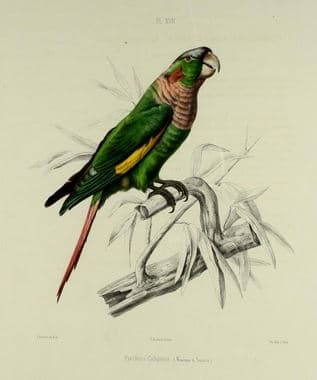
The flame-winged parakeet, also known as the brown-breasted parakeet, is a medium-sized parrot endemic to the eastern Andean slopes of Colombia. This species is distinguished by its bright yellow primary coverts and bluish primaries, with vivid yellow and orange-red wing markings visible in flight, which give it its common name. It is currently facing threats from habitat loss and fragmentation, leading to a declining population.
Ouvea parakeet
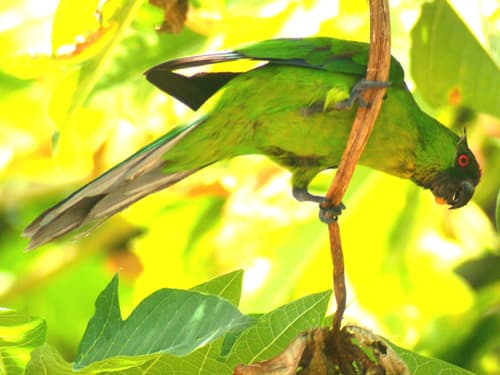
The Ouvea parakeet, also known as the Uvea parakeet, is a medium-sized parrot endemic to Uvea Island in New Caledonia. It is distinguished by its mostly green plumage, a prominent forward-curling green crest, and bright blue accents on its wings and tail. This species inhabits natural forests and is particularly fond of figs, facing threats from habitat loss and the pet trade.