
Ouvea parakeet
The Ouvea parakeet, also known as the Uvea parakeet, is a medium-sized parrot endemic to Uvea Island in New Caledonia. It is distinguished by its mostly green plumage, a prominent forward-curling green crest, and bright blue accents on its wings and tail. This species inhabits natural forests and is particularly fond of figs, facing threats from habitat loss and the pet trade.
Key Facts
- ›Endemic to Uvea Island in the Loyalty Islands, New Caledonia.
- ›Features a distinctive green crest composed of six backward-curling feathers.
- ›Primarily inhabits natural forests, with a diet emphasizing figs.
- ›Breeding season occurs from August to January, with nests in tree cavities.
- ›Listed as Vulnerable by the IUCN and is in Appendix I of CITES.
- ›Population has seen significant increase due to community conservation efforts.
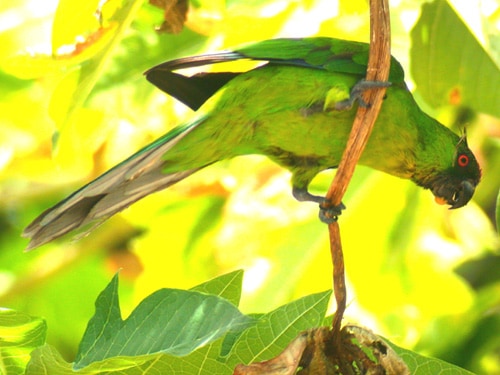
Uvea Parakeet
Oceania
Natural Forests, Laurel Forest
- Prominent Green Crest Composed of Six Backward Feathers That Curl Forwards
- Dark Face
- Black Beak
Figs
Not Specified
Not Specified
Natural Cavities In Native Trees
About Ouvea parakeet
The Ouvea parakeet, scientifically known as Eunymphicus uvaeensis and also referred to as the Uvea parakeet, is a species of parrot endemic to the island of Uvea in New Caledonia, including Faiava Island within the Loyalty Islands. This species is part of the Eunymphicus genus within the Psittaculidae family. It was formerly considered the same species as the horned parakeet of Grande Terre, but has since been classified as distinct.
Description and Habitat
This medium-sized parakeet is characterized by its predominantly green plumage, accented by a striking green crest. This crest is formed from six backward feathers that curl forward. The underside of the Ouvea parakeet is typically yellower, with vibrant blue coloration present on its wings and tail. Its face is dark, and its beak is black, distinguishing it from the horned parakeet which has yellow on its face. The Ouvea parakeet shows a preference for natural forests and laurel forest habitats, generally avoiding coconut plantations and coastal vegetation.
Diet and Behavior
The Ouvea parakeet is most active during the early morning and late afternoon, avoiding strenuous activity during the heat of the day. Its diet is varied, with figs from the genus Ficus playing a particularly significant role. While attempts have been made to reintroduce the species to other islands like Lifou, these efforts have faced challenges, with birds reportedly returning to Uvea. Future reintroductions are considered dependent on controlling invasive species like the ship rat.
Reproduction and Conservation
The breeding season for the Ouvea parakeet occurs between August and January. Nests are established in natural cavities within native trees, with Syzygium and Mimusops species being the preferred nesting sites, accounting for approximately 90% of cases. Females typically lay two to three eggs, which are incubated for about 21 days. The nestling period lasts around 43 days, and on average, about 1.5 chicks fledge per nesting attempt. Survival rates post-fledging are lower, with predation by the brown goshawk, starvation, and collection for the pet trade being significant causes of mortality.
The Ouvea parakeet is listed in Appendix I of CITES and is classified as Vulnerable by the IUCN. Threats include habitat loss, with an estimated 30-50% of its habitat disappearing over the last thirty years, and the pet trade. Collection methods for the pet trade can damage nesting sites, further limiting breeding success. Despite these challenges, community involvement in conservation initiatives has led to a notable increase in the Ouvea parakeet population, rising from an estimated 617 individuals in 1993 to 2,090 in 2009.
Source: Wikipedia ↗
Frequently Asked Questions
What is the Ouvea parakeet?
The Ouvea parakeet is a species of parrot belonging to the genus Eunymphicus. It is native to the island of Uvea in New Caledonia and is recognized for its green plumage and crest.
What does the Ouvea parakeet look like?
This parakeet is medium-sized with predominantly green feathers and a notable green crest that curls forward. It also has yellow undersides, blue on its wings and tail, a dark face, and a black beak.
Where does the Ouvea parakeet live?
The Ouvea parakeet is endemic to Uvea Island, including Faiava Island, which are part of the Loyalty Islands in New Caledonia. It prefers natural forest habitats.
What does the Ouvea parakeet eat?
Its diet consists of various food sources, with figs from the genus Ficus being a particularly important part of its diet. It is active in the early morning and late afternoon.
What is the conservation status of the Ouvea parakeet?
The Ouvea parakeet is listed as Vulnerable by the IUCN and is included in Appendix I of CITES. It faces threats from habitat loss and collection for the pet trade.
When does the Ouvea parakeet breed?
The breeding season for the Ouvea parakeet spans from August to January. They nest in natural cavities within native trees, laying two to three eggs.
Has the Ouvea parakeet population changed?
Yes, the Ouvea parakeet population has experienced significant growth in recent years. Estimates rose from 617 in 1993 to 2,090 in 2009, largely due to community conservation efforts.
Related Parrot species

Blue-headed racket-tail
The blue-headed racket-tail is a medium-sized parrot native to the western Philippines, particularly the Palawan region. It is distinguished by its vibrant blue head plumage and unique tail feathers, which have extended shafts ending in a racket shape. This species inhabits humid lowland forests and is currently classified as Vulnerable due to significant threats from habitat destruction and limited trapping for the cage-bird trade.
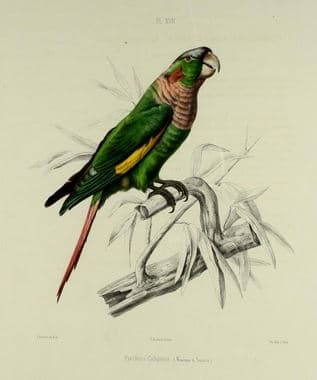
Flame-winged parakeet
The flame-winged parakeet, also known as the brown-breasted parakeet, is a medium-sized parrot endemic to the eastern Andean slopes of Colombia. This species is distinguished by its bright yellow primary coverts and bluish primaries, with vivid yellow and orange-red wing markings visible in flight, which give it its common name. It is currently facing threats from habitat loss and fragmentation, leading to a declining population.
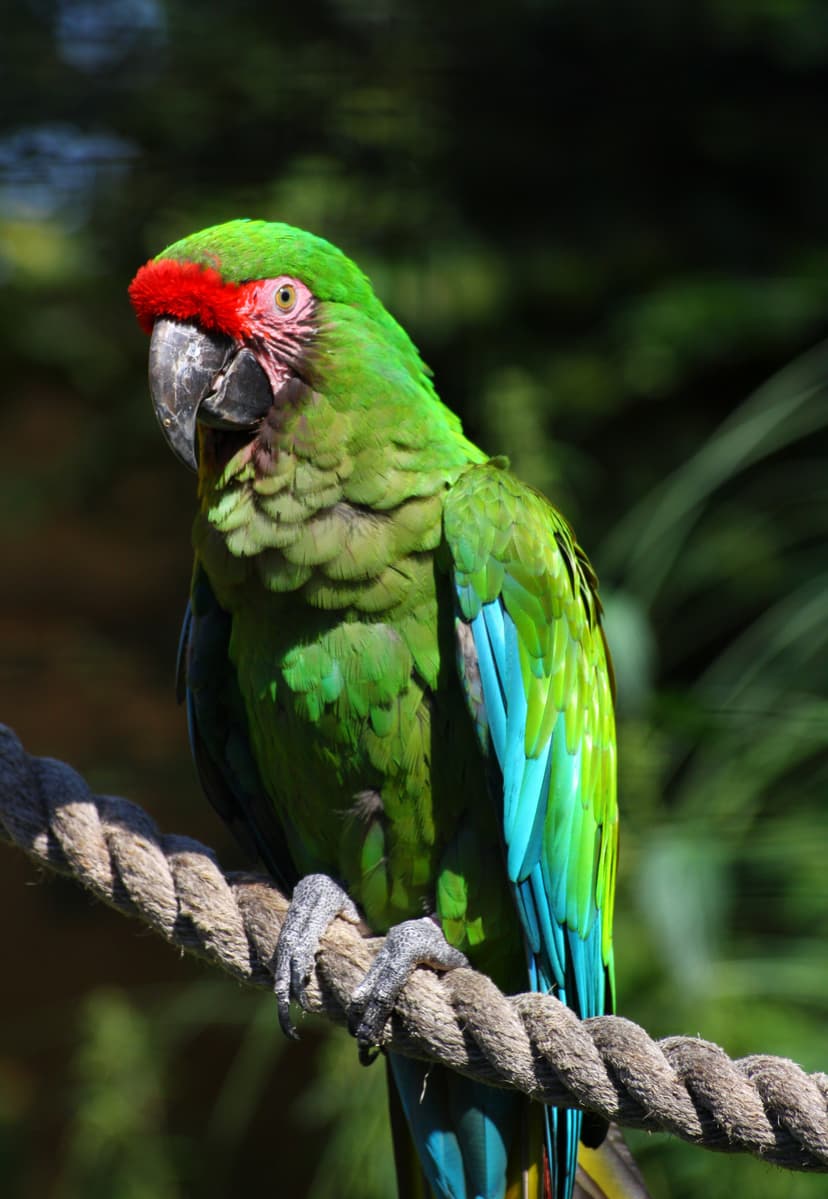
Military macaw
The military macaw (Ara militaris) is a medium to large parrot recognized by its predominantly green plumage accented with blue and yellow, and a distinctive red forehead patch, reminiscent of a military uniform. Native to a range stretching from west-central Mexico down to northern Argentina and Bolivia, these macaws are known for their loud vocalizations and social behavior. While facing conservation challenges, they are also commonly found in captivity due to their relative ease of breeding and long lifespan.