
Golden-tailed parrotlet
The golden-tailed parrotlet is a small, predominantly green parrot endemic to eastern Brazil, distinguished by its vibrant yellow facial markings and a white eye ring. It inhabits humid evergreen forests and forest fragments, often foraging in small family groups. This species is currently listed as Vulnerable due to extensive deforestation, though it may be more resilient to habitat fragmentation than previously believed.
Key Facts
- ›Approximately 16 cm (6.3 inches) in length.
- ›Predominantly green plumage with yellow on the forehead and cheeks.
- ›Found in humid evergreen forests and forest fragments in eastern Brazil.
- ›Diet primarily consists of fruit, though details are scarce.
- ›Nests have only been observed within arboreal termite nests.
- ›Classified as Vulnerable by the IUCN due to habitat loss.

Brazil
Humid Evergreen Forest, Forest On Sandy Soils, Primary Forest, Secondary Forest, Cacao Plantations, Montane Forest
Green, Yellow, White, Olive-Brown, Dusky Brown, Blue
White Eye Ring, Yellow Forehead, Lores, and Cheeks, Emerald Green Rump and Uppertail Coverts
Fruit
Falsetto 'Kree-Kree-Kree-Kruh-' Call, Shrieking 'K'ReeéH' Call
Arboreal Termite Nests
About Golden-tailed parrotlet
The Golden-Tailed Parrotlet
The golden-tailed parrotlet (Touit surdus) is a species of bird belonging to the parrot family Psittacidae, specifically within the subfamily Arinae. This small parrot is endemic to eastern Brazil, a region known for its rich biodiversity. Its distinctive features include a predominantly green body, with brighter emerald green on its rump and uppertail coverts. The face is marked with yellow on the forehead, lores, and cheeks, and it possesses a striking white eye ring. Males and females are very similar, though females may have slightly duller underparts and greener tail feathers.
Distribution and Habitat
The golden-tailed parrotlet has a fragmented distribution across northeastern and eastern Brazil, appearing in states such as Ceará, Pernambuco, Alagoas, Bahia, and São Paulo. It thrives in humid evergreen forests, including those growing on sandy soils, and is found in both primary and secondary forest habitats. The species also adapts to environments like cacao plantations and the lower strata of montane forests, inhabiting elevations from sea level up to 900 or 1,000 meters.
Behavior and Diet
Observations suggest that golden-tailed parrotlets engage in seasonal movements, though these are not precisely defined. They typically forage in small flocks, which are believed to be family units. Their diet primarily consists of fruit, though detailed studies on their feeding ecology are limited. Breeding behavior is thought to commence around September or October, coinciding with the start of the rainy season. The only known nesting sites have been discovered within arboreal termite nests. Information regarding clutch size, incubation periods, fledging times, and parental care remains unknown.
Conservation Status
Classified as Vulnerable by the International Union for Conservation of Nature (IUCN), the golden-tailed parrotlet faces significant threats. Its range is very restricted, and its population, estimated at fewer than 10,000 mature individuals, is believed to be in decline. The primary driver of its rarity is extensive deforestation throughout its habitat. However, recent findings suggest that the species may be more resilient to forest fragmentation than initially thought and could potentially be under-recorded, particularly in the southern parts of its range. Fortunately, the golden-tailed parrotlet is present in numerous private and government reserves, offering some protection.
Vocalizations
The vocalizations of the golden-tailed parrotlet are described as a falsetto call, often rendered as 'kree-kree-kree-kruh-', or a more piercing, shrieking sound, 'k'reeéh'.
Source: Wikipedia ↗
Frequently Asked Questions
What is the scientific name of the golden-tailed parrotlet?
The scientific name of the golden-tailed parrotlet is Touit surdus. It belongs to the subfamily Arinae within the family Psittacidae.
Where is the golden-tailed parrotlet found?
This species is endemic to eastern Brazil, with a disjunct distribution in northeastern and eastern parts of the country, including states like Ceará, Pernambuco, Alagoas, Bahia, and São Paulo.
What kind of habitat does the golden-tailed parrotlet prefer?
The golden-tailed parrotlet inhabits humid evergreen forests, including those on sandy soils, and forest fragments. They can be found in both primary and secondary forests, as well as cacao plantations and the lower levels of montane forests.
What are the distinctive physical features of the golden-tailed parrotlet?
The golden-tailed parrotlet is about 16 cm long with mostly green plumage. It is characterized by yellow on its forehead, lores, and cheeks, a distinct white eye ring, and emerald green on its rump and uppertail coverts.
What do golden-tailed parrotlets eat?
Their diet is understood to be mostly fruit, but specific details about their feeding habits are limited. They are observed foraging in small flocks, often suspected to be family groups.
What is the conservation status of the golden-tailed parrotlet?
The golden-tailed parrotlet is listed as Vulnerable by the IUCN. Its population is estimated to be fewer than 10,000 mature individuals and is believed to be decreasing due to extensive deforestation.
How does the golden-tailed parrotlet vocalize?
The typical call of the golden-tailed parrotlet is described as a falsetto 'kree-kree-kree-kruh-' or a shrieking 'k'reeéh'.
Where do golden-tailed parrotlets build their nests?
The only known nests of the golden-tailed parrotlet have been found within arboreal termite nests. Details regarding clutch size, incubation, and fledging periods are not currently known.
Related Parrot species
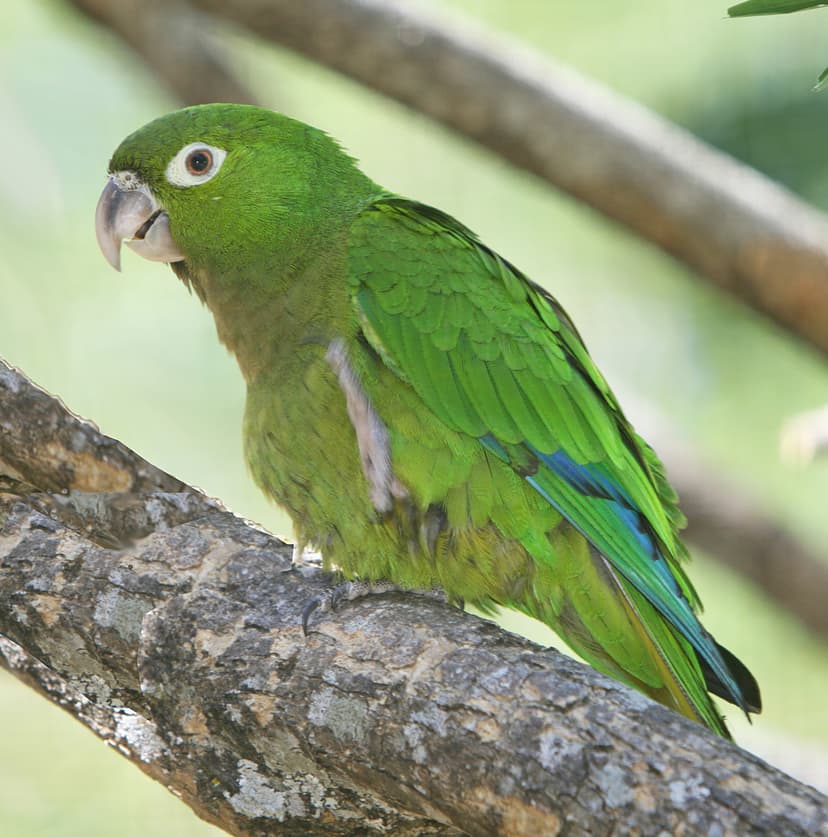
Jamaican parakeet
The Jamaican parakeet, also known as the nominate subspecies of the olive-throated parakeet (Eupsittula nana), is a bird native to Jamaica and introduced to the Dominican Republic. It is distinguished by its primarily green plumage with yellowish ear coverts, olive-brown throat and breast, and bare white skin around its eyes. This species is known for its social behavior, often forming flocks and utilizing termitaria for nesting.
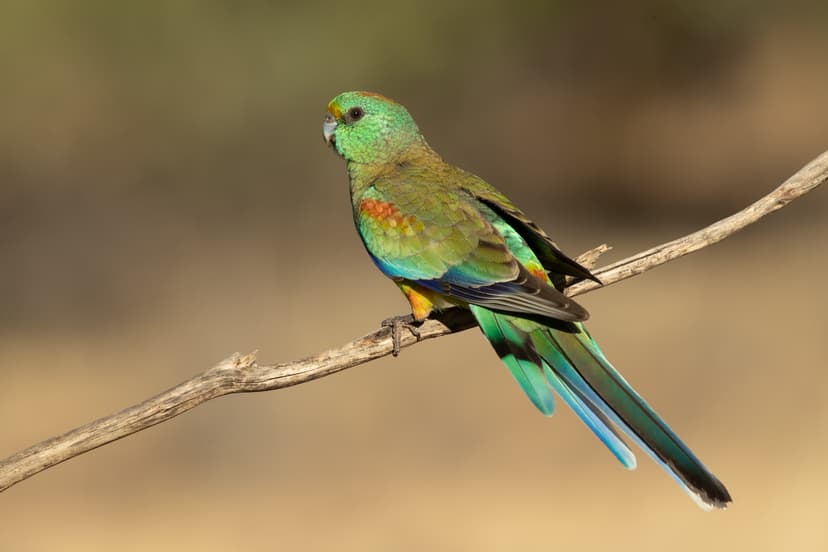
Mulga parrot
The mulga parrot is a medium-sized parrot endemic to the arid interior of southern Australia, known for its striking multicolored plumage, especially in males. It inhabits dry grasslands and mulga scrublands and is often seen in pairs. This species is sexually dimorphic, with males displaying vibrant greens, yellows, blues, and reds, while females are a duller olive-brown.
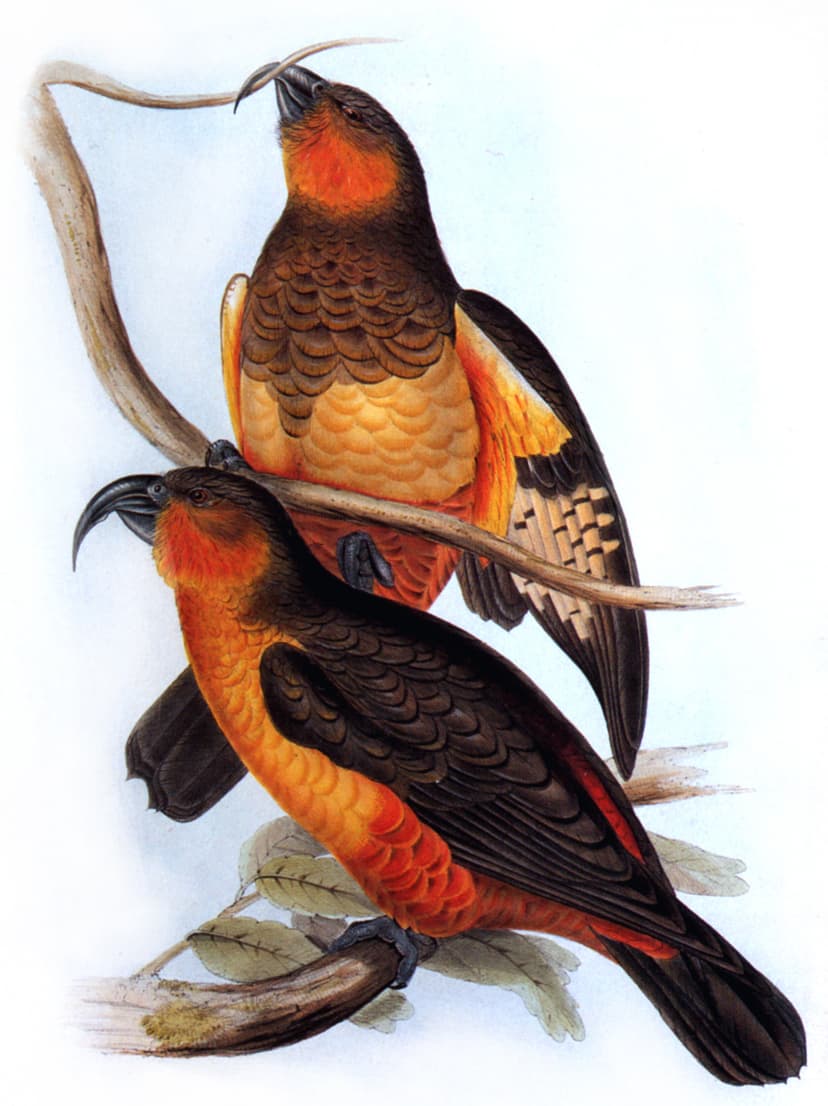
Norfolk kākā
The Norfolk kākā was a large parrot species native to Norfolk Island and Phillip Island, characterized by its olive-brown upperparts and distinct reddish-orange cheeks and throat. It belonged to the same family as the New Zealand kākā and inhabited both rocky areas and treetops. Sadly, this species is now extinct, with its decline attributed to hunting for food and capture as pets, exacerbated by the establishment of penal colonies on the islands.