
Mulga parrot
The mulga parrot is a medium-sized parrot endemic to the arid interior of southern Australia, known for its striking multicolored plumage, especially in males. It inhabits dry grasslands and mulga scrublands and is often seen in pairs. This species is sexually dimorphic, with males displaying vibrant greens, yellows, blues, and reds, while females are a duller olive-brown.
Key Facts
- ›Endemic to the arid interior of southern Australia.
- ›Males are brightly colored with green, yellow, blue, and red patches.
- ›Females are duller, with olive-brown plumage.
- ›Inhabits arid grasslands and mulga scrublands.
- ›Breeds between July and December, often triggered by rainfall.
- ›Lays clutches of 4-6 eggs, incubated by the female.
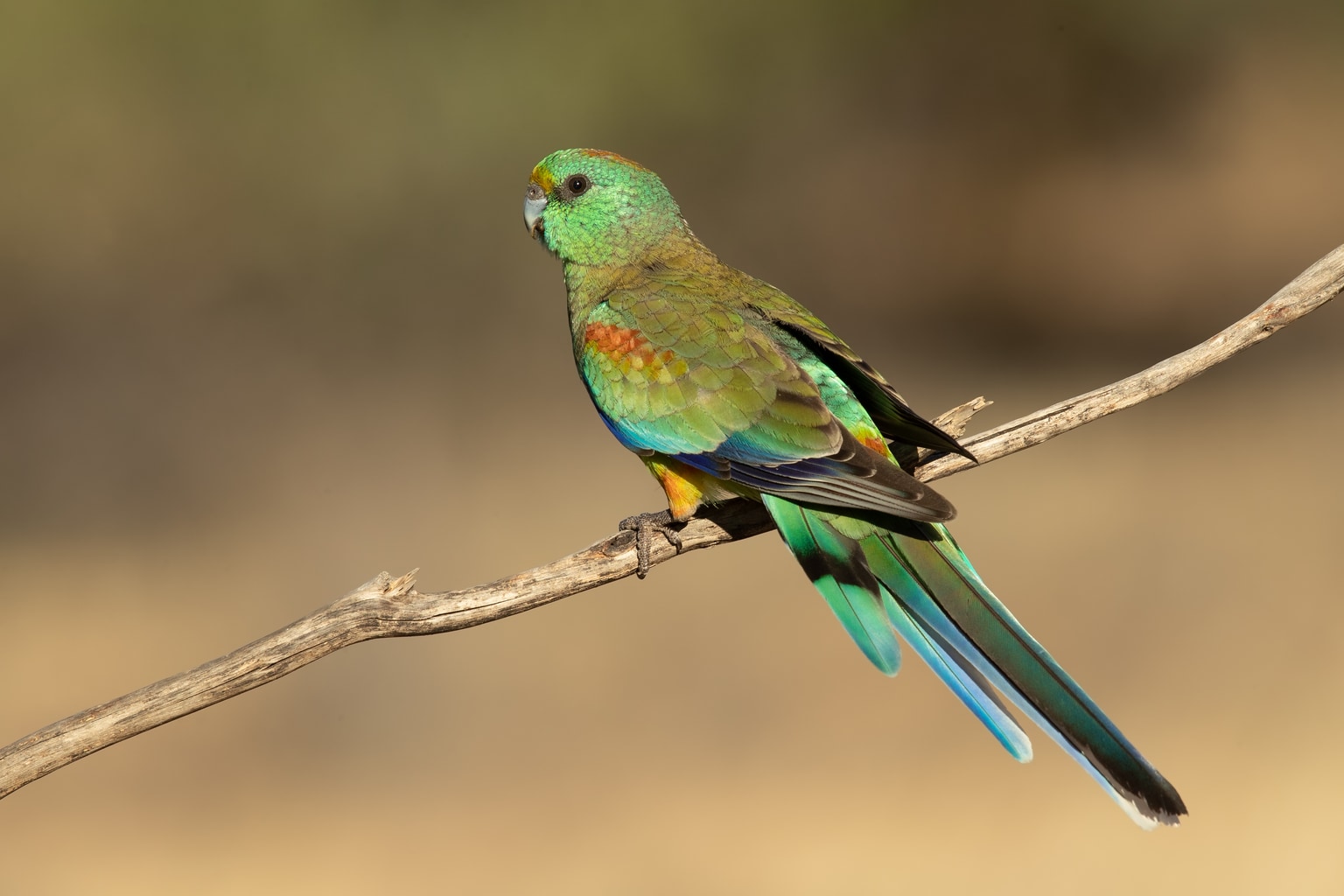
Many-Coloured Parrot, Many-Coloured Parakeet, Various Parrot, Varied Parrot
Australia
Arid Scrublands, Lightly Timbered Grasslands, Arid Grassland, Mulga Scrubland
Green, Blue, Yellow, Red, Orange-Red, Olive-Brown
Sexually dimorphic plumage, Male's multicolored appearance, Red patch on the back of the male's head, Yellow median wing coverts in males, Blue outer webs of primaries in males
Hollow In A Tree
About Mulga parrot
The Mulga parrot, scientifically known as Psephotellus varius, is a medium-sized parrot native to the arid interior of southern Australia. Its common name, and the older name "many-coloured parrot," are derived from the striking, multicolored plumage of the male. This species is characterized by its slim build, long tail, and a length typically ranging from 27 to 32 cm.
Description and Dimorphism
A hallmark of the Mulga parrot is its pronounced sexual dimorphism, meaning males and females exhibit significant differences in appearance. The male is a vibrant display of color, predominantly bright green with bluish tinges on the neck and above the eyes, a yellow forehead, and a distinct red patch on the back of its head. Its wings feature yellow median coverts and blue outer webs on the primaries, while its long tail is a complex mix of dark blue, green, and white, with red on the upper tail coverts. The female, in contrast, is much duller, with an olive-brown head and chest, a less vibrant yellow forehead, and a pale green belly. She may sometimes display a red shoulder patch.
Distribution and Habitat
The Mulga parrot's range spans the drier inland regions of the Australian continent. They are generally found in arid grasslands and mulga scrublands. Their distribution extends across Western New South Wales, the northwestern tip of Victoria, South Australia, and into the central and western regions of Western Australia.
Breeding Habits
The breeding season for Mulga parrots is flexible, occurring anytime between July and December, often initiated by rainfall. They are known to raise one or occasionally two broods per season, depending on environmental conditions. Nesting typically takes place in tree hollows, where the female lays a clutch of four to six white eggs. The incubation period lasts for 18 to 21 days, with the female undertaking this duty alone while the male provides her with food.
Source: Wikipedia ↗
Frequently Asked Questions
What is the scientific name of the Mulga parrot?
The scientific name of the Mulga parrot is Psephotellus varius. This name was given by Austin Hobart Clark in 1910.
What are the common names for Psephotellus varius?
Besides Mulga parrot, other common names for this species include many-coloured parrot, many-coloured parakeet, various parrot, and varied parrot.
Where does the Mulga parrot live?
The Mulga parrot is found in the drier interior of the Australian continent, ranging across arid grasslands and mulga scrublands.
What does the male Mulga parrot look like?
The male Mulga parrot is distinctly multicolored, featuring bright green plumage with a bluish tinge on the neck, a yellow forehead, a red patch on the back of the head, and yellowish lower belly and thighs marked with orange-red.
What is the breeding season for Mulga parrots?
The breeding season typically occurs from July to December, or it can be triggered by rainfall. They may raise one or occasionally two broods depending on the availability of resources.
How large is a typical Mulga parrot clutch?
A clutch of Mulga parrot eggs usually consists of four to six white eggs. These eggs measure approximately 22 x 18 mm.
What is the incubation period for Mulga parrot eggs?
The incubation period for Mulga parrot eggs lasts between 18 to 21 days. The female undertakes the incubation alone, while the male provides her with food.
Related Parrot species

Golden-capped parakeet
The golden-capped parakeet is a species of parrot endemic to Brazil, inhabiting dry and moist lowland forests, savannas, and plantations. It is distinguished by its predominantly green plumage with a black beak, white eyerings, orange-red belly, and a face that transitions from red to yellow on its crown. This parakeet is recognized as a valuable biological indicator due to its sensitivity to habitat fragmentation and vulnerability.

Kea
The kea, a large parrot endemic to New Zealand's South Island, is distinguished by its olive-green plumage, orange underwings, and a distinctive large, curved beak. Known for exceptional intelligence and curiosity, they inhabit both forested and alpine regions and have a varied omnivorous diet that includes carrion. Historically persecuted by sheep farmers, the kea is now a protected species.
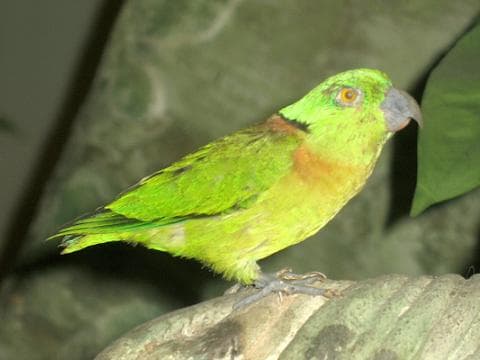
Black-collared lovebird
The black-collared lovebird, also known as Swindern's lovebird, is a small African parrot characterized by a distinctive black band around its neck and a dark greyish-black bill. It is primarily found in the dense tropical rainforests of Africa. This species is rarely kept in captivity due to its specific dietary needs, particularly its reliance on native figs.