
Green racket-tail
The Green racket-tail is an endemic parrot species found only in the Philippines, specifically on the islands of Luzon and Marinduque. Once common, its population is now critically endangered due to extensive deforestation and capture for the illegal cage-bird trade, with an estimated 300-800 mature individuals remaining. This species is distinguished by its unique tail feathers, which in adult males are elongated and tipped with black "rackets."
Key Facts
- ›Endemic to the Philippines, found on Luzon and Marinduque.
- ›Classified as Endangered due to habitat loss and illegal trapping.
- ›Males have distinctive elongated central tail feathers with black rackets.
- ›Diet consists of fruits, flowers, and seeds, including corn and rice.
- ›Nests in tree cavities, with chicks often poached in may.
- ›Smallest of the racket-tail species, measuring around 29 cm in length.

Green Racquet-Tail
Philippines
Tropical Lowland Rainforest Canopy, Primary Forest, Secondary Forest, Forest Edges, Cultivations
Yellow-Green, Paler Underparts, Paler Head, Darker
- Elongated central tail feathers with bare shafts and black rackets
Fruit, Flowers, Seeds of Corn, Seeds of Rice
Cavity Nesters, Tree Cavities
About Green racket-tail
The Green racket-tail (Prioniturus luconensis) is a parrot species endemic to the Philippines, found exclusively on the islands of Luzon and Marinduque. Historically, this species was quite common, but it is now facing a severe population decline and is classified as Endangered. This critical status is primarily due to extensive deforestation of lowland rainforests and the relentless capture of individuals for the cage-bird trade.
Description and Characteristics
Green racket-tails are characterized by their sexually dimorphic appearance. Adult males display a vibrant yellow-green plumage, with paler shades on their underparts and head. Their most striking feature is the modification of their two central tail feathers, which are elongated with bare shafts and tipped with distinctive black "rackets." Females are generally darker and less yellowish than males, and their bare tail shafts are shorter. Juveniles do not exhibit the racket-like tail feathers. The Green racket-tail is the smallest among all racket-tail species, measuring approximately 29 centimeters (11 inches) in length.
Habitat and Diet
This species primarily inhabits the canopy of tropical lowland rainforests, typically at elevations up to 700 meters (2,300 feet). They show a preference for primary forests but can also be found in secondary forests and forest edges. Green racket-tails have been observed visiting agricultural areas to feed on crops. Their diet consists of fruits, with a particular fondness for bananas, as well as the flowers and seeds of corn and rice.
Behaviour and Reproduction
Green racket-tails are cavity nesters, a behavior shared with other species in the racket-tail genus. Evidence suggests that chicks are often targeted by poachers during the month of May, indicating this period as significant for their breeding cycle.
Conservation Concerns
The current estimated population of mature Green racket-tails ranges from 300 to 800 individuals, and this number is continuing to decrease. Local extinctions have been documented across many parts of its historical range, with fears that the species may already be extinct on Marinduque. The ongoing threats of habitat loss, driven by logging, mining, and agricultural expansion, coupled with the persistent illegal trapping for the pet trade, pose a significant risk to the species' survival. Interspecific competition with the more common Blue-crowned racket-tail has also been noted as a threat in some areas.
Legal Status
In the Philippines, it is illegal to hunt, capture, or keep Green racket-tails, along with any other wild bird, under Philippine Law RA 9147. Despite legal protections, enforcement in many areas is reported to be lax, allowing deforestation and the cage-bird trade to continue.
Proposed Conservation Actions
Conservation efforts proposed for the Green racket-tail include conducting surveys to identify and protect key populations, researching their ecology to better understand their needs, monitoring the spread of competing species, and strengthening protection against illegal logging. Establishing a captive breeding program to support future reintroduction efforts and lobbying against developments that threaten suitable habitat are also recommended strategies.
Source: Wikipedia ↗
Frequently Asked Questions
What makes the Green racket-tail distinctive?
The Green racket-tail is distinguished by its unique tail feathers. Adult males possess two central tail feathers that are elongated, featuring bare shafts and ending in black, racket-shaped tips. Females have shorter bare tail shafts, and juveniles lack these racket-like features entirely.
Where is the Green racket-tail found?
This species is endemic to the Philippines. It is found on the islands of Luzon and Marinduque, inhabiting the canopy of tropical lowland rainforests.
What are the main threats to the Green racket-tail?
The primary threats to the Green racket-tail are lowland deforestation, which destroys its habitat, and capture for the cage-bird trade. These factors have led to a rapid decline in its population and local extinctions across its former range.
What does the Green racket-tail eat?
The diet of the Green racket-tail includes fruits, particularly bananas, as well as flowers and seeds from crops like corn and rice. They are known to visit cultivations to feed on these food sources.
What is the conservation status of the Green racket-tail?
The Green racket-tail is listed as Endangered. The population is estimated to be between 300 and 800 mature individuals, and it is feared to be extinct on Marinduque, with local extinctions occurring in many other former sites.
How do Green racket-tails nest?
Like other racket-tails, Green racket-tails are cavity nesters. They utilize tree cavities for nesting, and poachers have been known to target chicks from these nests, particularly in the month of May.
Related Parrot species
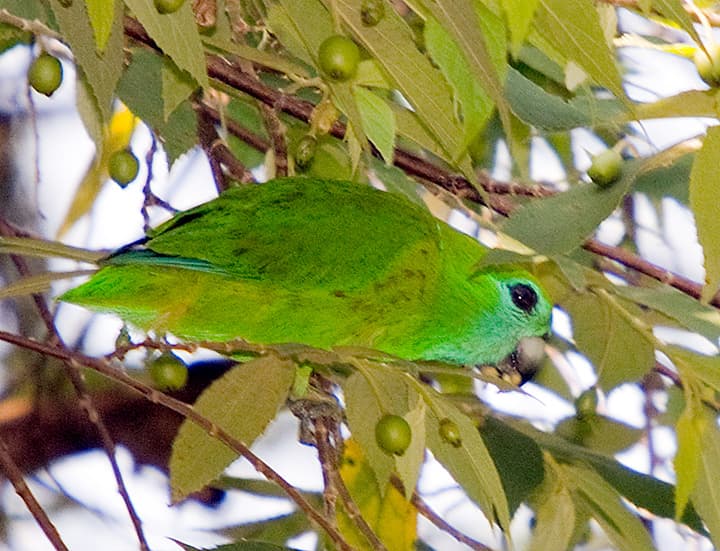
Guaiabero
The Guaiabero is a small, stout parrot endemic to the Philippines, belonging to the monotypic genus Bolbopsittacus and closely related to lovebirds and hanging parrots. Its common name stems from its reputation as a guava-eater, and it is distinctive for its large bill, stubby tail, and sexually dimorphic plumage, with males exhibiting more blue and females having black crescent markings.
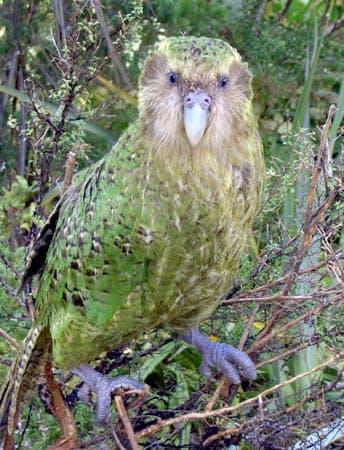
Kākāpō
The kākāpō, also known as the owl-parrot, is a unique, large, nocturnal, and flightless parrot endemic to New Zealand. It is distinguished by its finely blotched yellow-green plumage, owl-like facial disc, and exceptionally soft feathers. Historically significant to Māori culture, the kākāpō is now critically endangered due to introduced mammalian predators.
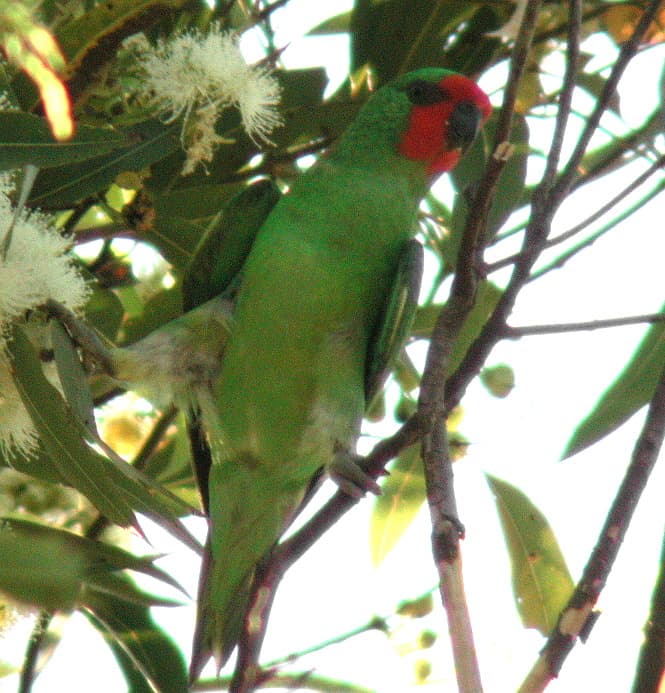
Little lorikeet
The Little lorikeet (Psitteuteles pusillus) is a small parrot endemic to Australia, characterized by its predominantly green plumage and a distinctive red face. It inhabits temperate and subtropical forests, feeding primarily on nectar and pollen from flowering trees. This species is known for its gregarious nature, often flocking with other lorikeet species.