
Little lorikeet
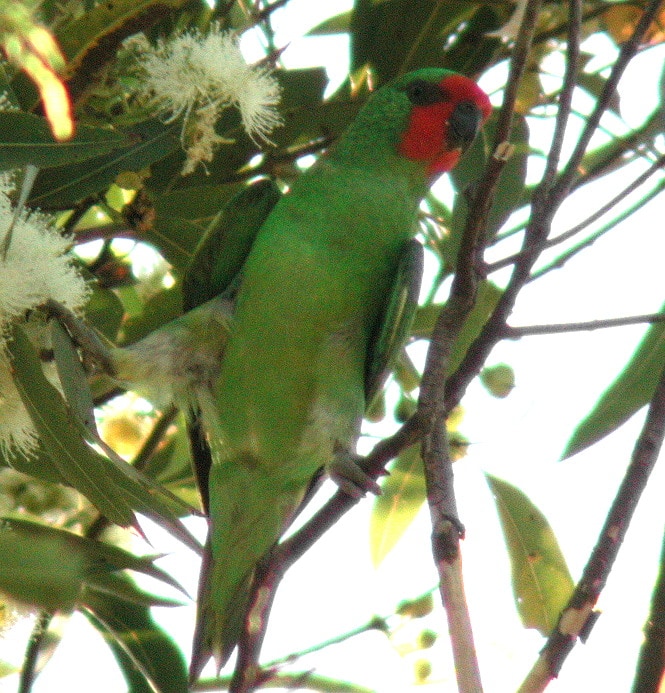
The Little lorikeet (Psitteuteles pusillus) is a small parrot endemic to Australia, characterized by its predominantly green plumage and a distinctive red face. It inhabits temperate and subtropical forests, feeding primarily on nectar and pollen from flowering trees. This species is known for its gregarious nature, often flocking with other lorikeet species.
Key Facts
- ›Endemic to eastern and southern Australia, including Tasmania.
- ›Measures approximately 15 cm in length.
- ›Predominantly green plumage with a red face, crown, lores, and throat.
- ›Feeds mainly on nectar and pollen from eucalyptus, angophora, and melaleuca species.
- ›Breeds from may (north) or August (south) to December.
- ›Listed as 'Endangered' in South Australia and 'Vulnerable' in New South Wales.
Tiny Lorikeet, Red-Faced Lorikeet, Gizzie, Slit, Gerryang
Australia
Temperate Eucalyptus Forest, Woodland, Subtropical Or Tropical Dry Forest, Subtropical Or Tropical Moist Lowland Forest
Red Face, Red Crown, Red Lores, Red Throat
Nectar, Pollen, Grasstrees, Fruit
Hollow In A Tree
About Little lorikeet
The Little lorikeet, scientifically known as Psitteuteles pusillus, is a small parrot species native to Australia. Measuring approximately 15 cm in length, it is distinguished by its predominantly green plumage, accented by a striking red face, crown, lores, and throat. The nape and shoulders often display a bronze coloration, and the belly is a paler yellow-green. Adult birds possess black bills and golden irises, while immatures have paler orange faces and brown irises and bills.
Distribution and Habitat
This species is endemic to eastern and southern Australia, with its range extending from near Cairns in Queensland southwards through New South Wales, across most of Victoria, and into southeastern South Australia. It also occurs in Tasmania, although it is uncommon there. The Little lorikeet thrives in temperate eucalyptus forests and woodlands, as well as subtropical or tropical dry and moist lowland forests, often favoring areas with flowering or fruit-bearing vegetation.
Diet and Behavior
Little lorikeets are gregarious birds, frequently seen flocking with other lorikeet species such as the rainbow, musk, and purple-crowned lorikeets. Their diet consists mainly of nectar and pollen gathered from the flowers of canopy trees like Eucalyptus, Angophora, and Melaleuca. They also supplement their diet with grasstrees and occasionally native mistletoe and introduced fruits like the loquat, sometimes visiting orchards.
Breeding
The breeding season for the Little lorikeet varies geographically, occurring from May in the northern parts of its range or August in the south, and continuing until December. Nests are typically made in tree hollows, where a clutch of 3 to 5 matte white, roundish eggs is laid. The incubation period lasts for approximately three weeks.
Conservation Status
While the Little lorikeet has a wide distribution across Eastern Australia, a decline in its numbers has been observed in several regions. In South Australia, the species is listed as 'Endangered' under the National Parks and Wildlife Act (1972), reflecting its rarity in areas where it was once abundant. Similarly, in New South Wales, it is classified as 'Vulnerable' under the Biodiversity Conservation Act (2016), with a noted decrease in flock sizes and frequency.
Source: Wikipedia ↗
Frequently Asked Questions
What is the scientific name of the Little lorikeet?
The scientific name of the Little lorikeet is Psitteuteles pusillus. It was first described by ornithologist George Shaw in 1790. Its specific epithet, 'pusilla', is Latin for 'small'.
What are the common names for the Little lorikeet?
Besides Little lorikeet, other common names include tiny lorikeet, red-faced lorikeet, gizzie, and slit. It was also formerly known by a local indigenous term, gerryang.
What is the typical size and appearance of a Little lorikeet?
Little lorikeets measure about 15 cm in length. They are predominantly green with a red face, crown, lores, and throat. Adult males and females are similarly colored, though females can be slightly duller. Adults have black bills and golden irises.
Where do Little lorikeets live?
These parrots are found in eastern and southern Australia, ranging from near Cairns in Queensland southwards through New South Wales, most of Victoria, and southeastern South Australia. They also occur, though uncommonly, in Tasmania. Their preferred habitats include temperate and subtropical forests.
What do Little lorikeets eat?
Their diet primarily consists of nectar and pollen from the flowers of trees like Eucalyptus, Angophora, and Melaleuca. They also consume grasstrees and occasionally fruits such as native mistletoe and introduced loquat. They may also visit orchards.
When do Little lorikeets breed and what are their nesting habits?
The breeding season typically runs from May in the north or August in the south, through to December. They nest in tree hollows and lay a clutch of 3 to 5 matte white, roundish eggs. The incubation period is about three weeks.
What is the conservation status of the Little lorikeet?
The Little lorikeet has a wide distribution, but its abundance has declined in some areas. It is listed as 'Endangered' in South Australia and 'Vulnerable' in New South Wales due to marked declines in flock sizes and frequency.
Related Parrot species
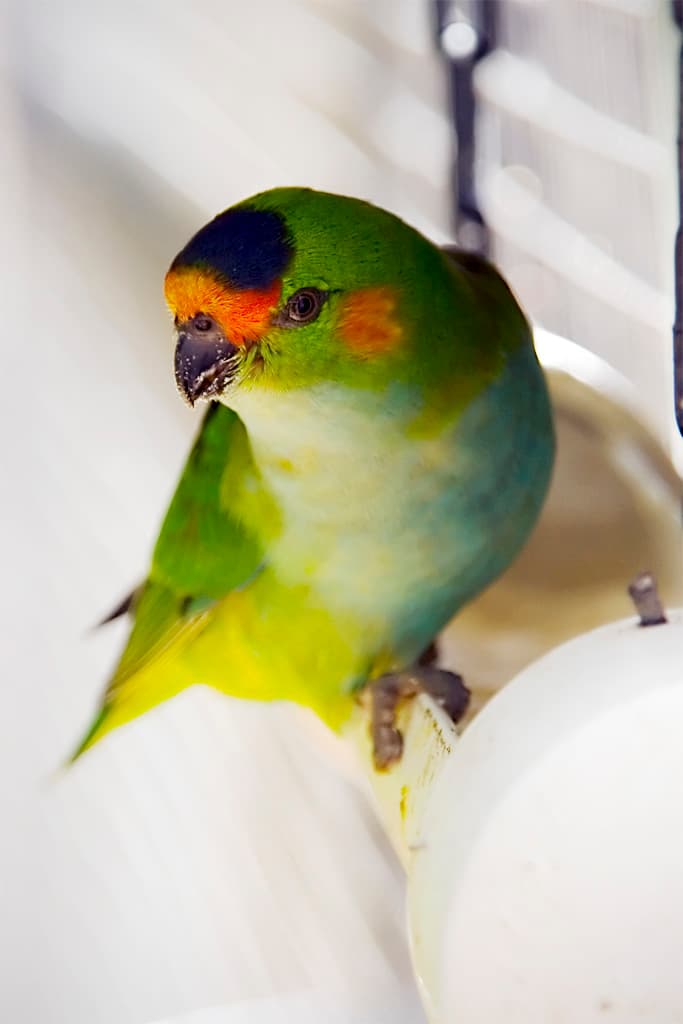
Purple-crowned lorikeet
The Purple-crowned lorikeet is a small lorikeet native to southern Australia, distinguished by its vibrant purple crown, orange forehead, and powder blue chest. Primarily found in dry sclerophyll forests and mallee scrub, these gregarious birds are known for their swift flight and high-pitched calls. They are often seen in small groups but can gather in larger flocks, particularly when feeding on Eucalyptus and Melaleuca blossoms.
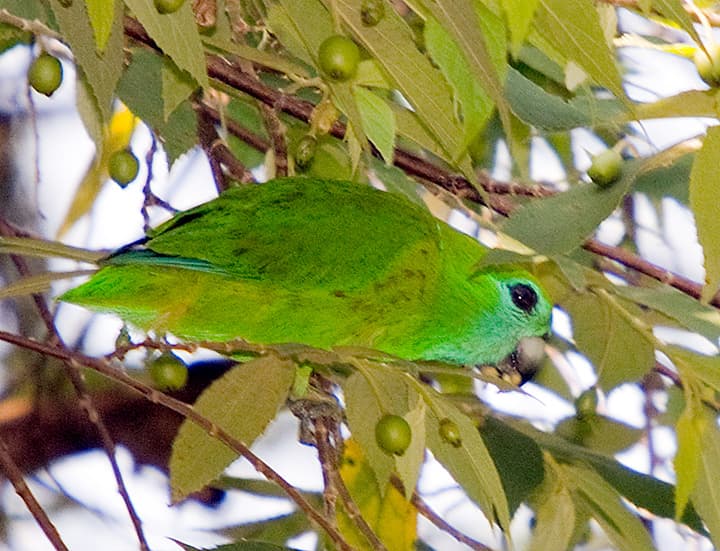
Guaiabero
The Guaiabero is a small, stout parrot endemic to the Philippines, belonging to the monotypic genus Bolbopsittacus and closely related to lovebirds and hanging parrots. Its common name stems from its reputation as a guava-eater, and it is distinctive for its large bill, stubby tail, and sexually dimorphic plumage, with males exhibiting more blue and females having black crescent markings.
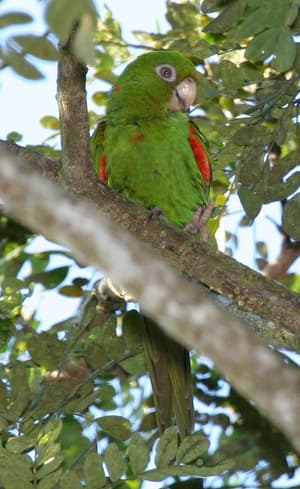
Cuban parakeet
The Cuban parakeet (Psittacara euops) is a Vulnerable species of bird endemic to Cuba, characterized by its predominantly yellow-green plumage with distinctive red markings on the head, neck, and breast. It inhabits savannas with palms and montane forests, where it nests in cavities. This highly social bird is known for its varied vocalizations and faces threats from habitat loss and illegal trapping.