
Kea
The kea, a large parrot endemic to New Zealand's South Island, is distinguished by its olive-green plumage, orange underwings, and a distinctive large, curved beak. Known for exceptional intelligence and curiosity, they inhabit both forested and alpine regions and have a varied omnivorous diet that includes carrion. Historically persecuted by sheep farmers, the kea is now a protected species.
Key Facts
- ›Endemic to the South Island of New Zealand.
- ›Possesses remarkable intelligence, problem-solving skills, and tool-use capabilities.
- ›Has a varied omnivorous diet, including roots, leaves, berries, nectar, insects, and carrion.
- ›Once hunted for bounty due to perceived attacks on livestock, now fully protected.
- ›Nests in burrows or crevices among tree roots in alpine and forested areas.
- ›Characterized by its olive-green plumage with brilliant orange underwings and a large, curved beak.

Kee-A
New Zealand
Forested Regions, Alpine Regions, Lowland River Valleys, Coastal Forests, Southern Beech Forests
Olive-Green, Orange, Brilliant Orange, Dark Olive-Brown, Orange-Red, Dull Blue, Bluish-Green, Black
- Large, narrow, curved, grey-brown upper beak
- Brilliant orange underwings
- Feather shafts projecting at tail tip
- Yellow-orange transverse stripes on inner tail feathers
Roots, Leaves, Berries, Nectar, Insects, Carrion, Beetle Larvae, Grasshoppers, Land Snails, Other Birds, Mammals, Flesh and Bone Marrow From Carcasses, Human Rubbish
Intelligent, Curious, Playful, Cheeky, Investigative, Trusting
In-flight call is an onomatopoeic 'Keee aaa', Known for their 'play' call
- Burrows or crevices among the roots of trees
- Underneath large Beech trees
- Rock crevices
- Tunnels leading back 1 to 6 meters into a larger chamber lined with lichens, moss, ferns, and rotting wood
About Kea
The Kea: A Remarkable Alpine Parrot
The kea (Nestor notabilis) is a species of large parrot native and endemic to the forested and alpine regions of New Zealand's South Island. Measuring approximately 46 to 50 cm in length, it is primarily olive-green with striking orange underwings and a large, narrow, curved grey-brown beak. This intelligent and inquisitive bird is known for its problem-solving abilities, including tool use and cooperative tasks, which are crucial for its survival in its challenging mountain habitat.
Distribution and Habitat
Kea inhabit a wide range of environments, from lowland river valleys and coastal forests to high alpine regions. They are closely associated with southern beech forests, and are one of the few parrot species globally that regularly venture above the tree line. While historically present in parts of the North Island, their current distribution is largely confined to the South Island, a shift attributed to the impact of mammalian predators.
Diet and Behavior
As omnivores, kea consume a varied diet comprising roots, leaves, berries, nectar, insects, and carrion. They have been observed feeding on the chicks of other birds and scavenging from carcasses. Their intelligence is further demonstrated by their cognitive abilities, including impulse control and planning. Kea are social birds, typically living in groups, and are known for their curiosity, often investigating and interacting with human-made objects, which can sometimes lead to damage. This trait has earned them the nickname "the clown of the mountains."
Conservation and Threats
Once hunted extensively due to a bounty placed on them by sheep farmers who believed they attacked livestock, the kea is now a protected species, receiving absolute protection under New Zealand law in 1986. Despite this, they face significant threats, including predation of eggs and chicks by introduced pests, lead poisoning, and accidental deaths from pesticides and traps. Their conservation status is listed as Endangered, with estimated populations ranging between 3,000 and 7,000 individuals.
Source: Wikipedia ↗
Frequently Asked Questions
What is the scientific name of the kea?
The scientific name of the kea is Nestor notabilis. The genus Nestor includes other parrot species, such as the New Zealand kākā.
Where does the kea live?
The kea is found exclusively in the forested and alpine regions of the South Island of New Zealand. Historically, they also ranged into lowland forests of the North Island before human settlement.
What does a kea eat?
The kea is an omnivore with a diverse diet. It consumes roots, leaves, berries, nectar, insects, and carrion. They have also been observed feeding on the chicks of other birds and scavenging from carcasses.
Why was the kea hunted?
Kea were historically killed due to concerns by sheep farmers that they attacked livestock, particularly sheep. This led to bounties being paid for their bills for many years.
What makes the kea unique?
The kea's uniqueness stems from its high intelligence, remarkable problem-solving abilities, and curiosity, which are unusual for birds. They are also one of the few parrot species that regularly inhabit alpine environments.
What is the conservation status of the kea?
The kea is classified as Nationally Endangered in New Zealand and is listed as endangered on the IUCN Red List. It has received absolute protection under New Zealand law since 1986.
How do kea reproduce?
Kea breed in southern beech forests, often on steep mountainsides, nesting in ground burrows or rock crevices. The laying period extends from July to January, with clutches of two to five white eggs. The incubation period is around 21 days, and the brooding period lasts approximately 94 days.
What are the main threats to kea populations?
Key threats to kea include predation of eggs and chicks by introduced mammals like possums, lead poisoning from building materials, and accidental deaths from pesticides like 1080 and traps. Traffic also poses a risk, especially in areas like the Homer Tunnel.
Related Parrot species
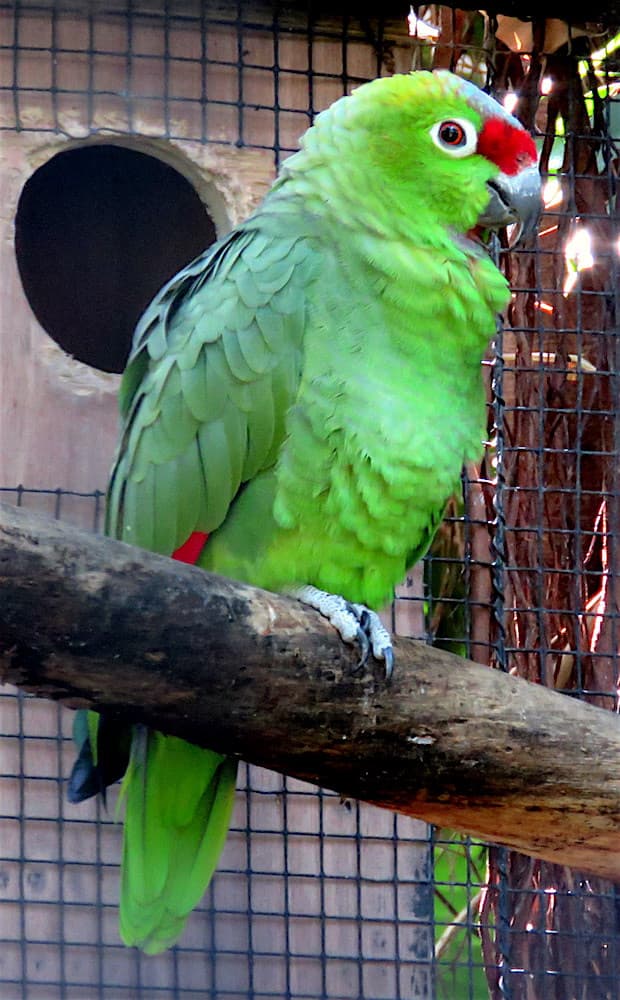
Diademed amazon
The Diademed Amazon (Amazona diadema) is a species of parrot native to the Amazon basin in north-western Brazil. It was formerly considered a subspecies of the Red-lored Amazon but is now recognized as distinct, though molecular analysis may further clarify its species status. This largely green parrot is distinguished by subtle red and black markings, particularly on its forehead and wing feathers, and inhabits lowland forests.

Aztec parakeet
The Aztec parakeet, also known as the olive-throated parakeet, is a species of bird found from Mexico to Costa Rica and in Jamaica. It is distinctive for its mainly dark green plumage with yellowish ear coverts and rump, and an olive-brown throat and breast. This species is known for its vocalizations, described as sharp, grating calls, and its adaptability to various woodland and forest habitats.
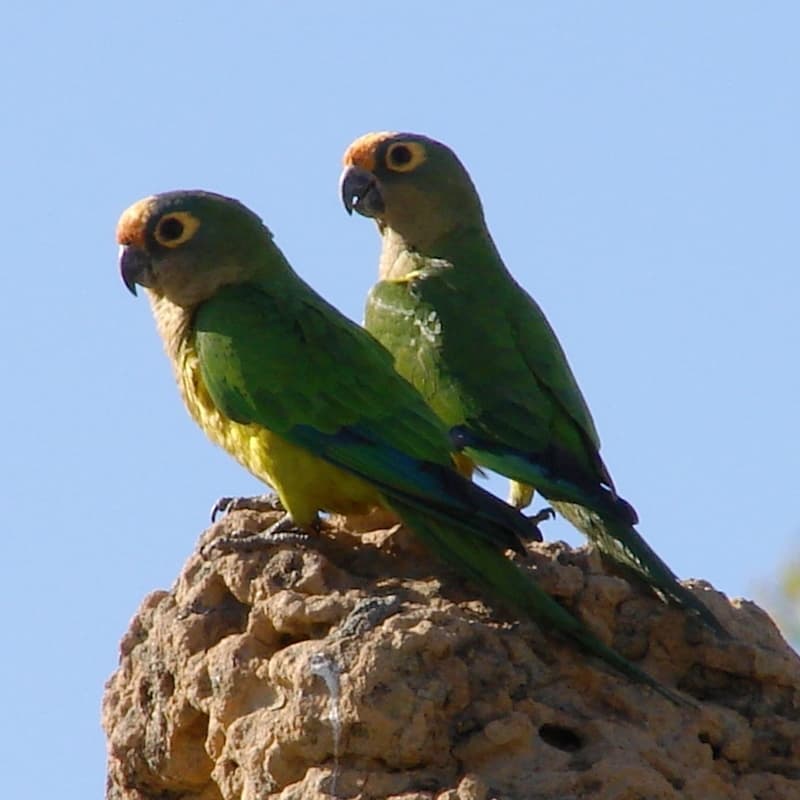
Peach-fronted parakeet
The Peach-fronted parakeet is a species of parrot found in South America, inhabiting a variety of semi-open to wooded landscapes. It is distinguished by its peachy orange forehead and hindcrown of dull blue, and is known for its varied diet and nesting habits.