
Painted tiger parrot
The painted tiger parrot is a species of parrot native to Papua New Guinea, distinguished by its striking plumage featuring green wings and tail, a red cap, yellow eyes, a red rump, and distinctive tiger stripes on its back and belly. It inhabits montane and subalpine forests and shrublands at high elevations.
Key Facts
- ›Found primarily in Papua New Guinea.
- ›Distinctive features include green wings and tail, a red cap, yellow eyes, and red rump.
- ›Characterized by tiger stripes on its back and belly.
- ›Inhabits montane and subalpine forests and shrublands at high altitudes (2,400-4,000 m).
- ›Feeds on seeds, berries, and small fruits of dacrydium conifers.
- ›Usually observed in pairs or small groups of up to six birds.

Papua New Guinea
Montane Forests, Subalpine Forests, Shrublands
Tiger Stripes On Back and Belly, Red Cap, Yellow Eye, Red Rump
Seeds, Berries, Small Fruits of Dacrydium Conifers
Not Specified
About Painted tiger parrot
The painted tiger parrot, scientifically known as Psittacella picta, is a distinctive species of parrot found primarily in Papua New Guinea. This bird is part of the Psittaculidae family and is recognizable by its vibrant and unique plumage.
Description and Appearance
The painted tiger parrot is characterized by its striking coloration. It possesses green wings and tail, complemented by a bright red cap on its head and a vivid yellow eye. A notable feature is its red rump, and the species is further distinguished by the presence of tiger-like stripes across its back and belly, giving it its common name.
Distribution and Habitat
This species is distributed throughout much of the Bismarck Range and Owen Stanley Range in Papua New Guinea, inhabiting several provinces including Western Province, Hela Province, and Morobe Province. The painted tiger parrot thrives in montane and subalpine forests and shrublands, typically found at high elevations ranging from 2,400 to 4,000 meters above sea level. While the total population size is unknown, wildlife surveys indicate a stable and locally common presence.
Ecology and Behavior
The painted tiger parrot is usually observed feeding cautiously in low bushes. Its diet consists of a variety of seeds, berries, and the small fruits of dacrydium conifers. This species is also known to forage alongside Madarasz's tiger parrot. When startled, it has a tendency to fly quickly into the tree canopy. Socially, the painted tiger parrot is typically seen in pairs or in small groups, with these social units seldom exceeding six individuals.
Source: Wikipedia ↗
Frequently Asked Questions
What does a painted tiger parrot look like?
The painted tiger parrot is easily identified by its green wings and tail, a bright red cap, and a striking yellow eye. It also features a red rump and distinctive tiger-like stripes across its back and belly.
Where is the painted tiger parrot found?
This parrot species is mainly found in Papua New Guinea. Its range extends throughout the Bismarck Range and Owen Stanley Range, covering numerous provinces including Western Province, Hela Province, and Morobe Province.
What kind of habitat does the painted tiger parrot prefer?
The painted tiger parrot inhabits montane and subalpine forests and shrublands. It typically lives at high elevations, ranging from 2,400 to 4,000 meters above sea level.
What do painted tiger parrots eat?
Their diet consists of a variety of seeds, berries, and the small fruits of dacrydium conifers. They are often observed feeding cautiously in low bushes.
Are painted tiger parrots social?
Yes, painted tiger parrots are typically seen in pairs or in small social groups. These groups usually consist of up to six birds.
Related Parrot species

Hispaniolan amazon
The Hispaniolan amazon, scientifically known as Amazona ventralis, is a parrot species native to the island of Hispaniola in the Caribbean. It is distinguished by its white forehead, light beak, white eye-ring, blue ear patch, and a maroon belly patch, setting it apart from other amazons. Once widespread, its population experienced a significant decline throughout the 20th century, with its range now largely confined to inland mountains and increasingly observed in urban areas.
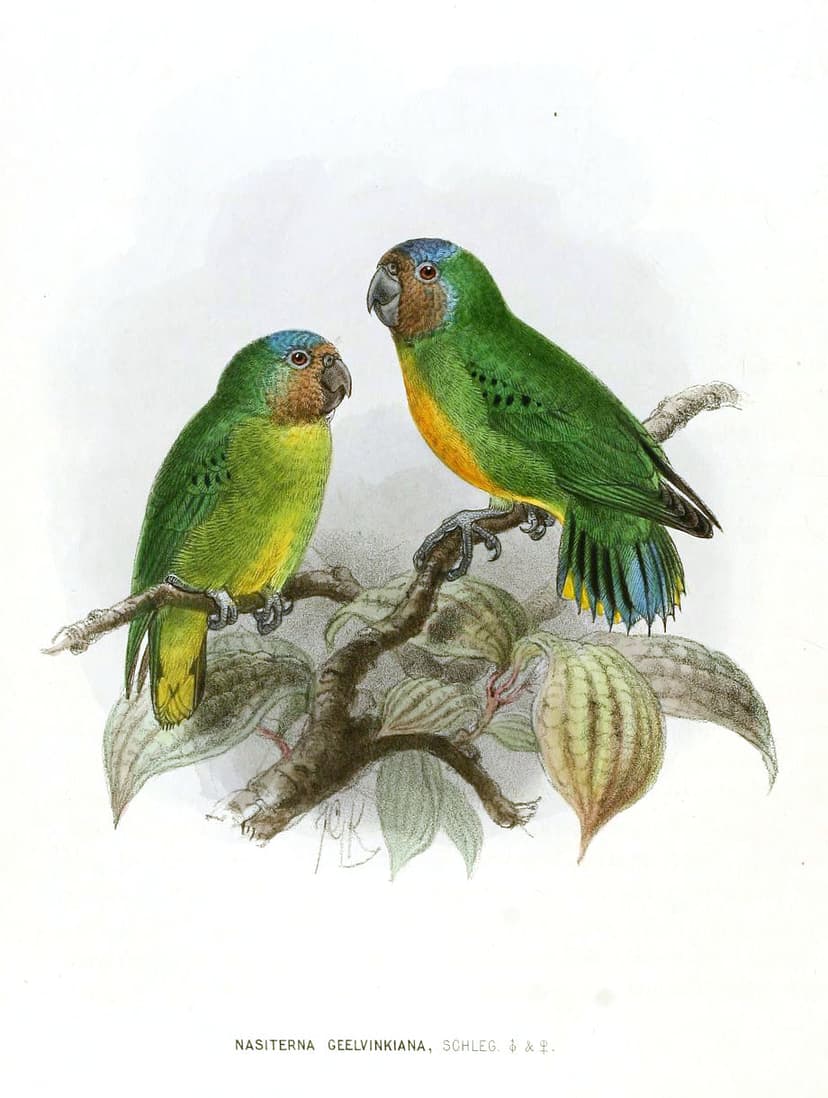
Geelvink pygmy parrot
The Geelvink pygmy parrot is a small parrot species found exclusively on Biak and Numfoor islands in Western New Guinea. Its distinctive plumage includes a brown head, blue crown, yellow breast, green body, and blue tail, with red eyes. The species is threatened by habitat loss in its natural lowland forest and garden environments.

Josephine's lorikeet
Josephine's lorikeet is a species of parrot native to the highlands of New Guinea. It is distinguished by its predominantly red plumage, green wings, and a distinctive yellow-tipped tail. This species primarily inhabits moist lowland and montane forests.