
Horned parakeet
The horned parakeet (Eunymphicus cornutus) is a medium-sized parrot native to New Caledonia. It is distinguished by two prominent black crest feathers tipped with red that protrude from its head. Primarily green with a yellowish nape, black and red face, and bluish wings and tail, this species inhabits rainforests and scrublands.
Key Facts
- ›Endemic to New Caledonia.
- ›Distinctive two-feather black crest with red tips.
- ›Primarily green plumage with yellow nape and blue wings/tail.
- ›Feeds on nuts and seeds in small family groups or pairs.
- ›Nests on or near the ground, in hollow logs, or tree cavities.
- ›Listed as Vulnerable by the IUCN due to a declining population and restricted range.
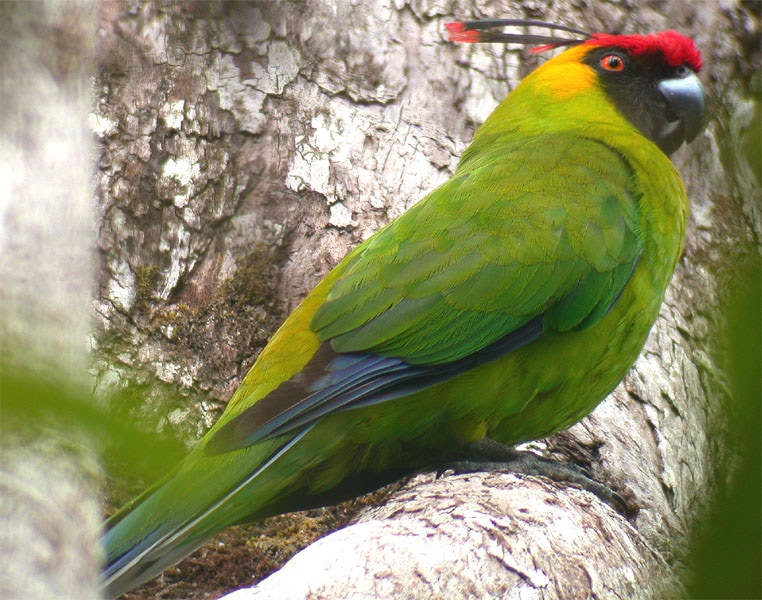
Horned Parrot
New Caledonia
Rainforest, Laurel Forest, Scrubland, Savannah, Humid Pine Forests
Two black crest feathers with red tips
Nuts, Seeds
Nasal "Kho-Khoot" Contact Call, Wide Range of Shrieks and Chuckles
On Or Near the Ground, Hollowed-Out Logs, Nest Hollows In Dead Trees, Nest-Sharing
About Horned parakeet
The horned parakeet (Eunymphicus cornutus) is a striking parrot species endemic to New Caledonia. It is notable for its distinctive pair of black crest feathers, tipped with red, which protrude from its head, giving it its common name. Adults typically measure around 32 cm in length and are predominantly green, accented with a yellowish nape, a black and red face, and bluish wings and tail.
Distribution and Habitat
This species is exclusively found on the island of New Caledonia. Its preferred natural habitats include rainforests and laurel forests, though it can also adapt to scrublands and savannahs. It shows a particular affinity for humid pine forests, especially those featuring Agathis and Araucaria pines.
Behavior and Diet
Horned parakeets are observed foraging in small family groups or as pairs. Their diet in the wild consists primarily of nuts and seeds, which they seek out in the forest canopy. They are known to emit a nasal contact call described as "kho-khoot," alongside a variety of shrieks and chuckles.
Breeding
Uncommonly among parrots, horned parakeets have been documented to share nesting sites. They construct their nests on or near the ground, within hollowed-out logs, or in cavities found in dead trees. A typical clutch consists of two to four eggs. The incubation period, observed in captivity, lasts approximately 21 to 22 days, with fledging occurring about five to six weeks after hatching.
Conservation Status
Classified as Vulnerable by the IUCN, the horned parakeet faces threats from habitat loss, introduced species like the black rat and wildcat, and disease, including Psittacine beak and feather disease. International trade is prohibited under CITES Appendix I, and the species is fully protected by New Caledonian law, reflecting concerns over its restricted range and declining population size.
Source: Wikipedia ↗
Frequently Asked Questions
What makes the horned parakeet distinctive?
The horned parakeet is most easily recognized by its two prominent black crest feathers, which have bright red tips. These feathers give the species its common name and are a unique visual characteristic among parrots.
Where is the horned parakeet found?
This species is endemic to the island of New Caledonia, located in the southwestern Pacific Ocean. It is the only parrot species in the genus Eunymphicus found on this island.
What is the natural habitat of the horned parakeet?
The horned parakeet prefers to inhabit rainforests and laurel forests. It can also be found in scrublands and savannahs, and specifically lives in humid pine forests, particularly those with Agathis and Araucaria pines.
What do horned parakeets eat?
In their natural environment, horned parakeets forage in the canopy for their diet. Their primary food sources consist of nuts and seeds.
What is the conservation status of the horned parakeet?
The horned parakeet is classified as Vulnerable by the International Union for Conservation of Nature (IUCN). This status is attributed to its limited geographic range and a population that is small and declining.
How are horned parakeets protected?
Horned parakeets are fully protected under New Caledonian law. Internationally, they are listed on CITES Appendix I, prohibiting all commercial trade, and the European Union lists them as Annex A, also prohibiting intra-EU trade.
Related Parrot species
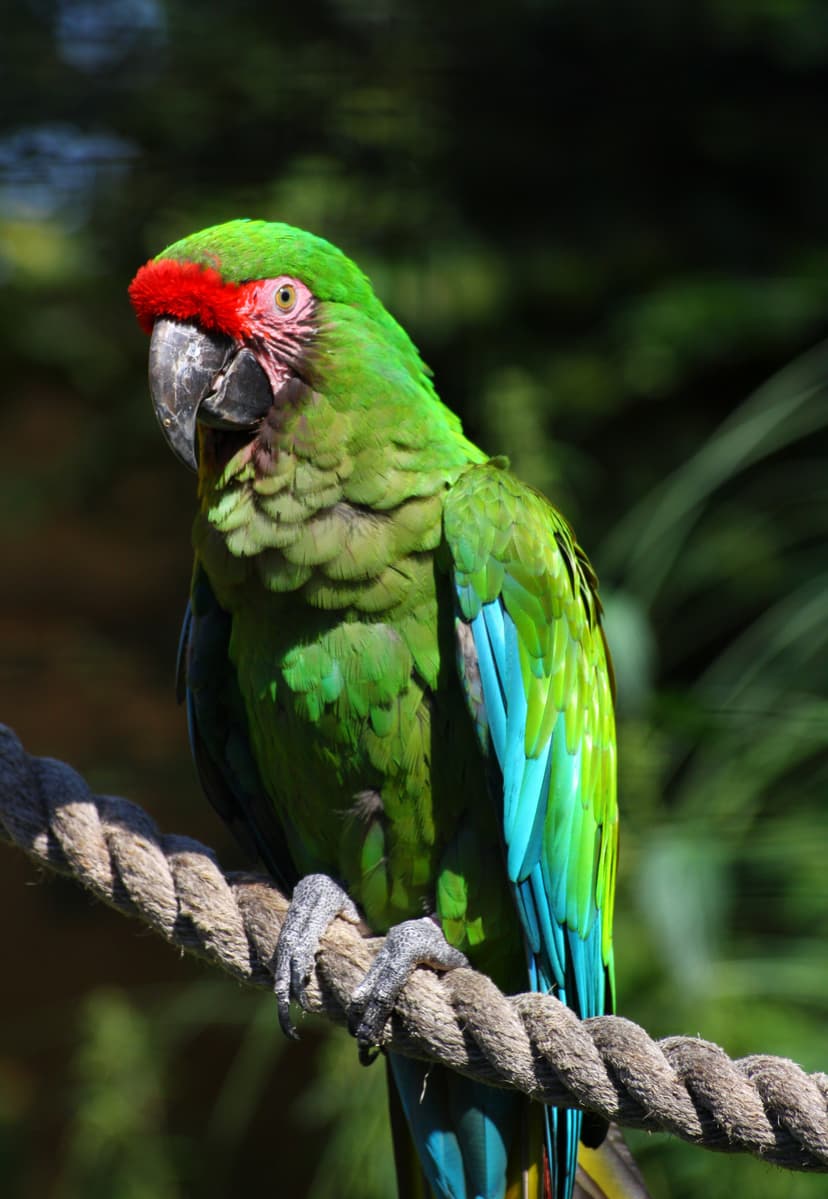
Military macaw
The military macaw (Ara militaris) is a medium to large parrot recognized by its predominantly green plumage accented with blue and yellow, and a distinctive red forehead patch, reminiscent of a military uniform. Native to a range stretching from west-central Mexico down to northern Argentina and Bolivia, these macaws are known for their loud vocalizations and social behavior. While facing conservation challenges, they are also commonly found in captivity due to their relative ease of breeding and long lifespan.
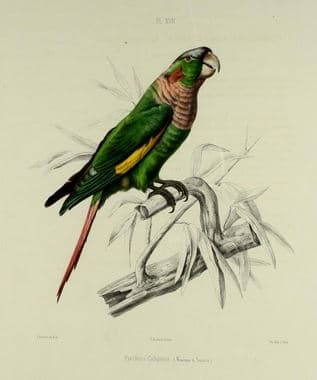
Flame-winged parakeet
The flame-winged parakeet, also known as the brown-breasted parakeet, is a medium-sized parrot endemic to the eastern Andean slopes of Colombia. This species is distinguished by its bright yellow primary coverts and bluish primaries, with vivid yellow and orange-red wing markings visible in flight, which give it its common name. It is currently facing threats from habitat loss and fragmentation, leading to a declining population.
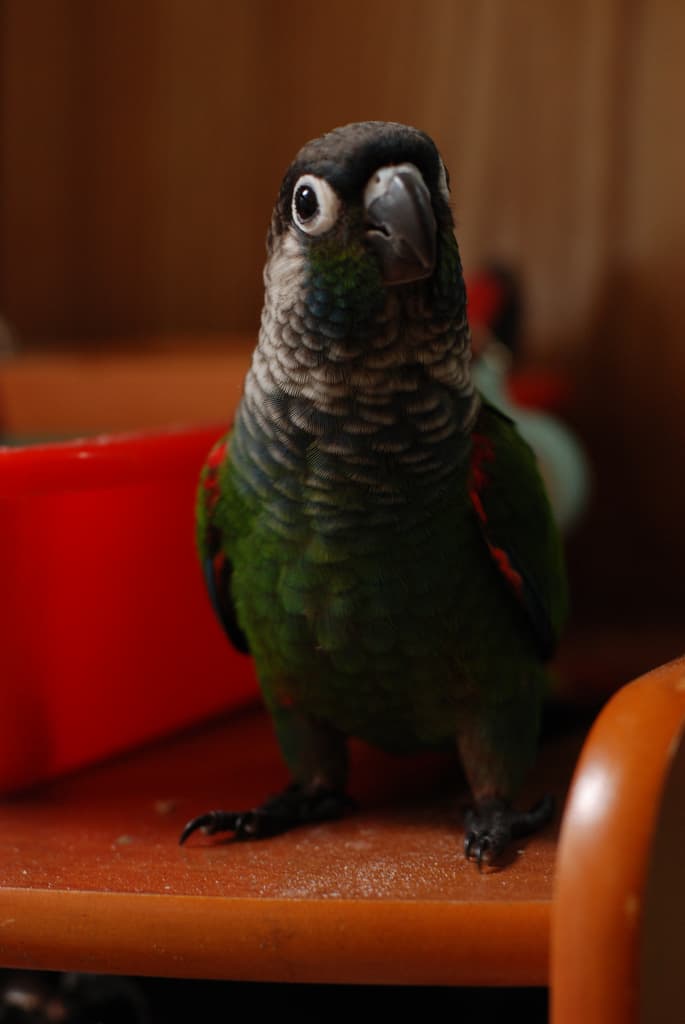
Pearly parakeet
The pearly parakeet (Pyrrhura lepida), also known as the pearly conure in aviculture, is a Vulnerable species endemic to Brazil. Its plumage features a striking combination of greens, blues, and reddish-browns, with scaling on its breast giving it a pearly appearance. The species inhabits humid forests and is threatened primarily by habitat loss due to deforestation.