
Hyacinth macaw
The hyacinth macaw, also known as the hyacinthine macaw, is the largest parrot species, native to central and eastern South America. It is distinguished by its entirely cobalt-blue plumage and its impressive size, reaching up to one meter in length. Unfortunately, habitat loss and illegal trapping for the pet trade have led to its classification as Vulnerable, with strict protections in place.
Key Facts
- ›It is the largest parrot species in the world by length, reaching up to 1 meter (3 ft 3 in).
- ›Its plumage is predominantly cobalt blue, with a distinct vibrant yellow cere and eye-ring.
- ›The hyacinth macaw's diet primarily consists of nuts from specific palm species, possessing powerful beaks capable of cracking very hard shells.
- ›Habitat loss due to cattle ranching, agriculture, and illegal trapping for the pet trade are major threats to its survival.
- ›It is listed as Vulnerable on the IUCN Red List and protected by CITES Appendix I.
- ›Limited tool use has been observed in both wild and captive individuals, often involving chewed leaves or wood pieces to aid in feeding.

Hyacinthine Macaw
South America
Semi-Open, Wooded Habitats, Savannah Grasslands, Dry Thorn Forests, Palm Stands, Swamps
Cobalt Blue, Lighter Blue, Grey, Black, Vibrant Yellow
- Largest parrot by length in the world
- Entirely cobalt-blue plumage
- Strong, powerful beak capable of cracking hard nuts
- Vibrant yellow cere and eye-ring
Nuts From Specific Palm Species, Fruits, Other Vegetable Matter
Noisy, Fearless, Curious, Sedentary, Predictable
Tree Cavities, Cliff Faces, Enlarged Existing Holes In Trees
About Hyacinth macaw
The hyacinth macaw (Anodorhynchus hyacinthinus), also known as the hyacinthine macaw, holds the distinction of being the world's largest parrot species by length. Native to central and eastern South America, this magnificent bird is characterized by its striking, entirely cobalt-blue plumage, accented by a vibrant yellow eye-ring and a patch of yellow skin beneath its beak. Reaching up to a meter in length, the hyacinth macaw possesses an exceptionally powerful beak, capable of cracking exceptionally hard nuts, including those from specific palm species that form a staple of its diet. They are also known to travel considerable distances to find ripe food sources.
Habitat and Distribution
These parrots are found in three primary regions within South America: the Pantanal of Brazil and adjacent eastern Bolivia and Paraguay; the cerrado regions of eastern interior Brazil; and the open areas associated with major river systems in the eastern Amazon Basin. They generally prefer semi-open, wooded habitats, often avoiding dense, humid forests. Their preferred environments include savannah grasslands, dry thorn forests known as caatinga, and palm stands or swamps. Notably, they show a strong preference for anthropogenic areas, particularly cattle ranches, where they are often found interspersed with savannas.
Diet and Behavior
The hyacinth macaw's diet is highly specialized, relying heavily on the nuts of certain palm trees, such as the acuri and bocaiuva palms. Their powerful beaks are essential for processing these hard nuts, and in some instances, they can only digest them after they have passed through the digestive system of cattle. Limited tool use has been observed, with individuals using chewed leaves or wood pieces to stabilize nuts while feeding. They are described as noisy, fearless, curious, sedentary, and predictable birds.
Reproduction and Lifespan
Nesting typically occurs between July and December, with nests constructed in tree cavities or cliff faces, predominantly in mature Manduvi trees in the Pantanal. The clutch size is usually one or two eggs, though often only one chick survives due to competition for food. The incubation period lasts about a month, and fledglings typically leave the nest around 110 days of age, remaining dependent on their parents for up to six months. Hyacinth macaws reach sexual maturity around seven years of age.
Conservation Concerns
The hyacinth macaw faces significant threats, primarily habitat loss due to cattle ranching, agriculture, and infrastructure development. The illegal trapping of wild birds for the pet trade has also severely impacted their populations. Consequently, the species is classified as Vulnerable on the IUCN Red List and is protected by CITES Appendix I, which restricts international trade. Conservation efforts include research, the creation of artificial nests, and raising awareness among landowners to protect remaining habitats and nesting sites.
Source: Wikipedia ↗
Frequently Asked Questions
What is the hyacinth macaw's conservation status?
The hyacinth macaw is classified as Vulnerable on the IUCN Red List. This is due to significant population declines caused by habitat loss and illegal trapping for the pet trade. It is also protected under CITES Appendix I to regulate international trade.
What is unique about the hyacinth macaw's diet?
The hyacinth macaw has a specialized diet primarily consisting of nuts from specific palm species like the acuri and bocaiuva. They possess exceptionally strong beaks, capable of cracking extremely hard nuts, including coconuts and macadamia nuts. In some cases, they can only consume certain nuts after they have passed through the digestive system of cattle.
Where does the hyacinth macaw live?
The hyacinth macaw is native to central and eastern South America. Its primary range includes the Pantanal region of Brazil and adjacent areas in Bolivia and Paraguay, as well as cerrado regions in eastern Brazil and areas along major rivers in the Amazon Basin.
How large is a hyacinth macaw?
The hyacinth macaw is the largest parrot species in the world by length. It measures approximately 1 meter (3 ft 3 in) from the top of its head to the tip of its tail and typically weighs between 1.2 and 1.7 kg (2 lb 10 oz to 3 lb 12 oz).
What are the main threats to the hyacinth macaw population?
The main threats are habitat loss and alteration due to cattle ranching, agriculture, and hydroelectric developments. The illegal trapping of wild birds for the pet trade also significantly impacts their numbers. Additionally, annual grass fires can destroy their essential nesting trees.
Does the hyacinth macaw exhibit tool use?
Yes, limited tool use has been observed in hyacinth macaws. This behavior has been documented in both wild and captive birds and often involves using chewed leaves or pieces of wood to help stabilize nuts while they are being eaten, preventing them from slipping.
Related Parrot species

Elegant parrot
The elegant parrot (Neophema elegans) is a small parrot species native to Australia, belonging to the Psittaculidae family. It is distinguished by its predominantly golden olive plumage, with a distinctive blue frontal band and yellow abdomen, and is one of six species of grass parrots in the genus Neophema.

Pesquet's parrot
Pesquet's parrot is a large, distinctive parrot native to the hill and montane rainforests of New Guinea. It is characterized by its black plumage with striking red markings on its belly and wings, and a unique bare, black facial skin giving it a vulture-like appearance. Primarily feeding on figs and other fruits, this species is known for its specialized diet and is currently listed as Vulnerable due to overhunting and habitat loss.
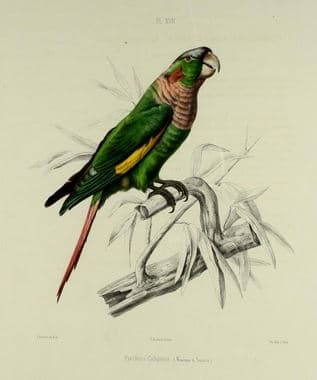
Flame-winged parakeet
The flame-winged parakeet, also known as the brown-breasted parakeet, is a medium-sized parrot endemic to the eastern Andean slopes of Colombia. This species is distinguished by its bright yellow primary coverts and bluish primaries, with vivid yellow and orange-red wing markings visible in flight, which give it its common name. It is currently facing threats from habitat loss and fragmentation, leading to a declining population.