
Pesquet's parrot
Pesquet's parrot is a large, distinctive parrot native to the hill and montane rainforests of New Guinea. It is characterized by its black plumage with striking red markings on its belly and wings, and a unique bare, black facial skin giving it a vulture-like appearance. Primarily feeding on figs and other fruits, this species is known for its specialized diet and is currently listed as Vulnerable due to overhunting and habitat loss.
Key Facts
- ›Endemic to the hill and montane rainforests of New Guinea.
- ›Features predominantly black plumage with bright red on the belly, uppertail coverts, and wing panels.
- ›Possesses bare black facial skin and a long, hooked bill, contributing to a vulture-like profile.
- ›Feeds almost exclusively on figs and other fruits, with flowers and nectar also consumed.
- ›Typically observed in pairs or small groups of up to 20 individuals.
- ›Classified as Vulnerable on the IUCN Red List due to hunting and habitat loss.

Vulturine Parrot, Bare-Headed Parrot
New Guinea
Hill Rainforests, Montane Rainforests
- Bare black facial skin
- Long, hooked bill
- Vulture-like profile
- Small dull red spot behind the eye in adult males
Figs, Other Fruit, Flowers, Nectar
Not Specified In Text
Not Specified In Text
Nest in a large hollow in a tree
About Pesquet's parrot
Pesquet's parrot, scientifically known as Psittrichas fulgidus, is a large and distinctive avian species found exclusively in the hill and montane rainforests of New Guinea. It is the sole member of its genus, Psittrichas, and belongs to the Old World parrot family, Psittaculidae. The parrot is immediately recognizable by its predominantly black plumage, accented by striking red coloration on its belly, uppertail coverts, and wing panels. A unique characteristic is its bare black facial skin and a long, hooked bill, which together create a profile reminiscent of a vulture, leading to its alternative common names.
Diet and Behavior
This species is a highly specialized frugivore, with its diet consisting almost entirely of figs, though it also consumes other fruits, flowers, and nectar. This dietary specialization is thought to be linked to its bare facial skin, which may help prevent feather matting from sticky fruit pulp. Pesquet's parrots are typically observed in pairs or in small social groups that can number up to 20 individuals. In flight, they exhibit a characteristic alternation between rapid flapping and short glides. Seasonally, they may be nomadic within their range in response to the availability of fruit.
Reproduction
Little is documented regarding the breeding habits of Pesquet's parrot in the wild. Nests are typically found in large tree hollows, where females lay clutches of two eggs. Birds have been observed in breeding condition between February and May, with fledged juveniles sighted in December, suggesting a breeding cycle that spans these months.
Conservation Status
Pesquet's parrot is currently listed as Vulnerable on the IUCN Red List of Threatened Species. This status is a consequence of significant pressures from overhunting, driven by the high value placed on its feathers, and ongoing habitat loss. The species is also listed on Appendix II of CITES, indicating that international trade is regulated to prevent over-exploitation.
Source: Wikipedia ↗
Frequently Asked Questions
What is Pesquet's parrot known for?
Pesquet's parrot is notable for its striking appearance, featuring black plumage with vivid red accents and a bare, black face that gives it a vulture-like profile. It is also recognized for its specialized frugivorous diet, primarily consisting of figs.
Where does Pesquet's parrot live?
This species is endemic to the hill and montane rainforests of New Guinea. Its natural habitat is restricted to these specific forest ecosystems on the island.
What does Pesquet's parrot eat?
Pesquet's parrot is a highly specialized frugivore, meaning its diet consists almost exclusively of fruits. It feeds on various species of figs and also consumes other fruits, flowers, and nectar.
What is the conservation status of Pesquet's parrot?
Pesquet's parrot is evaluated as Vulnerable on the IUCN Red List of Threatened Species. This status is attributed to threats from overhunting, as its feathers are highly prized, and ongoing habitat loss.
What are the distinctive physical features of Pesquet's parrot?
Its most distinctive features include its bare black facial skin, a long, hooked bill, and its plumage which is black with a bright red belly, uppertail coverts, and wing panels. Adult males also have a small dull red spot behind the eye.
Are Pesquet's parrots social?
Yes, Pesquet's parrots are typically seen in pairs or in groups of up to 20 individuals. They exhibit social behavior in their natural environment.
Related Parrot species
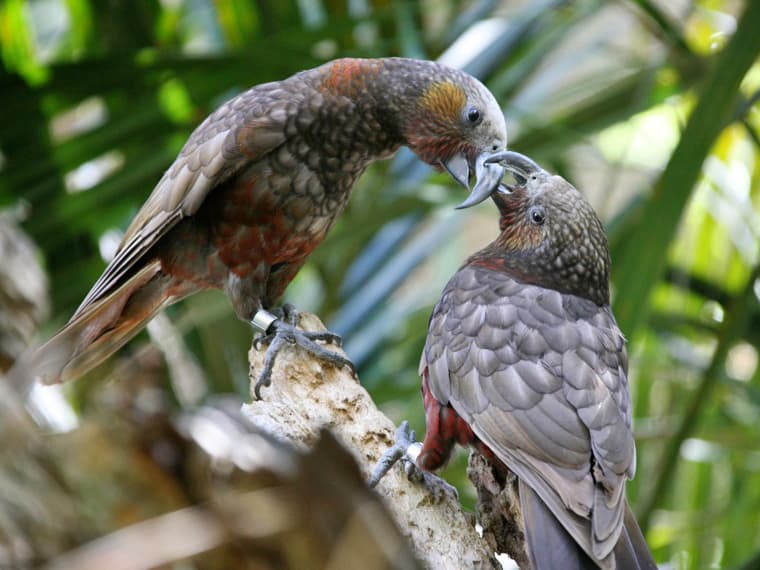
New Zealand kākā
The New Zealand kākā (Nestor meridionalis) is a large, endangered parrot native to the forests of New Zealand. Known for its distinctive brown and green plumage with scarlet flashes, it is an arboreal species that plays a vital role in its ecosystem through its varied diet, which includes fruits, seeds, nectar, and sap. Its conservation is a priority due to significant population declines caused by habitat loss and introduced predators.
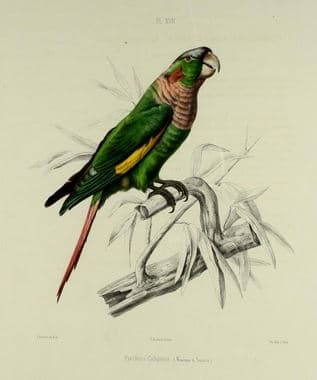
Flame-winged parakeet
The flame-winged parakeet, also known as the brown-breasted parakeet, is a medium-sized parrot endemic to the eastern Andean slopes of Colombia. This species is distinguished by its bright yellow primary coverts and bluish primaries, with vivid yellow and orange-red wing markings visible in flight, which give it its common name. It is currently facing threats from habitat loss and fragmentation, leading to a declining population.

Hyacinth macaw
The hyacinth macaw, also known as the hyacinthine macaw, is the largest parrot species, native to central and eastern South America. It is distinguished by its entirely cobalt-blue plumage and its impressive size, reaching up to one meter in length. Unfortunately, habitat loss and illegal trapping for the pet trade have led to its classification as Vulnerable, with strict protections in place.