
Iris lorikeet
The iris lorikeet is a small, predominantly green lorikeet found in the forests and woodlands of Timor and Wetar in the Lesser Sunda Islands. Its distinctive plumage includes a red forehead and a purple band over the eyes, with variations between males and females. Due to habitat loss and trapping, it is currently listed as Near Threatened.
Key Facts
- ›Measures up to 20 cm (8 inches) in length.
- ›Possesses a green body with pale-green striations on the underside.
- ›Distinguished by a red forehead and a purple band extending from the eyes over the ears.
- ›Inhabits forests and woodlands from sea level up to 1,500 meters.
- ›Typically observed in small flocks.
- ›Classified as near Threatened on the IUCN Red List.

Lesser Sunda Islands
Forests, Woodlands
Red Forehead, Purple Band From Eye Over Ear, Pale-Green Transverse Striations On Underside
About Iris lorikeet
The iris lorikeet (Trichoglossus iris) is a small parrot species that inhabits the islands of Wetar and Timor in the Lesser Sunda Islands. Measuring up to 20 cm in length, it is predominantly green with pale-green transverse striations on its underside. This lorikeet is easily identified by its striking head plumage, which typically features a red forehead and a distinct purple band extending from the eyes over the ears.
Habitat and Distribution
This species is found in forests and woodlands across its native islands, occupying elevations from sea level up to 1,500 meters. The iris lorikeet is usually observed in small flocks, indicating a social disposition. Its geographic range is limited to these specific islands in the Lesser Sundas.
Description and Variation
The iris lorikeet's most notable colors are its green body, red forehead, and purple eye band. While males and females are largely similar, the female's red coloration on the head is generally paler and less extensive. Juveniles exhibit duller versions of these colors, with brown irises and bills.
Conservation Status
The iris lorikeet is currently listed as Near Threatened on the IUCN Red List of Threatened Species. This classification is due to several factors, including ongoing habitat loss, its restricted geographic range, and the detrimental impact of illegal trapping for the caged-bird trade. The species is also listed on Appendix II of CITES, which regulates the international trade of endangered species.
Source: Wikipedia ↗
Frequently Asked Questions
What does the iris lorikeet look like?
The iris lorikeet is a small bird, approximately 20 cm long, with predominantly green plumage. It is characterized by a red forehead and a distinctive purple band that runs from its eyes over its ears. Its beak is red-orange, and its irises are orange.
Where can the iris lorikeet be found?
This species is native to the islands of Wetar and Timor, located in the Lesser Sunda Islands. It inhabits forests and woodlands across these islands, from sea level up to altitudes of 1,500 meters.
Are there differences between male and female iris lorikeets?
Males and females are nearly identical, though the female's red on the head is typically paler and covers a smaller area. Juveniles resemble females but have a brownish bill, brown irises, and duller purple bands on their heads.
What is the conservation status of the iris lorikeet?
The iris lorikeet is evaluated as Near Threatened on the IUCN Red List. This status is attributed to ongoing habitat loss, its limited geographic range, and the pressures of illegal trapping for the pet trade.
Does the iris lorikeet live alone or in groups?
Iris lorikeets are generally found in small flocks, indicating a social nature. They are not typically solitary birds in their natural habitat.
Related Parrot species

Duchess lorikeet
The Duchess lorikeet (Vini margarethae) is a species of parrot native to the Solomon Islands archipelago. This vibrantly colored bird, primarily bright red with distinctive yellow and purple markings, inhabits lowland and montane forests, as well as plantations. It is currently listed as Least Concern but faces threats from habitat loss and potential large-scale pet trade.

Goldie's lorikeet
Goldie's lorikeet is a distinctive parrot species native to the highlands of New Guinea. It is recognized for its vibrant, multi-colored head plumage, which includes red, blue, and purple, contrasting with its predominantly green body and yellowish-streaked chest. This species is known for its quiet and non-aggressive temperament, making it a well-regarded pet.
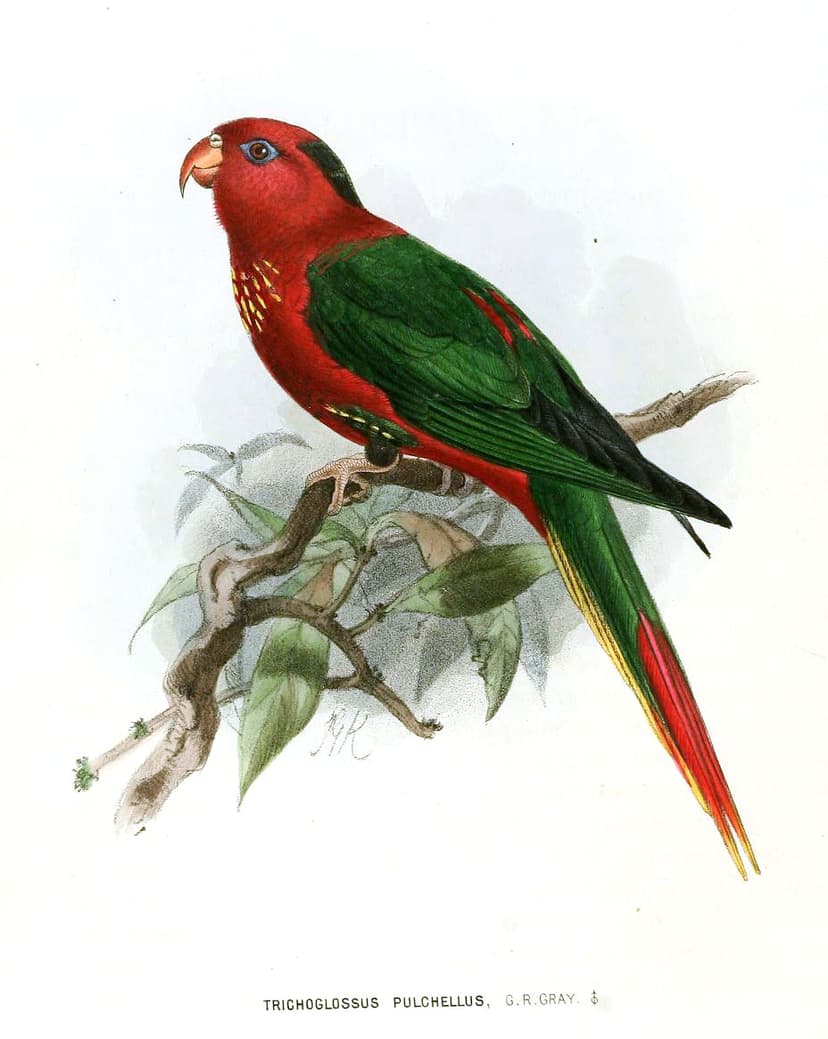
Fairy lorikeet
The fairy lorikeet (Charmosynopsis pulchella) is a small, vibrantly colored parrot native to New Guinea. Primarily red with green wings and yellow accents, it inhabits moist lowland and montane forests. Distinctive subspecies exist, differing in the extent of yellow and green markings, particularly on the breast and rump.