
Lilian's lovebird
Lilian's lovebird, also known as the Nyasa lovebird, is a small African parrot characterized by its predominantly green plumage with orange on its upper chest and head. It is the smallest parrot found on mainland Africa and is endemic to a specific region within southern Africa. This species is notable for its difficulty to breed in captivity and its strong pair bonds, mating for life.
Key Facts
- ›The Lilian's lovebird measures approximately 13 cm (5 inches) in length.
- ›Its plumage is primarily green, accented with orange on the head, neck, and upper chest.
- ›It is the smallest parrot species found on mainland Africa.
- ›Lilian's lovebirds feed on grass seeds, millet, wild rice, flowers, and fruits.
- ›They are endemic to Malawi, Mozambique, Tanzania, Zambia, and Zimbabwe.
- ›In captivity, this species is considered uncommon and challenging to breed.

Nyasa Lovebird
Africa
Miombo Woodlands, Forests
White Eyerings, Smallest Parrot On Mainland Africa
Grass Seeds, Millet, Wild Rice, Flowers, Fruit
Mates For Life, Prone To Loneliness In Captivity
Roofless Nests In Tree Crevices
About Lilian's lovebird
Lilian's Lovebird: A Small, Distinctive African Parrot
Lilian's lovebird, scientifically known as Agapornis lilianae and often referred to as the Nyasa lovebird, is a small parrot species endemic to a specific region of Africa. It is distinguished by its predominantly green plumage, accented with orange coloration on its head, neck, and upper chest, and complemented by white eyerings. Measuring approximately 13 cm (5 inches) in length, it holds the distinction of being the smallest parrot found on mainland Africa.
Distribution and Habitat
This species is native to Malawi, Mozambique, Tanzania, Zambia, and Zimbabwe. Historically found in broader areas, its distribution is becoming increasingly confined, particularly to Liwonde National Park in Malawi. Their natural habitat includes Miombo woodlands and surrounding forests, though these areas are under pressure from agricultural expansion, leading to habitat fragmentation and loss outside protected zones.
Diet and Breeding
Lilian's lovebirds are primarily granivorous and frugivorous, feeding on a diet of grass seeds, millet, wild rice, flowers, and various fruits. Their breeding season typically spans from January to March and again in June and July. They construct roofed nests within tree crevices. In captivity, a clutch usually consists of three to eight white eggs, with incubation lasting around 22 days. The chicks typically fledge approximately 44 days after hatching.
Captivity and Conservation
In aviculture, Lilian's lovebirds are known to be a challenging species to breed, with many breeders worldwide encountering difficulties. A notable characteristic is their strong pair bonding, as they mate for life, and a significant health concern in captivity is loneliness. While specific conservation status is not detailed, population estimates in the wild have been below 20,000 individuals, and threats from habitat exploitation and potential poisoning incidents are noted.
Source: Wikipedia ↗
Frequently Asked Questions
What are the distinguishing features of Lilian's lovebird?
Lilian's lovebird is primarily green with white eyerings, and features orange coloration on its head, neck, and upper chest. It is also noted for being the smallest parrot on mainland Africa.
Where are Lilian's lovebirds found in the wild?
These lovebirds are endemic to Malawi, Mozambique, Tanzania, Zambia, and Zimbabwe. Their distribution is increasingly restricted, with significant populations now found in Liwonde National Park in Malawi.
What do Lilian's lovebirds eat?
Their diet consists of grass seeds, millet, wild rice, flowers, and the seeds and fruit of various other plant species.
What is the breeding season for Lilian's lovebirds?
The breeding season typically occurs from January to March and again in June and July. They construct roofed nests in tree crevices.
Are Lilian's lovebirds easy to keep as pets?
Lilian's lovebirds are considered a difficult species to rear in captivity, and many breeders worldwide encounter struggles in successfully breeding them.
What is the typical lifespan of Lilian's lovebirds?
The lifespan for Lilian's lovebirds is generally between 10 to 12 years. A significant health concern for them in captivity is loneliness, as they are known to mate for life.
Related Parrot species

Black-cheeked lovebird
The black-cheeked lovebird is a small parrot species native to southwest Zambia, characterized by its predominantly green plumage, brown head, red beak, and distinctive white eyerings. It inhabits deciduous woodlands where permanent water sources are available and faces vulnerability due to habitat loss and desiccation of water bodies. These birds are known for their loud, piercing shrieks and can gather in large flocks, particularly during the dry season.
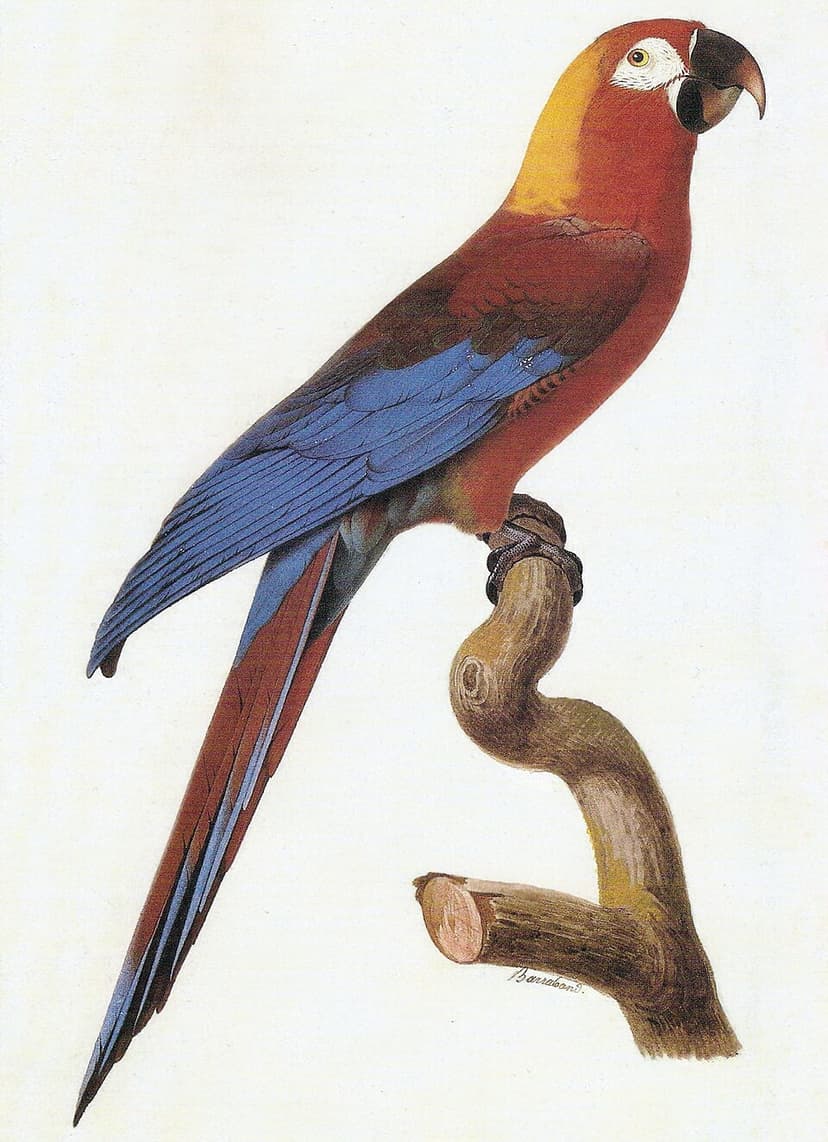
Cuban macaw
The Cuban macaw (Ara tricolor) was a species of macaw native to Cuba and Isla de la Juventud, becoming extinct in the late 19th century. It was one of the smallest macaws, characterized by a vibrant plumage of red, orange, yellow, green, brown, and blue. Its demise was attributed to hunting, habitat destruction, and possibly hurricanes, despite limited knowledge of its behavior.
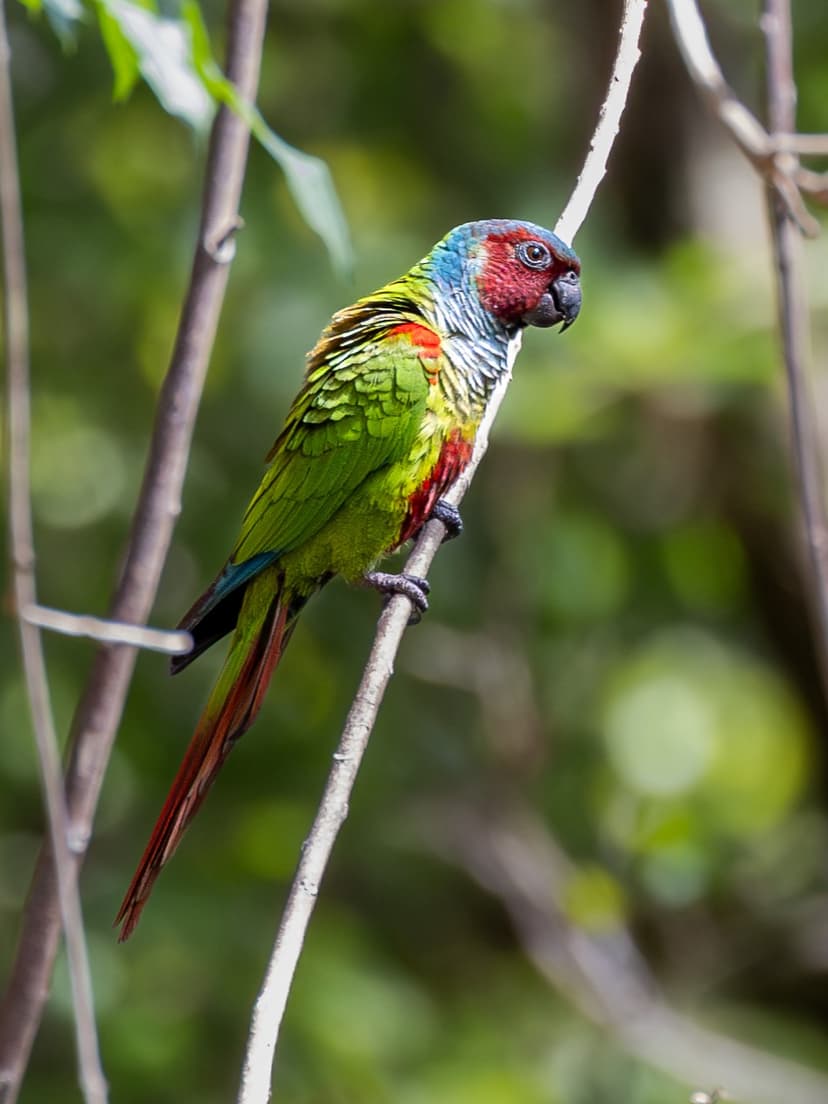
Pfrimer's parakeet
Pfrimer's parakeet, also known as Pfrimer's conure or maroon-faced conure, is a non-migratory parrot species endemic to the Caatinga forest of Brazil's Goiás and Tocantins regions. It is distinguished by its brown and red face, blue crown, and maroon tail, and is currently classified as endangered due to significant habitat loss from deforestation for agriculture.