
Purple-crowned lorikeet
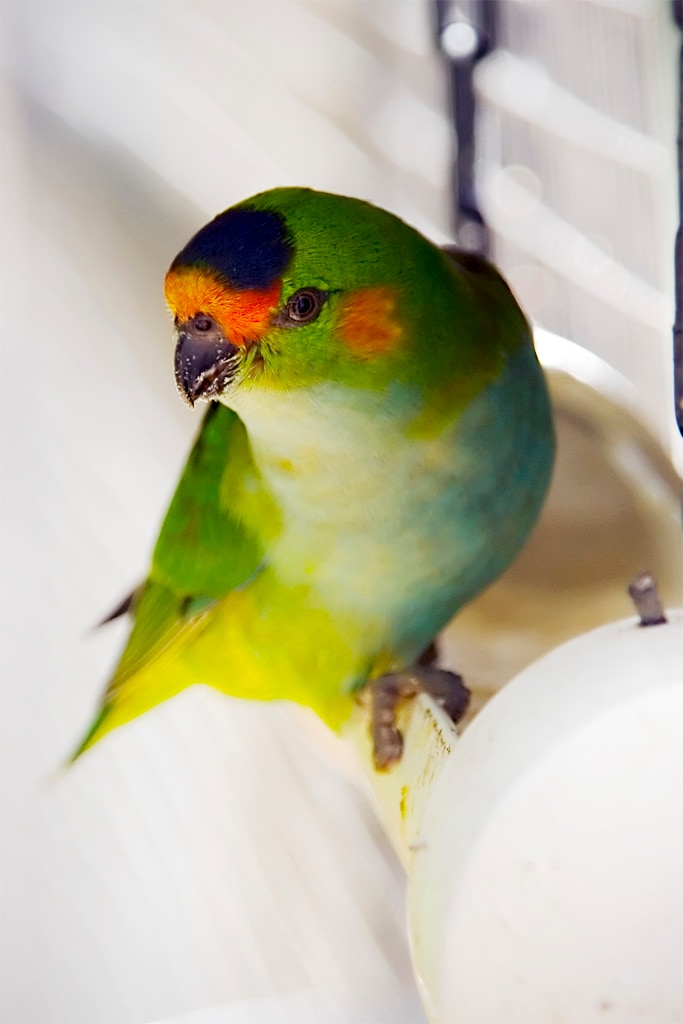
The Purple-crowned lorikeet is a small lorikeet native to southern Australia, distinguished by its vibrant purple crown, orange forehead, and powder blue chest. Primarily found in dry sclerophyll forests and mallee scrub, these gregarious birds are known for their swift flight and high-pitched calls. They are often seen in small groups but can gather in larger flocks, particularly when feeding on Eucalyptus and Melaleuca blossoms.
Key Facts
- ›Native to southern Australia, including parts of Western Australia, South Australia, and Victoria.
- ›Characterized by a distinctive purple crown, orange forehead, and powder blue chest.
- ›Feeds primarily on the blossoms of Eucalyptus and Melaleuca species.
- ›Typically found in small groups, but may form larger flocks, often alongside other lorikeet species.
- ›Nests in small, unlined hollows in eucalyptus trees.
- ›Has a reputation for being short-lived in captivity.
Porphyry-Crowned Lorikeet, Zit Parrot, Blue-Crowned Lorikeet, Purple-Capped Lorikeet, Lory, Cowara, Lorikeet, Purple-Capped Parakeet, Dietrichsen's Lory
Australia
Dry Sclerophyll Forest, Mallee Scrub, Town Parks and Gardens, Forest Canopy
Purple, Orange, Yellow-Orange, Green, Bronze, Powder Blue, Yellowish-Green, Orange-Red, Crimson
Dark Purple Crown, Yellow-Orange Forehead and Ear-Coverts, Powder Blue Chin, Chest, and Belly, Crimson Patches Under the Wings
Blossoms of Eucalyptus Species, Blossoms of Melaleuca Species, Boobialla
- High-Pitched Loud 'Tsit'
- Chattering While Eating
- Call Pitched Lower Than Little Lorikeet But Higher Than Musk Lorikeet
Small Unlined Hollow In Eucalyptus, Often With A Knot-Hole Entrance, Sometimes Nests In Colonies
About Purple-crowned lorikeet
The Purple-crowned lorikeet, scientifically known as Psitteuteles porphyrocephalus, is a small and vibrantly colored lorikeet native to the scrub and mallee regions of southern Australia. It is distinguished by its striking dark purple crown, a bright yellow-orange forehead and ear-coverts, and a conspicuous powder blue chin and chest. The upperparts are predominantly green, often tinted with bronze on the mantle and nape, while the thighs and under-tail coverts are yellowish-green. A notable feature, particularly visible in flight, are the crimson patches under its wings.
Distribution and Habitat
This species is found across the southern parts of Australia, with a range extending through southwest Western Australia, southern South Australia, and across Victoria to East Gippsland. It is also present on Kangaroo Island but is absent from Tasmania. The Purple-crowned lorikeet inhabits dry sclerophyll forests, mallee scrub, and is also commonly observed in town parks and gardens, especially where Eucalyptus trees are abundant and flowering. They tend to dwell in the forest canopy.
Behavior and Diet
The Purple-crowned lorikeet is a gregarious bird, often found in small groups. However, they are known to congregate in larger flocks, sometimes in the company of other lorikeet species such as the Little and Musk lorikeets. They are fast, straight flyers. Their diet primarily consists of the blossoms of various Eucalyptus and Melaleuca species, as well as the boobialla (Myoporum insulare). They are described as blossom nomads, reappearing in areas where they have not been seen for some time.
Breeding
The breeding season for the Purple-crowned lorikeet occurs between August and December, during which they produce one brood. Nests are typically simple, unlined hollows found in eucalyptus trees, often with a knot-hole entrance. Occasionally, these lorikeets will nest in colonies. A clutch usually contains between 2 to 4 matte white, roundish eggs, and the incubation period is approximately 17 days.
Aviculture
In captivity, Purple-crowned lorikeets have developed a reputation for being short-lived. They are not commonly encountered in aviaries outside of Australia.
Source: Wikipedia ↗
Frequently Asked Questions
What are the distinctive physical features of the Purple-crowned lorikeet?
The Purple-crowned lorikeet is a small bird, measuring around 15 cm long. It is recognized by its dark purple crown, a yellow-orange forehead and ear-coverts, and a conspicuous powder blue chin, chest, and belly. Green upperparts with bronze tints and a tail with some orange-red coloration at the bases of the lateral feathers are also characteristic.
Where does the Purple-crowned lorikeet live?
This lorikeet is found in the scrub and mallee regions of southern Australia. Its range includes southwest Western Australia, southern South Australia east of the Eyre Peninsula, and across Victoria to East Gippsland. It is also present on Kangaroo Island but not in Tasmania.
What does the Purple-crowned lorikeet eat?
As a gregarious blossom nomad, the Purple-crowned lorikeet feeds on the blossoms of various Eucalyptus and Melaleuca species. The boobialla (Myoporum insulare) is also among its food sources. They are often found in areas where these trees are flowering.
What is the breeding behavior of the Purple-crowned lorikeet?
The breeding season for the Purple-crowned lorikeet is from August to December, during which they lay one brood. They nest in small, unlined hollows in eucalyptus trees, sometimes with a knot-hole entrance, and occasionally nest in colonies. A clutch typically consists of 2–4 matte white, roundish eggs.
Are Purple-crowned lorikeets social birds?
Yes, Purple-crowned lorikeets are generally found in small groups and may congregate in larger flocks. They are often seen in the company of other lorikeet species like the Little and Musk lorikeets, indicating a social nature.
What sounds does the Purple-crowned lorikeet make?
The call of the Purple-crowned lorikeet is described as a high-pitched loud 'tsit', which also gives it the nickname 'zit parrot'. They also produce chattering sounds while eating in treetops. Their call is pitched lower than the little lorikeet but higher than the musk lorikeet.
Related Parrot species
Caatinga parakeet
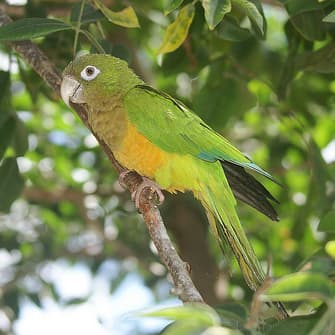
The Caatinga parakeet is a species of parrot endemic to eastern Brazil, found in dry landscapes characterized by thorny vegetation. It is distinguished by its predominantly green plumage with yellow-orange underparts and a pale brown forecrown, and it is known for its high-pitched screeching flight calls. While its diet is not fully investigated, it includes fruits, cactus, and agricultural crops.
Little lorikeet
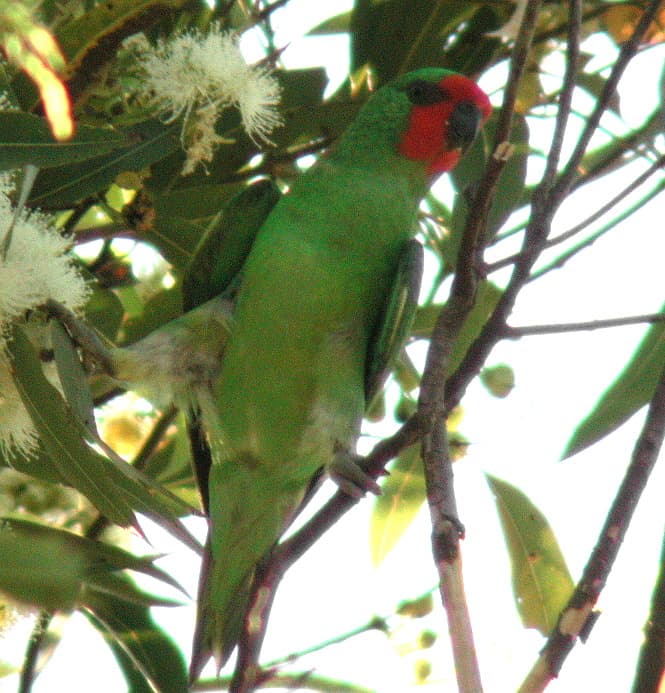
The Little lorikeet (Psitteuteles pusillus) is a small parrot endemic to Australia, characterized by its predominantly green plumage and a distinctive red face. It inhabits temperate and subtropical forests, feeding primarily on nectar and pollen from flowering trees. This species is known for its gregarious nature, often flocking with other lorikeet species.

Black-cheeked lovebird
The black-cheeked lovebird is a small parrot species native to southwest Zambia, characterized by its predominantly green plumage, brown head, red beak, and distinctive white eyerings. It inhabits deciduous woodlands where permanent water sources are available and faces vulnerability due to habitat loss and desiccation of water bodies. These birds are known for their loud, piercing shrieks and can gather in large flocks, particularly during the dry season.