
Malherbe's parakeet
Malherbe's parakeet, also known as the orange-fronted parakeet, is a small parrot endemic to New Zealand's South Island. It is distinguished by a vibrant orange frontal band and a lemon-yellow crown, though these are absent in juveniles. This species is critically endangered due to habitat loss and predation by introduced mammals, leading to extensive conservation efforts including translocations to predator-free islands.
Key Facts
- ›Endemic to a few valleys in New Zealand's South Island.
- ›Characterized by a bright blue-green body, azure blue wing feathers, an orange frontal band, and a lemon-yellow crown.
- ›Primarily inhabits Nothofagus (beech) forests.
- ›Feeds on seeds, flowers, buds, and invertebrates, with diet varying seasonally.
- ›Nests in natural hollows or cavities of mature beech trees.
- ›Classified as Critically Endangered by the IUCN and Nationally Critical by New Zealand.
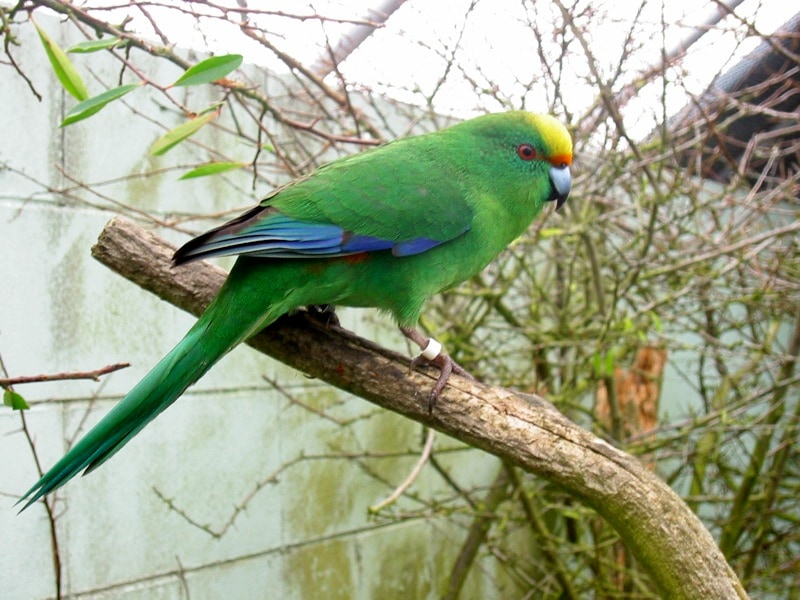
Orange-Fronted Parakeet, KāKāRiki Karaka, Orange-Fronted KāKāRiki
New Zealand
Nothofagus/Fuscospora Forest, Alpine Tussock Shrubland, Subalpine Tussock Shrubland, Open Matagouri Shrubland
Blue-Green, Azure Blue, Orange, Lemon Yellow
Orange Frontal Band, Lemon Yellow Crown, Orange Rump Patches
Seeds, Beech Flowers, Buds, Invertebrates, Herbs, Ferns
- Natural Hollows Or Cavities of Mature Beech Trees
- Pinus Radiata Forests
About Malherbe's parakeet
Malherbe's parakeet, scientifically known as Cyanoramphus malherbi and also referred to as the orange-fronted parakeet, is a small, distinctive parrot native exclusively to New Zealand. Its primary range is confined to a few valleys on the South Island, though conservation efforts have led to translocations to various islands and a protected mainland sanctuary. The species is characterized by its predominantly bright blue-green plumage, accented by azure blue feathers on its wings. Mature individuals are further distinguished by a vibrant orange frontal band and a lemon-yellow crown.
Taxonomy and Description
Historically, the classification of Malherbe's parakeet has been debated, with some ornithologists considering it a color morph of the yellow-crowned parakeet (Cyanoramphus auriceps). However, molecular genetic analysis has led to the current consensus that it is a distinct species. Adults measure approximately 20 cm in length. While juveniles share the blue-green body, they lack the distinctive orange frontal band and yellow crown, instead exhibiting a pale yellow band. Subtle differences in size, plumage, and habits also exist when comparing it to the yellow-crowned parakeet.
Distribution and Habitat
The natural distribution of Malherbe's parakeet is restricted to the South Branch Hurunui River Valley, Hawdon River Valley, and Poulter Valley on New Zealand's South Island. These areas are predominantly Nothofagus (beech) forests, though reports from alpine and subalpine shrubland also exist. Conservation initiatives have established populations on islands such as Te Hoiere/Maud Island and Oruawairua/Blumine Island, as well as at the Brook Waimārama Sanctuary.
Diet and Behavior
Malherbe's parakeets are often observed foraging in the canopy of beech trees, but they also feed in lower vegetation and on the ground. Their diet is varied, encompassing seeds, beech flowers, buds, and invertebrates, with a notable increase in insect consumption during spring. They are known to forage in mixed-species flocks. During seasons of abundant beech seed production, these seeds become a primary food source.
Breeding
These parakeets are monogamous and can breed throughout the year, with a peak between December and April. They typically nest in natural hollows or cavities within mature beech trees. A clutch usually consists of about seven eggs, and incubation lasts between 21 and 26 days, with the female undertaking the incubation and being fed by the male. Nestlings fledge between 43 and 71 days after hatching.
Conservation Status and Threats
Malherbe's parakeet is classified as Critically Endangered by the IUCN and Nationally Critical in New Zealand. This dire status is largely attributed to predation by introduced mammalian pests such as stoats, rats, and possums, which target eggs and nestlings. Habitat destruction and fragmentation have also played a role in their decline. Conservation strategies focus heavily on predator management, captive breeding programs, and translocations to predator-free environments. The Brook Waimārama Sanctuary currently represents a significant stronghold for the species, boasting a growing population due to its pest-free status.
Source: Wikipedia ↗
Frequently Asked Questions
What are the distinguishing features of Malherbe's parakeet?
Malherbe's parakeets are primarily bright blue-green with azure blue wing feathers. Mature birds possess a distinctive orange frontal band and a lemon-yellow crown, which are absent in juveniles who have a pale yellow band.
Where does Malherbe's parakeet live?
This species is native to only a few valleys in New Zealand's South Island, specifically the South Branch Hurunui River Valley, Hawdon River Valley, and the Poulter Valley. It has also been translocated to several islands and a fenced mainland sanctuary.
What is the primary diet of Malherbe's parakeet?
Their diet consists of various seeds, beech flowers, buds, and invertebrates. During spring, caterpillars and other insects become a significant part of their diet, and beech seeds are dominant during mast years.
What is the conservation status of Malherbe's parakeet?
Malherbe's parakeet is classified as Critically Endangered by the International Union for Conservation of Nature (IUCN) and Nationally Critical by the New Zealand Threat Classification System. This is largely due to predation by introduced mammalian pests.
How does Malherbe's parakeet breed?
They are monogamous and can nest year-round, with a peak breeding season between December and April. They primarily nest in tree cavities, laying about seven eggs which are incubated by the female for 21-26 days.
Related Parrot species

Orange-fronted hanging parrot
The Orange-fronted hanging parrot is a small parrot species endemic to the forests of New Guinea and nearby islands. It is characterized by its predominantly green plumage, with distinct color differences between males and females on their forecrowns and cheeks, and both sexes featuring a red throat patch and rump. This species is notable for its small size and specific geographic distribution.

Orange-bellied parrot
The Orange-bellied parrot is a small, critically endangered parrot endemic to southern Australia, notable for being one of only three parrot species that migrate. It breeds in Tasmania and winters on the mainland coast, distinctive for its bright green plumage, yellow underparts, and a striking orange belly patch in males. Extensive captive breeding programs are in place to prevent its extinction.

Blue-throated macaw
The blue-throated macaw (Ara glaucogularis), also known as the Caninde or Wagler's macaw, is a critically endangered species endemic to a small region of north-central Bolivia. It is distinguished by its striking turquoise-blue upperparts, bright yellow underparts, and a distinctive blue throat patch with unique feather patterns on its bare facial skin. This magnificent bird plays a significant role in Bolivian culture and is protected by law as a natural patrimony of the nation.