
Orange-bellied parrot
The Orange-bellied parrot is a small, critically endangered parrot endemic to southern Australia, notable for being one of only three parrot species that migrate. It breeds in Tasmania and winters on the mainland coast, distinctive for its bright green plumage, yellow underparts, and a striking orange belly patch in males. Extensive captive breeding programs are in place to prevent its extinction.
Key Facts
- ›Small parrot, approximately 20 cm (8 in) in length.
- ›Exhibits sexual dimorphism, with males being more brightly colored than females.
- ›Migratory species, breeding in Tasmania and wintering on the southern Australian mainland coast.
- ›Feeds primarily on seeds and berries of coastal grasses and shrubs.
- ›Classified as critically endangered by the IUCN, with wild populations numbering less than 100.
- ›Subject to intensive captive breeding programs to ensure species survival.

Orange-Breasted Parrot, Yellow-Bellied Parrot, Orange-Bellied Grass-Parakeet, Trumped-Up Corella
Australia
- Saltmarsh
- Coastal Areas
- Beach and Dune Environments
- Estuaries and Lagoons
- Eucalypt Woodlands Bordering Button Grass Moors
Orange Belly Patch, Two-Toned Blue Frontal Band, Blue Outer Wing Feathers
Seeds, Berries, Coastal Grasses, Shrubs, Saltmarsh Species
- Single-note buzzing contact call
- Quickly repeated 'tzeet' alarm call with a buzzing quality
- Gurgle-buzz call by sentries
- Soft low-pitched chitting sounds when feeding
Hollows In Mature Trees, Nest Boxes
About Orange-bellied parrot
The Orange-bellied parrot (Neophema chrysogaster), also known by names such as the orange-breasted parrot, is a small, critically endangered parrot native to southern Australia. It holds the distinction of being one of only three parrot species that undertake migration. The species was first scientifically described by John Latham in 1790 and is noted for its striking plumage, particularly in adult males.
Description and Characteristics
Adult Orange-bellied parrots measure approximately 20 cm (8 inches) in length. They exhibit clear sexual dimorphism. The adult male is characterized by bright grass-green upperparts, yellow underparts, and a prominent orange patch on its belly. Both sexes and juveniles share a distinctive two-toned blue frontal band and blue outer wing feathers. Females and juveniles are generally duller green, with the female's orange belly patch being smaller and less distinct. The species' scientific name, chrysogaster, derives from Greek words meaning "golden belly," referencing this characteristic.
Distribution and Habitat
The Orange-bellied parrot is endemic to southern Australia, with its entire breeding population found solely in southwestern Tasmania. Here, they nest in eucalypt trees bordering button grass moors, typically within 30 km of the coast. Following the breeding season, the entire population migrates across Bass Strait to winter along the coast of southeastern mainland Australia. Their preferred wintering habitats are estuaries and lagoons containing salt marsh, where they forage on saltmarsh species, beach and dune plants, and various exotic weed species.
Diet
In their natural habitat, Orange-bellied parrots feed on a diet primarily consisting of seeds and berries from small coastal grasses and shrubs. Important food plants include beaded glasswort and shrubby glasswort, along with seeds from species like coast fescue and saltbush, and berries from plants such as Coprosma. They have also been observed consuming kelp.
Behaviour and Breeding
Orange-bellied parrots are generally monogamous in the wild, though captive males may mate with multiple females. Pairs may form either on the mainland before migration or upon arrival in Tasmania. Breeding is confined to southwestern Tasmania, with the season running from November to February. They nest in tree hollows, typically in mature eucalypts, with nests being cleaned by the female who then lays 3 to 6 white eggs at two-day intervals. The incubation period lasts 21–24 days, and the young fledge at 4–5 weeks old. The species is known to utter a single-note buzzing contact call, an alarm call described as a quickly repeated 'tzeet', and a gurgle-buzz call used by sentries.
Conservation Status and Threats
Regrettably, the Orange-bellied parrot is classified as critically endangered by the IUCN, with wild populations having fallen to alarmingly low numbers, though recent efforts have shown some recovery. Historically, its range has contracted due to habitat loss and degradation. Major threats include fragmentation and degradation of overwintering habitat, competition with introduced species, abandonment of breeding habitat due to altered fire regimes, and risks associated with a small population size, such as loss of genetic diversity, inbreeding, and stochastic environmental events. Introduced predators, disease, and disorientation from artificial lights during migration also pose threats. Intensive conservation programs, including captive breeding and reintroduction efforts, are underway to secure the future of this unique migratory parrot.
Source: Wikipedia ↗
Frequently Asked Questions
What makes the Orange-bellied parrot distinctive?
The Orange-bellied parrot is distinctive for its small size, migratory behavior, and the prominent orange patch on the male's belly. Males also display brighter green upperparts and yellow underparts compared to the duller green of females and juveniles, though all have a notable blue frontal band and blue outer wing feathers.
Where does the Orange-bellied parrot live?
This parrot is endemic to southern Australia. It breeds exclusively in the southwestern region of Tasmania and migrates across Bass Strait to spend the winter months along the coast of southeastern mainland Australia.
What is the conservation status of the Orange-bellied parrot?
The Orange-bellied parrot is listed as critically endangered on the IUCN Red List of Endangered Species. Wild populations have dwindled significantly, prompting extensive conservation efforts, including captive breeding programs.
What does the Orange-bellied parrot eat?
Their diet consists mainly of seeds and berries from small coastal grasses and shrubs. Favored food plants include beaded glasswort and shrubby glasswort, as well as seeds from various coastal plants and berries.
Are there differences between male and female Orange-bellied parrots?
Yes, the species exhibits sexual dimorphism. Adult males have bright grass-green upper parts, yellow underparts, and a distinct orange belly patch. Adult females and juveniles are duller green overall, with a less distinct and smaller orange belly patch.
Why is the Orange-bellied parrot considered endangered?
The primary reasons for its endangered status include habitat loss and degradation, particularly in its non-breeding range. Factors such as low breeding participation by females, climate change, habitat fragmentation, and the small population size increasing risks from genetic diversity loss, disease, and predation also contribute to its decline.
Related Parrot species
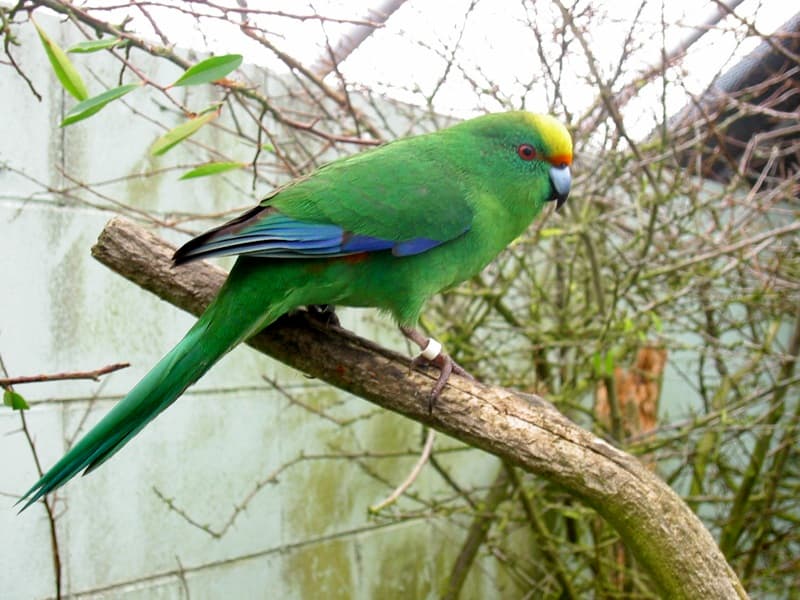
Malherbe's parakeet
Malherbe's parakeet, also known as the orange-fronted parakeet, is a small parrot endemic to New Zealand's South Island. It is distinguished by a vibrant orange frontal band and a lemon-yellow crown, though these are absent in juveniles. This species is critically endangered due to habitat loss and predation by introduced mammals, leading to extensive conservation efforts including translocations to predator-free islands.

Blue-throated macaw
The blue-throated macaw (Ara glaucogularis), also known as the Caninde or Wagler's macaw, is a critically endangered species endemic to a small region of north-central Bolivia. It is distinguished by its striking turquoise-blue upperparts, bright yellow underparts, and a distinctive blue throat patch with unique feather patterns on its bare facial skin. This magnificent bird plays a significant role in Bolivian culture and is protected by law as a natural patrimony of the nation.
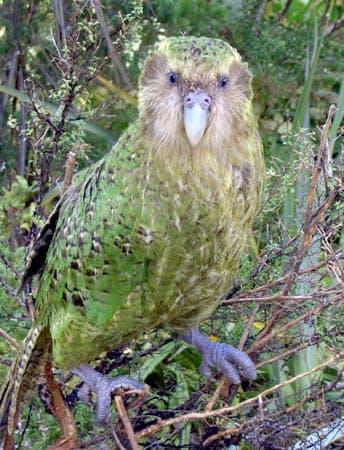
Kākāpō
The kākāpō, also known as the owl-parrot, is a unique, large, nocturnal, and flightless parrot endemic to New Zealand. It is distinguished by its finely blotched yellow-green plumage, owl-like facial disc, and exceptionally soft feathers. Historically significant to Māori culture, the kākāpō is now critically endangered due to introduced mammalian predators.