
Large fig parrot
Cyclopsitta desmarestii·Psittaculidae
The Large fig parrot, also known as the flame-headed fig parrot, is a small parrot species found in the forests of New Guinea and the West Papuan Islands. It is distinguished by its vibrant head coloration, featuring a red to orange cap, a blue eye patch, and a yellow face, set against a predominantly green body.
Key Facts
- ›Found in lowland and montane forests of New Guinea and West Papuan Islands.
- ›Distinctive head plumage includes a red/orange cap, blue eye patch, and yellow face.
- ›Both males and females have identical external appearances.
- ›Juveniles exhibit duller head colors compared to adults.
- ›Diet primarily consists of figs and potentially other fruits and seeds.
- ›Five subspecies are recognized across its geographic range.

Flame-Headed Fig Parrot, Desmarest's Fig Parrot
New Guinea, West Papuan Islands
Subtropical Or Tropical Moist Lowland Forest, Subtropical Or Tropical Mangrove Forest, Subtropical Or Tropical Moist Montane Forest
Red To Orange Cap, Light Blue Eye Patch, Yellow Face, Pale Turquoise Ring Tinged With Red
Figs
About Large fig parrot
The Large Fig Parrot
The Large fig parrot (Cyclopsitta desmarestii), also known by its common names flame-headed fig parrot and Desmarest's fig parrot, is a species of parrot belonging to the Psittaculidae family. This vibrant bird is native to the lush forests of New Guinea and the adjacent West Papuan Islands.
Description and Habitat
This small parrot is characterized by its striking head coloration. Adults typically display a red to orange cap, a contrasting light blue eye patch beneath the eye, and a yellow face. The body is predominantly green, often accented by a pale turquoise ring around the neck, which may show tinges of red. Notably, male and female adult Large fig parrots are externally identical. Juveniles share the adult plumage but tend to have duller colors on their heads.
Their natural habitat encompasses a range of forest types, including subtropical and tropical moist lowland forests, mangrove forests, and subtropical and tropical moist montane forests. This suggests an adaptability to various forested environments within its geographic range.
Subspecies and Distribution
Five subspecies of the Large fig parrot are recognized, reflecting variations and distributions across its extensive range:
- C. d. blythii: Found on Misool Island in the Raja Ampat Islands.
- C. d. occidentalis: Inhabits Salawati, Batanta Islands, the western Bird's Head Peninsula, and the Onin Peninsula in northwestern New Guinea.
- C. d. desmarestii: Native to the western regions of New Guinea, specifically the eastern parts of the Bird's Head Peninsula.
- C. d. godmani: Occurs in the southern lowlands of western and central New Guinea, from the Mimika River to the Fly River.
- C. d. cervicalis: Found in southeastern New Guinea, from the Fly River to the far eastern parts of the country.
Little is recorded about their specific diet in the wild beyond their name suggesting a preference for figs, and their typical lifespan or breeding habits are not detailed in available records.
Source: Wikipedia ↗
Frequently Asked Questions
What are the distinguishing features of the Large fig parrot?
The Large fig parrot is easily identified by its striking head plumage, which includes a red to orange cap, a light blue patch below its eye, and a yellow face. Its body is predominantly green, contrasting with a pale turquoise neck ring that may be tinged with red.
Where does the Large fig parrot naturally occur?
This species is native to the West Papuan Islands, Indonesia, and the southern and western regions of New Guinea, which includes both Indonesian and Papua New Guinean territories.
What kind of habitats does the Large fig parrot prefer?
The Large fig parrot inhabits a variety of forest ecosystems, including subtropical and tropical moist lowland forests, mangrove forests, and subtropical and tropical moist montane forests.
Are there differences between male and female Large fig parrots?
Adult male and female Large fig parrots are externally identical in appearance. Juveniles tend to have duller colors on their heads but otherwise resemble the adults.
How many subspecies of the Large fig parrot are there?
There are five recognized subspecies of the Large fig parrot: C. d. blythii, C. d. occidentalis, C. d. desmarestii, C. d. godmani, and C. d. cervicalis. These subspecies are distributed across different islands and regions of New Guinea and its surrounding islands.
Related Parrot species
Black-capped lory
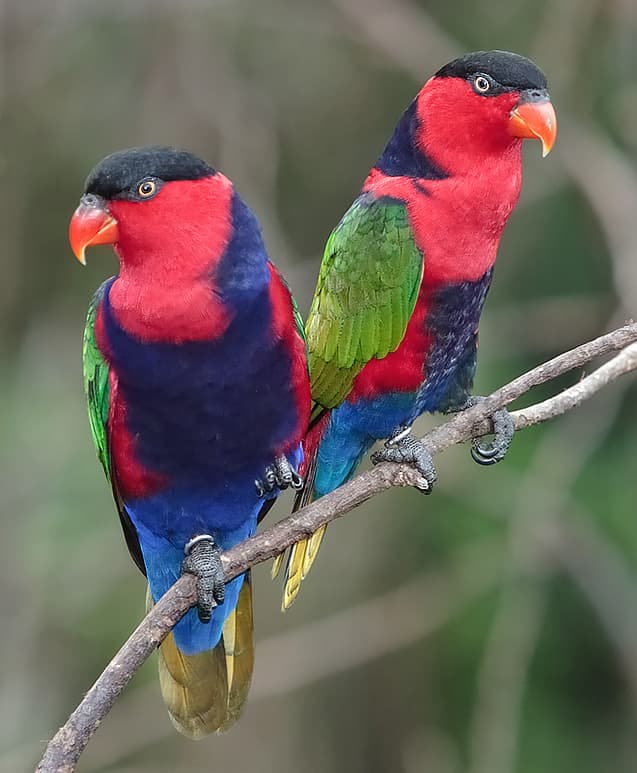
The Black-capped lory, also known as the western black-capped lory or tricolored lory, is a vibrant parrot native to New Guinea and its surrounding islands. This species is distinguished by its striking plumage, featuring a black cap, red head and body, green wings, and blue legs and belly, with variations among its seven recognized subspecies. Despite being generally widespread, one subspecies, cyanuchen, faces rarity with fewer than 5,000 individuals remaining.
Pacific parrotlet
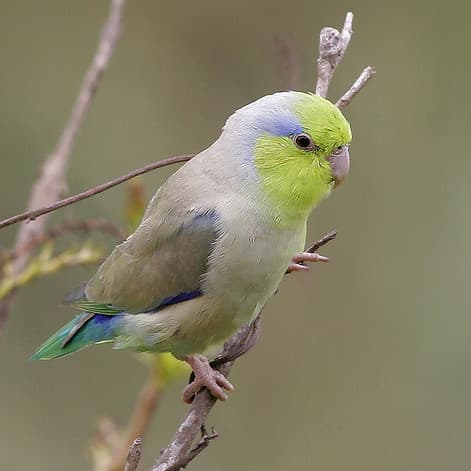
The Pacific parrotlet, scientifically known as Forpus coelestis, is a small parrot originating from South America, specifically western Ecuador and northwestern Peru. These birds are distinguished by their small size, often referred to as "pocket parrots," and their often feisty and curious personalities, despite their diminutive stature.

Meyer's parrot
Meyer's parrot, also known as the brown parrot, is a species of parrot native to sub-Saharan Africa. This small parrot is distinctive for its black plumage, turquoise belly, blue rump, and bright yellow markings on the wings and often the head. It inhabits various woodland types and is commonly bred for the pet trade due to its relatively quiet nature and ability to learn speech.