
Mindanao racket-tail
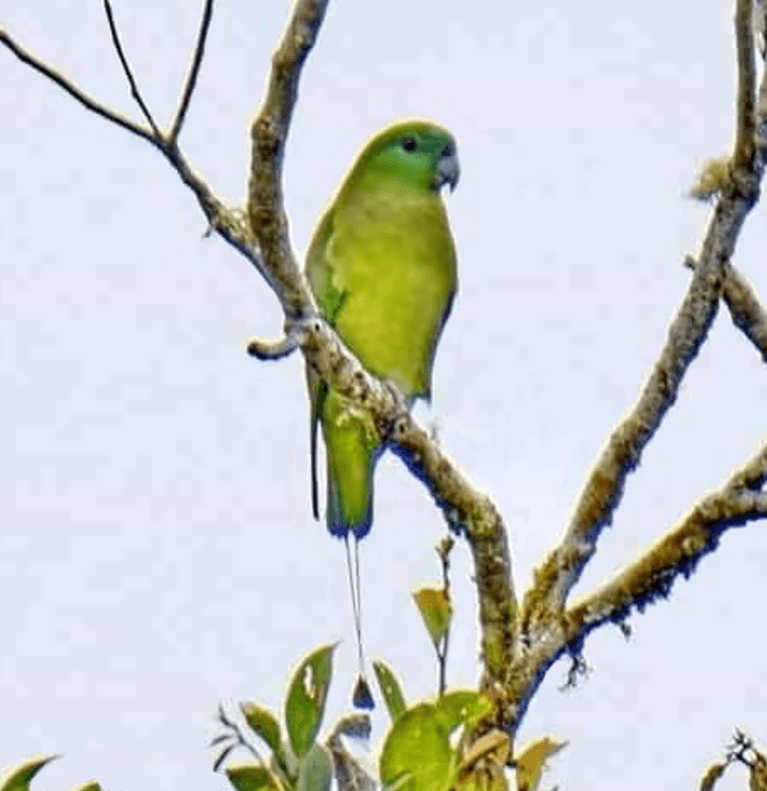
The Mindanao racket-tail is a species of parrot endemic to the island of Mindanao in the Philippines. It is distinguished by its distinctive racket-shaped tail feathers. This parrot inhabits tropical moist montane forests and is currently assessed as Near Threatened by the IUCN due to habitat loss and trapping for the pet trade.
Key Facts
- ›Endemic to Mindanao in the Philippines.
- ›Distinguished by racket-shaped tail feathers.
- ›Inhabits tropical moist montane forests.
- ›Assessed as near Threatened by the IUCN.
- ›Population estimated at approximately 3,300 mature individuals.
- ›Susceptible to habitat loss and trapping for the pet trade.
Philippines
Tropical Moist Montane Forests
Racket-Shaped Tail Feathers
Berries, Seeds, Nuts
Cavity Nesters
About Mindanao racket-tail
The Mindanao racket-tail (Prioniturus waterstradti) is a species of parrot belonging to the family Psittaculidae. This bird is endemic to the island of Mindanao in the Philippines, meaning it is found nowhere else in the world. It is characterized by its distinctive racket-shaped tail feathers, a feature shared with other members of its genus. Historically, it was considered the same species as the Luzon Racket-tail, but is now recognized as distinct.
Habitat and Ecology
The natural habitat of the Mindanao racket-tail is tropical moist montane forests, typically found at elevations between 820 and 2,700 meters, though it has been observed as low as 450 meters. Studies on its specific diet and breeding behaviors are limited. However, it is presumed to consume a diet of berries, seeds, and nuts, and like other racket-tails, it is a cavity nester, utilizing tree hollows for nesting.
Conservation Status
The International Union for Conservation of Nature (IUCN) has assessed the Mindanao racket-tail as Near Threatened. The population is estimated to consist of approximately 3,300 mature individuals. Despite this relatively low number and restricted range, the species is reported to be locally common within its territory. The primary threats to its survival are habitat loss due to deforestation and the species' susceptibility to trapping for the pet trade. Recommendations for conservation include gathering data on the impacts of international and national trade, conducting surveys for better population estimates, and effectively protecting its habitat in key areas.
Source: Wikipedia ↗
Frequently Asked Questions
What is the scientific name for the Mindanao racket-tail?
The scientific name for the Mindanao racket-tail is Prioniturus waterstradti. It was previously considered the same species as the Luzon Racket-tail.
Where does the Mindanao racket-tail live?
The Mindanao racket-tail is found exclusively on the island of Mindanao in the Philippines. Its natural habitat is tropical moist montane forests.
What are the recognized subspecies of the Mindanao racket-tail?
Two subspecies are recognized: Prioniturus waterstradti waterstradti, found in southeastern Mindanao with a browner mantle, and Prioniturus waterstradti malindangensis, found in western Mindanao with a paler blue crown and face.
What is the conservation status of the Mindanao racket-tail?
The Mindanao racket-tail is classified as Near Threatened by the International Union for Conservation of Nature (IUCN). Its population is estimated to be around 3,300 mature individuals.
What threats does the Mindanao racket-tail face?
The primary threats to the Mindanao racket-tail are habitat loss, particularly of its montane forest environment, and trapping for the pet trade. While montane forests are less threatened than lowland forests, these pressures are impacting the species.
What is known about the diet and breeding of the Mindanao racket-tail?
Little is documented about the specific diet and breeding habits of the Mindanao racket-tail. It is presumed to eat berries, seeds, and nuts, and like other racket-tails, it nests in tree cavities.
Related Parrot species

Nicobar parakeet
The Nicobar parakeet (Psittacula caniceps), also known as Blyth's parakeet, is a large parrot endemic to the Nicobar Islands in the Indian Ocean. It is distinguished by its predominantly green plumage, yellowish-grey head, and striking black facial markings, with notable differences in beak color between males and females. Listed as Near Threatened, its population is declining due to human settlement and its popularity in the caged bird trade.

Blue-cheeked amazon
The blue-cheeked amazon (Amazona dufresniana), also known as the blue-cheeked parrot or Dufresne's amazon, is a Near Threatened species of parrot found in Brazil, the Guianas, and Venezuela. This medium-sized parrot is distinguished by its predominantly green plumage, with striking lavender-blue coloration on its cheeks, throat, and sides of the neck, and yellow on its forehead and crown.

Blue-winged macaw
The blue-winged macaw, also known as Illiger's macaw, is a small species of macaw native to central and eastern South America. It is distinguished by its predominantly green plumage with blue accents on its wings and crown, and a distinct red patch on its lower abdomen. These macaws are known for their social nature and are often kept as aviary or companion birds.