
Mindoro racket-tail
The Mindoro racket-tail is a species of parrot endemic to the island of Mindoro in the Philippines, inhabiting tropical moist lowland forests. It is distinguished from its close relative, the blue-crowned racket-tail, by its bluer hindcrown, darker hindcrown, and a more matte green face, along with a slightly longer tail. This species is currently facing threats from habitat loss and the cage-bird trade.
Key Facts
- ›Endemic to the island of Mindoro in the Philippines.
- ›Inhabits tropical moist lowland and montane forests.
- ›Distinguished by a bluer hindcrown and a more matte green face.
- ›Diet is presumed to include fruits, flowers, and seeds.
- ›Classified as Vulnerable by the IUCN due to habitat loss and trapping.
- ›Threatened by deforestation from logging, mining, and slash-and-burn agriculture.

Philippines
Tropical Moist Lowland Forest, Moist Montane Forest
Racket-Shaped Tail Feathers, Bluer Hindcrown, Matte Green Face
Fruit, Bananas, Flowers, Seeds, Corn, Rice
Cavity Nester, Tree Cavity
About Mindoro racket-tail
The Mindoro Racket-tail: An Endemic Philippine Parrot
The Mindoro racket-tail (Prioniturus mindorensis) is a species of parrot found exclusively on the island of Mindoro in the Philippines. It belongs to the Psittaculinae subfamily and was once considered the same species as the blue-crowned racket-tail, but genetic findings have reinforced its status as a distinct species. This parrot is recognizable by its distinctive tail feathers, which are described as "rackets," though females possess shorter versions of these. Visually, it is differentiated from its close relative by a bluer hindcrown and a more matte green facial coloration.
Habitat and Ecology
This species primarily inhabits tropical moist lowland forests, but it has also been recorded in moist montane forests at elevations up to 1,670 meters above sea level. It has been observed visiting cultivated areas, suggesting some adaptability to human-modified landscapes. Like other parrots, the Mindoro racket-tail is a cavity nester, with a recorded nest found in a tree cavity in May. While specific dietary studies are limited, it is presumed to share a diet with other racket-tail species, consuming fruits, particularly bananas, as well as flowers and seeds from crops like corn and rice.
Conservation Concerns
The Mindoro racket-tail is classified as Vulnerable by the IUCN, with an estimated population of 2,500 to 9,999 mature individuals. The primary threats to its survival are habitat loss and degradation, driven by extensive deforestation from legal and illegal logging, mining operations, road construction, and slash-and-burn agricultural practices. Trapping for both the food and cage-bird trades further exacerbates the pressures on this parrot's populations. Conservation efforts proposed include population surveys, studies on habitat requirements, assessments of trapping threats, and awareness-raising activities to mitigate trapping.
Source: Wikipedia ↗
Frequently Asked Questions
What makes the Mindoro racket-tail different from the blue-crowned racket-tail?
The Mindoro racket-tail can be distinguished by its bluer hindcrown and an even darker hindcrown compared to the more uniform color of the blue-crowned racket-tail. It also features a more matte green face and a slightly longer tail.
What is the natural habitat of the Mindoro racket-tail?
The Mindoro racket-tail primarily inhabits tropical moist lowland forests. It has also been observed in moist montane forests up to 1,670 meters above sea level and has been known to visit cultivated areas.
What does the Mindoro racket-tail eat?
Specific studies on the Mindoro racket-tail's diet are lacking. However, it is presumed to feed on fruits, particularly bananas, as well as flowers and seeds of growing corn and rice, similar to other racket-tail species.
What are the main threats to the Mindoro racket-tail?
The Mindoro racket-tail is threatened by habitat loss due to legal and illegal logging, mining, road construction, and slash-and-burn agriculture. Trapping for the cage-bird trade also poses a significant threat.
What is the conservation status of the Mindoro racket-tail?
The Mindoro racket-tail is assessed as Vulnerable by the International Union for Conservation of Nature (IUCN). Its population is estimated to be between 2,500 and 9,999 mature individuals.
Related Parrot species

Blue-headed racket-tail
The blue-headed racket-tail is a medium-sized parrot native to the western Philippines, particularly the Palawan region. It is distinguished by its vibrant blue head plumage and unique tail feathers, which have extended shafts ending in a racket shape. This species inhabits humid lowland forests and is currently classified as Vulnerable due to significant threats from habitat destruction and limited trapping for the cage-bird trade.
Flame-winged parakeet
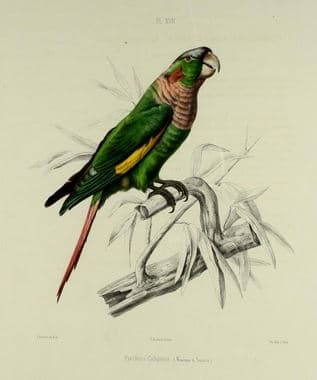
The flame-winged parakeet, also known as the brown-breasted parakeet, is a medium-sized parrot endemic to the eastern Andean slopes of Colombia. This species is distinguished by its bright yellow primary coverts and bluish primaries, with vivid yellow and orange-red wing markings visible in flight, which give it its common name. It is currently facing threats from habitat loss and fragmentation, leading to a declining population.
Ouvea parakeet
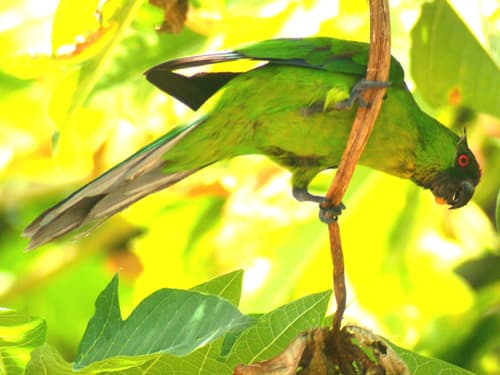
The Ouvea parakeet, also known as the Uvea parakeet, is a medium-sized parrot endemic to Uvea Island in New Caledonia. It is distinguished by its mostly green plumage, a prominent forward-curling green crest, and bright blue accents on its wings and tail. This species inhabits natural forests and is particularly fond of figs, facing threats from habitat loss and the pet trade.