
Orange-fronted parakeet
The Orange-fronted parakeet, also known as the orange-fronted conure or Petz's conure, is a vulnerable species of parrot found from western Mexico to Costa Rica. Its most distinctive feature is the orange patch on its forehead, which is less pronounced in immature birds. They are known for forming nomadic flocks and nesting in termite mounds.
Key Facts
- ›Measures 23-25 cm in length and weighs 68-80 grams.
- ›Possesses an orange-peach forehead, a dull blue midcrown, and green hindcrown, nape, and back.
- ›Inhabits semiopen to open landscapes including forest edges, deciduous woodlands, savannas, and thorn scrub.
- ›Feeds on fruits, flowers, and seeds, and can cause damage to crops like maize and bananas.
- ›Nests are typically excavated in termite mounds, with clutch sizes of three to five eggs.
- ›Listed as vulnerable by the IUCN due to illegal trapping for the pet trade and habitat destruction.
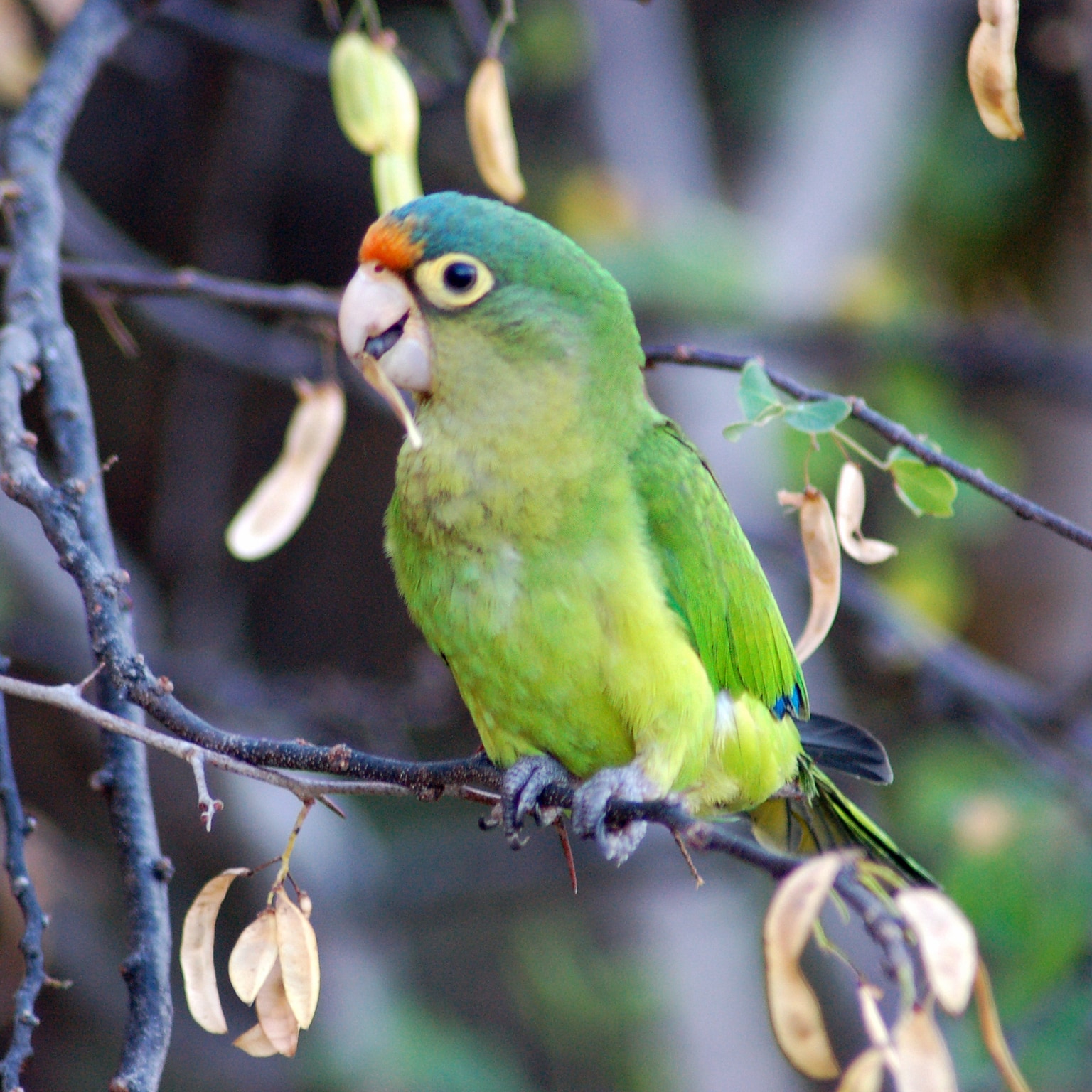
Orange-Fronted Conure, Half-Moon Conure, Petz's Conure
North America, Central America
Semiopen Landscapes, Open Landscapes, Forest Edges, Deciduous Woodlands, Pacific Swamp Forest, Savanna, Thorn Scrub, Pastures With Scattered Trees, Plantations of Palms and Fruiting Trees
Orange-Peach Forehead, Dull Blue Midcrown, Ring of Bare Yellow Skin Around the Eyes
Fruits, Flowers, Seeds
Excitable, Energetic, Good-Natured When Properly Socialized, Climbs and Plays
Scratchy, High-Pitched Keea'Ah!, Lower Keh'Keh'Keh'Keh'Keh, Whining Ehhhhh
- Excavates cavity in nest of arboreal termite Nasutitermes nigriceps
- Sometimes uses natural fissure or woodpecker cavity
About Orange-fronted parakeet
The Orange-fronted parakeet, scientifically known as Eupsittula canicularis, is a species of parrot belonging to the family Psittacidae. It is also recognized by common names such as the orange-fronted conure, half-moon conure, or Petz's conure. This bird is found across a significant portion of Central America, with its range extending from western Mexico down to Costa Rica.
Description and Appearance
Adult Orange-fronted parakeets typically measure between 23 to 25 centimeters (9.1 to 9.8 inches) in length and weigh between 68 to 80 grams (2.4 to 2.8 ounces). Sexes are alike in appearance. A key identifying feature is the vibrant orange-peach coloration on its forehead, which gives the species its name. This is complemented by a dull blue midcrown and a hindcrown, nape, and back that are a dull green. A distinctive ring of bare yellow skin encircles their eyes. Their throat and breast are a pale olive brown, transitioning to a yellowish green on the rest of their underparts. The wings are predominantly green with bluish flight feathers, and the tail is green on top with a yellowish underside. Immature birds are similar to adults but exhibit much less orange on their forehead.
Distribution and Habitat
The Orange-fronted parakeet inhabits a variety of semiopen to open landscapes. This includes the edges of forests, deciduous woodlands, Pacific swamp forests, savannas, and thorn scrub environments. They are also commonly found in pastures dotted with trees and in cultivated areas with plantations of fruit-bearing trees like mangoes and bananas. While primarily a bird of lowlands and foothills, they can be found at elevations up to 1,500 meters (4,900 feet) above sea level.
Behavior and Diet
Outside of the breeding season, the Orange-fronted parakeet is known to form nomadic flocks, which can sometimes number several hundred individuals. These flocks often move to higher elevations during certain times of the year. Their diet is varied, consisting of fruits (such as Ficus), flowers (like those from Gliricidia), and seeds (from plants like Ceiba). The large flocks can pose a significant problem for agriculture, sometimes causing serious damage to young maize crops and ripening bananas.
Reproduction
The breeding season for the Orange-fronted parakeet varies geographically, occurring between January and May in Mexico and El Salvador, and from December to March in Costa Rica. A unique nesting habit involves excavating a cavity within the mound of the arboreal termite Nasutitermes nigriceps. Occasionally, they will utilize natural fissures or cavities previously dug by woodpeckers. The female typically incubates a clutch of three to five eggs for approximately 30 days. After hatching, the young birds fledge about six weeks later. The process of excavating a termite mound cavity can take about a week, with the male often performing the majority of the initial digging. After excavation, the birds leave the cavity unattended for a period to allow the termites to seal and abandon the damaged area before they return to nest.
Vocalizations
The vocalizations of the Orange-fronted parakeet are described as including a scratchy, high-pitched 'keea'ah!' and a lower 'keh'keh'keh'keh'keh' sound. They also possess a distinct 'whining ehhhhh' call.
In Aviculture
In aviculture, the Orange-fronted parakeet is often referred to as the half-moon conure and is sometimes kept as a companion parrot. It is characterized as an excitable and energetic bird that enjoys climbing and playing. Generally, they tend to be quieter than some other conure species and can be good-natured when properly socialized. While not particularly known for extensive talking, they may mimic a few words or sounds. To maintain their health, they require regular mental stimulation and ample time outside of their cage for flight.
Conservation Status
The conservation status of the Orange-fronted parakeet has been reassessed over time. Originally listed as of least concern by the IUCN in 2004, it has been classified as vulnerable since 2020. The species faces threats from illegal trapping for the parrot trade, and its population is believed to be decreasing. While population declines have been rapid in the past, evidence suggests that the rates of illegal capture may be slowing in certain parts of its range. The species does show some tolerance for habitat destruction.
Source: Wikipedia ↗
Frequently Asked Questions
What are the different subspecies of the Orange-fronted parakeet?
The Orange-fronted parakeet has three recognized subspecies: E. c. clarae, E. c. eburnirostrum, and E. c. canicularis. Each subspecies has slight variations in plumage and geographic distribution within their overall range.
Where is the Orange-fronted parakeet found?
This species is found from western Mexico down to Costa Rica. Their distribution is segmented among their three subspecies, covering different regions within this broad area.
What is the typical diet of the Orange-fronted parakeet?
Their diet consists of fruits, such as Ficus, flowers, like those from Gliricidia, and seeds from plants like Ceiba. Large flocks can be a concern for agricultural crops such as young maize and ripening bananas.
How does the Orange-fronted parakeet reproduce?
Breeding occurs between December and May, depending on the region. They typically excavate cavities in termite mounds for nesting, laying three to five eggs which the female incubates for about 30 days.
What sounds does the Orange-fronted parakeet make?
Their vocalizations include a scratchy, high-pitched 'keea'ah!' and a lower 'keh'keh'keh'keh'keh' sound. They also possess a distinct 'whining ehhhhh' call.
Is the Orange-fronted parakeet kept as a pet?
Yes, the Orange-fronted parakeet is sometimes kept as a companion parrot, often referred to as a half-moon conure in aviculture. They are described as excitable and energetic, generally good-natured when socialized, and may mimic a few sounds.
What is the conservation status of the Orange-fronted parakeet?
The Orange-fronted parakeet is currently listed as vulnerable by the IUCN. This status is due to threats from illegal trapping for the pet trade and habitat destruction, although rates of illegal capture may be slowing in some areas.
Related Parrot species

Grey-cheeked parakeet
The grey-cheeked parakeet, also known as the fire-winged parakeet, is a vulnerable bird species native to Ecuador and Peru. It is distinguished by its predominantly green plumage, pale blue crown, ashy gray cheeks, and striking orange to orange-red underwing coverts. This species inhabits a variety of forest types and scrublands and is known for its noisy, chattering vocalizations.
New Zealand kākā
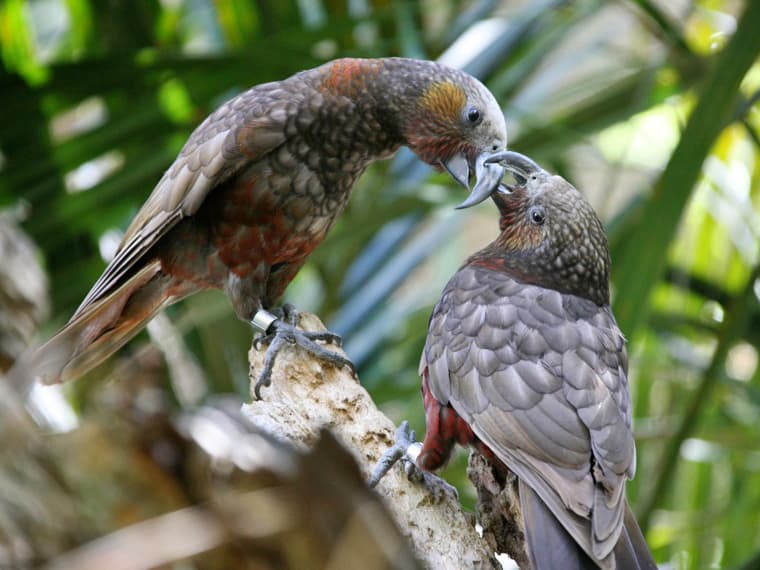
The New Zealand kākā (Nestor meridionalis) is a large, endangered parrot native to the forests of New Zealand. Known for its distinctive brown and green plumage with scarlet flashes, it is an arboreal species that plays a vital role in its ecosystem through its varied diet, which includes fruits, seeds, nectar, and sap. Its conservation is a priority due to significant population declines caused by habitat loss and introduced predators.

Blue-headed racket-tail
The blue-headed racket-tail is a medium-sized parrot native to the western Philippines, particularly the Palawan region. It is distinguished by its vibrant blue head plumage and unique tail feathers, which have extended shafts ending in a racket shape. This species inhabits humid lowland forests and is currently classified as Vulnerable due to significant threats from habitat destruction and limited trapping for the cage-bird trade.