
Palm cockatoo
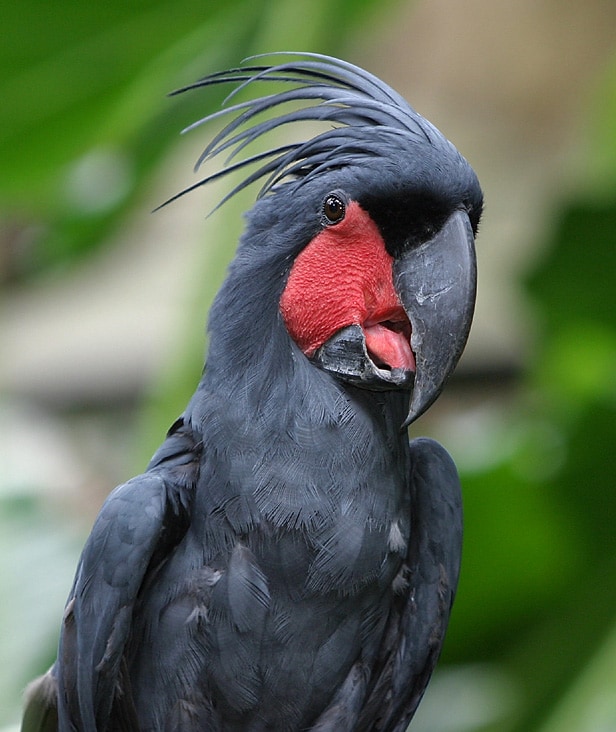
The palm cockatoo is a large, predominantly smoky-grey to black parrot found in the rainforests and woodlands of New Guinea, the Aru Islands, and the Cape York Peninsula of Australia. It is distinguished by its prominent crest, a very large and strong black beak capable of cracking hard nuts, and striking bright-red cheek patches. This species is also notable for its unique tool-using behavior, particularly the male's habit of drumming with sticks to mark territory and attract mates.
Key Facts
- ›The palm cockatoo is one of the largest parrot species, measuring 55-60 cm and weighing 910-1200g.
- ›It possesses one of the largest beak sizes among parrots, adapted for cracking extremely hard nuts and seeds.
- ›Males use sticks or seed pods to drum on trees, a behavior believed to be for territorial marking or mate attraction.
- ›Palm cockatoos typically lay only one egg every two years, resulting in a low breeding success rate.
- ›They are found in rainforests and woodlands across New Guinea and the Cape York Peninsula.
- ›The species is listed as near Threatened on the IUCN Red List.
Goliath Cockatoo, Great Black Cockatoo
New Guinea, Aru Islands, Cape York Peninsula, Australia
Rainforests, Woodlands
Smoky-Grey, Black
- Prominent crest of long feathers
- Very large and strong, sharply-hooked black beak
- Prominent bright-red cheek patches
- Lower and upper mandibles of beak do not meet for much of their length
Wild Pandanus Palm Fruits, Kanari Tree Nuts, Fruits of Darwin Stringy Bark, Fruits of Nonda Tree, Seeds From Cocky Apple Tree, Seeds From Beach Almond Tree, Seeds From Black Bean Tree
- Produce a variety of additional syllables in display and exchange with neighboring individuals
- Males often combine syllables to form long, complex sequences
- Different call types exist between populations due to long-term isolation
- Nest inside tree hollows that resemble standing pipes
- Fires play a role in creating nest hollows by allowing microorganisms and termites to hollow out the inside of trees
- Cyclones are important in the final stage of nest hollow development
- Males may strip broken drum tools to line the nest
About Palm cockatoo
The palm cockatoo, scientifically known as Probosciger aterrimus, is a striking and large parrot belonging to the cockatoo family. It is characterized by its predominantly smoky-grey to black plumage, a prominent crest of long feathers atop its head, and a very large, powerful black beak. A distinctive feature is its bright-red cheek patches, which can change color when the bird is alarmed or excited. The palm cockatoo is also recognized for its intelligence and unique tool-using capabilities, particularly observed in males.
Distribution and Habitat
This species is native to the rainforests and woodlands of New Guinea, the Aru Islands, and the Cape York Peninsula in Queensland, Australia. They are adapted to these lush environments, often found in areas with abundant trees that provide both food and nesting sites.
Physical Characteristics
Measuring between 55 to 60 cm in length and weighing 910 to 1200 grams, the palm cockatoo is among the largest parrot species. Its most notable physical attribute is its exceptionally large and strong beak, which is perfectly suited for cracking open extremely hard nuts and seeds. The male palm cockatoo generally possesses a larger beak than the female. The unique structure of its beak, where the mandibles do not fully meet, aids in manipulating food.
Behavior and Ecology
The palm cockatoo exhibits fascinating behaviors, including a unique territorial display where males use sticks or seed pods to drum on trees. This drumming is believed to serve purposes such as marking territory or attracting potential mates. This species is also one of the few known bird species to utilize tools. Unlike many other cockatoo species, palm cockatoos are not typically found in large flocks, usually observed feeding in small groups of one to six individuals.
Diet
Their diet primarily consists of hard nuts and seeds, such as those from pandanus palms and kanari trees. They also supplement their diet with various fruits and seeds from other native trees.
Breeding
Palm cockatoos have a notably low breeding success rate, laying only one egg every second year. This is offset by their very long lifespan. Breeding occurs within tree hollows, with fires and cyclones playing a role in the formation and development of suitable nesting sites.
Conservation Status
The palm cockatoo is currently listed as Near Threatened on the IUCN Red List of Threatened Species, facing threats from habitat destruction and traditional hunting in some areas. In Australia, its status was updated to Vulnerable in 2015.
Aviculture
Due to its distinctive appearance and intelligence, the palm cockatoo is highly sought after in the pet trade. Their dietary needs in captivity have become better understood over time, leading to more specialized diets beyond generic bird seed.
Source: Wikipedia ↗
Frequently Asked Questions
What makes the palm cockatoo's beak unique?
The palm cockatoo has an exceptionally large and strong beak, with the lower and upper mandibles not meeting for much of their length. This unique structure allows the bird to hold nuts firmly with its tongue against the upper mandible while using the lower mandible to crack them open.
What is the distinctive drumming behavior of the palm cockatoo?
Male palm cockatoos engage in a unique territorial display where they break off thick sticks or seed pods and drum them against dead branches or trees. This creates a loud noise that can be heard at a considerable distance and is thought to serve as a way to mark territory or attract mates.
What is the typical diet of a palm cockatoo?
The palm cockatoo primarily feeds on wild pandanus palm fruits and kanari tree nuts. They also consume fruits from Darwin stringy bark and nonda trees, as well as seeds from various other trees such as cocky apple and black bean.
Where are palm cockatoos found?
Palm cockatoos are native to the rainforests and woodlands of New Guinea, the Aru Islands, and the Cape York Peninsula in Queensland, Australia. They can sometimes be observed in trees along roadsides in areas like Sorong, West Papua, Indonesia.
What is the conservation status of the palm cockatoo?
The palm cockatoo is currently listed as Near Threatened on the IUCN Red List of Threatened Species. In Australia, it was relisted from Near Threatened to Vulnerable in October 2015.
How long do palm cockatoos typically live?
Palm cockatoos have a very long lifespan, which helps offset their low breeding rate. Anecdotal evidence suggests they can reach 80 or 90 years in captivity, though the oldest confirmed individual lived to 56 years.
Related Parrot species

Blue-cheeked amazon
The blue-cheeked amazon (Amazona dufresniana), also known as the blue-cheeked parrot or Dufresne's amazon, is a Near Threatened species of parrot found in Brazil, the Guianas, and Venezuela. This medium-sized parrot is distinguished by its predominantly green plumage, with striking lavender-blue coloration on its cheeks, throat, and sides of the neck, and yellow on its forehead and crown.

Nicobar parakeet
The Nicobar parakeet (Psittacula caniceps), also known as Blyth's parakeet, is a large parrot endemic to the Nicobar Islands in the Indian Ocean. It is distinguished by its predominantly green plumage, yellowish-grey head, and striking black facial markings, with notable differences in beak color between males and females. Listed as Near Threatened, its population is declining due to human settlement and its popularity in the caged bird trade.

Lord Derby's parakeet
Lord Derby's parakeet is a parrot species found in a limited region of moist evergreen forests in the Himalayas and adjoining areas of China. It is distinguished by its predominantly green plumage, blue-purple crown, and sexually dimorphic beak coloration. The species faces threats from habitat destruction and illegal wildlife trade, leading to its classification as near threatened.