
Pohnpei lorikeet
The Pohnpei lorikeet (Trichoglossus rubiginosus), also known as serehd in Pohnpeian, is a parrot species endemic to Pohnpei and the Ant Atoll in Micronesia. It is distinguished by its predominantly reddish-maroon plumage with darker striations, and slight differences in beak and iris color between males and females.
Key Facts
- ›Endemic to Pohnpei and Ant Atoll in Micronesia, with historical presence on Namoluk Atoll.
- ›Plumage is primarily reddish-maroon with darker maroon striations, and olive-yellow flight feathers and tail.
- ›Feeds on nectar, pollen from coconuts, fruit, and insect larvae.
- ›Nests in tree cavities and lays a single egg.
- ›Males have orange beaks and yellow-orange irises, while females have yellow beaks and light grey irises.
- ›Designated as the state bird of Pohnpei and protected by law.

Serehd
Micronesia
Tropical Moist Lowland Forests, Plantations
Reddish-Maroon, Darker Maroon, Olive-Yellow
- Vague transverse striations of darker maroon on plumage
- Male has orange beak and yellow-orange irises
- Female has yellow beak and light grey irises
- Juveniles have brown beaks and brown irises
Nectar, Pollen, Fruit, Insect Larvae
Hole In A Tree
About Pohnpei lorikeet
The Pohnpei lorikeet, scientifically known as Trichoglossus rubiginosus and referred to as "serehd" in the Pohnpeian language, is a species of parrot native to the island of Pohnpei and the adjacent Ant Atoll within Micronesia. Historically, it is believed to have inhabited Namoluk Atoll near Chuuk and may have once been more widespread across Micronesia.
Description and Habitat
This lorikeet measures approximately 24 cm (9.4 inches) in length and weighs around 80 grams (2.8 ounces). Its plumage is predominantly a reddish-maroon color, marked with subtle, darker maroon striations across the body. The head is a slightly deeper shade of maroon, while the flight feathers and tail are olive-yellow. The legs are grey. A notable distinction exists between sexes: males possess an orange beak and yellow-orange irises, whereas females have a yellow beak and light grey irises. Juveniles are identified by their brown beaks and brown irises.
The natural habitat of the Pohnpei lorikeet comprises tropical moist lowland forests and cultivated plantation areas. Its diet is varied, including nectar and pollen from coconuts, supplemented by fruits and insect larvae.
Reproduction and Conservation
Reproductively, the Pohnpei lorikeet typically nests in tree cavities and lays a single egg per clutch. The species is considered common within its range and is not currently designated as threatened. In recognition of its importance, the Pohnpei lorikeet has been officially designated as the state bird of Pohnpei through the "Designation of State Bird Act." This legislation also provides legal protection, prohibiting the hunting or killing of the bird, with penalties of fines or imprisonment for offenders.
Source: Wikipedia ↗
Frequently Asked Questions
What is the Pohnpei lorikeet's scientific name?
The scientific name for the Pohnpei lorikeet is Trichoglossus rubiginosus.
Where does the Pohnpei lorikeet live?
The Pohnpei lorikeet is endemic to the island of Pohnpei and the nearby Ant Atoll in Micronesia. Historically, it may have had a wider distribution throughout Micronesia.
What does the Pohnpei lorikeet eat?
The diet of the Pohnpei lorikeet consists of nectar and pollen, particularly from coconuts, as well as fruit and insect larvae.
What are the physical characteristics of the Pohnpei lorikeet?
This parrot is about 24 cm long and weighs around 80 grams. Its plumage is mainly reddish-maroon with darker striations, olive-yellow flight feathers and tail, and grey legs. Males have orange beaks and yellow-orange irises, while females have yellow beaks and light grey irises.
How does the Pohnpei lorikeet reproduce?
The Pohnpei lorikeet nests in a hole in a tree and typically lays a single egg.
Is the Pohnpei lorikeet endangered?
The Pohnpei lorikeet is considered common and is not currently listed as threatened in its natural habitat.
Related Parrot species
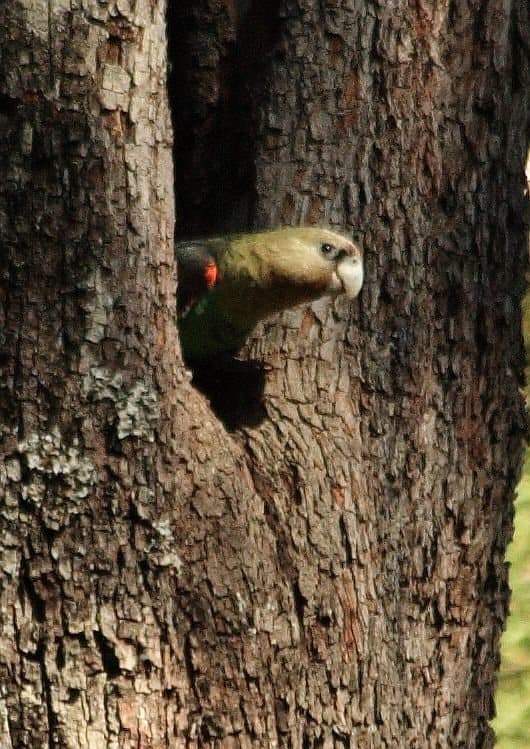
Cape parrot
The Cape parrot (Poicephalus robustus), also known as Levaillant's parrot, is a large parrot endemic to the temperate Afromontane forests of South Africa. It is distinguished by its very large beak, used for cracking hard nuts and fruit kernels, and a distinctive olive-yellow head, differentiating it from closely related savanna species. The species faces threats from habitat loss and a specific viral disease, leading to conservation efforts.

Fuertes's parrot
Fuertes's parrot, also known as the indigo-winged parrot, is an endangered species endemic to the west slope of Colombia's Central Andes. This parrot is distinguished by its striking blue and green plumage, accented with red and violet-blue markings on its wings and tail. It inhabits wet temperate cloudforests and is known to feed in flocks, with conservation efforts focusing on nest box programs to aid its population recovery.
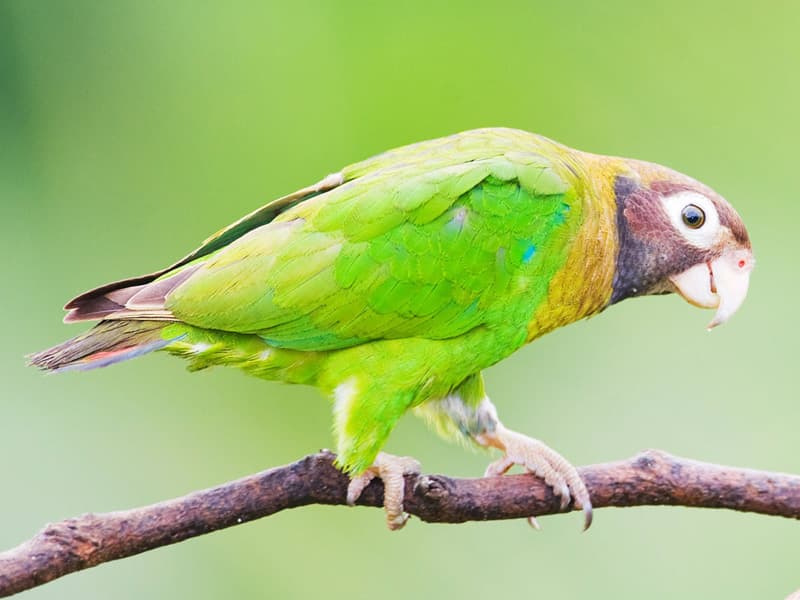
Brown-hooded parrot
The brown-hooded parrot is a species of parrot found from Mexico to Colombia, belonging to the family Psittacidae. It is distinguished by its vibrant plumage, featuring a reddish-brown crown and throat, olive-yellow breast, and green body with blue accents on the wings and tail.