
Red-and-green macaw
The red-and-green macaw, also known as the green-winged macaw, is the largest parrot in the genus Ara, native to the forests and woodlands of northern and central South America. It is distinguished by its predominantly red plumage, with green upper-wing covert feathers and characteristic red lines around its eyes. This species is popular in aviculture but faces population declines due to habitat loss and illegal capture.
Key Facts
- ›The red-and-green macaw is the largest species within the genus Ara.
- ›Its plumage is predominantly red, with distinctive green upper-wing covert feathers.
- ›It is found in forests and woodlands across northern and central South America.
- ›The species is known to form lifelong pair bonds.
- ›It is popular in aviculture and is the second most commonly kept macaw species.
- ›Population declines are attributed to habitat loss and the illegal pet trade.

Green-Winged Macaw
South America
Forests, Woodlands
Predominantly red plumage, Green upper-wing covert feathers, Red lines around the eyes on bare white skin, Iridescent teal feathers on the tail
Nests Made In Holes In Trees
About Red-and-green macaw
The Red-and-Green Macaw
The red-and-green macaw (Ara chloropterus), also widely known as the green-winged macaw, is a magnificent and large parrot that holds the distinction of being the largest member of the genus Ara. Its natural range encompasses the diverse forests and woodlands of northern and central South America. This species is characterized by its predominantly vibrant red plumage, which is complemented by distinctive green upper-wing covert feathers. A notable identifying feature is the presence of characteristic red lines, formed by rows of tiny feathers, on the otherwise bare white skin patches around its eyes. The tail also displays iridescent teal feathers bordered by red.
Popular in aviculture, the red-and-green macaw is the second most commonly kept macaw species, though it is considerably more expensive than the blue-and-yellow macaw. Despite its popularity and wide distribution, the species has experienced a marked decline in numbers in recent years. This reduction is primarily attributed to habitat loss and the illegal capture of birds for the pet trade. In some regions, such as Argentina, the species was extirpated by the 1960s due to hunting, the pet trade, and land-use changes, and is now listed as critically endangered there, though re-introduction programs are active.
Red-and-green macaws typically form lifelong pair bonds. Reproduction involves the female laying two or three eggs in a nest situated within a tree cavity. The incubation period lasts approximately 28 days, and the young macaws fledge, or take their first flight, around 90 days after hatching. The wild population is estimated to be between 50,000 and 499,999 individuals, and the species is listed on CITES Appendix II, indicating that international trade is regulated.
Source: Wikipedia ↗
Frequently Asked Questions
How can I distinguish a red-and-green macaw from a scarlet macaw?
The red-and-green macaw can be distinguished from the scarlet macaw by its predominantly green upper-wing covert feathers, whereas the scarlet macaw's are mostly yellow or a mix of yellow and green. Additionally, the red-and-green macaw has characteristic red lines formed by tiny feathers on its bare white eye patches.
What is the size of a red-and-green macaw?
The red-and-green macaw is a large parrot, reaching a total body length of 90 to 95 cm (35 to 37 inches) in adults. It is second only in size to the hyacinth macaw among all macaws.
What is the typical weight of a red-and-green macaw?
Adult red-and-green macaws typically weigh between 1,050 and 1,708 grams (2.315 to 3.765 pounds). Twelve adults were found to average 1,214 grams.
How do red-and-green macaws reproduce?
Red-and-green macaws generally mate for life and typically lay two or three eggs in a nest made in a tree hole. The female incubates the eggs for about 28 days, and the chicks fledge approximately 90 days after hatching.
What is the conservation status of the red-and-green macaw?
The red-and-green macaw is listed on CITES Appendix II, meaning its trade is restricted. While its wild population is estimated to be between 50,000 and 499,999 individuals, it is considered critically endangered in Argentina, though re-introduction programs are underway.
Is the red-and-green macaw common as a pet?
The red-and-green macaw is popular in aviculture and is the second most commonly kept macaw species. However, it is not as common in captivity as the blue-and-yellow macaw and is significantly more expensive.
Related Parrot species
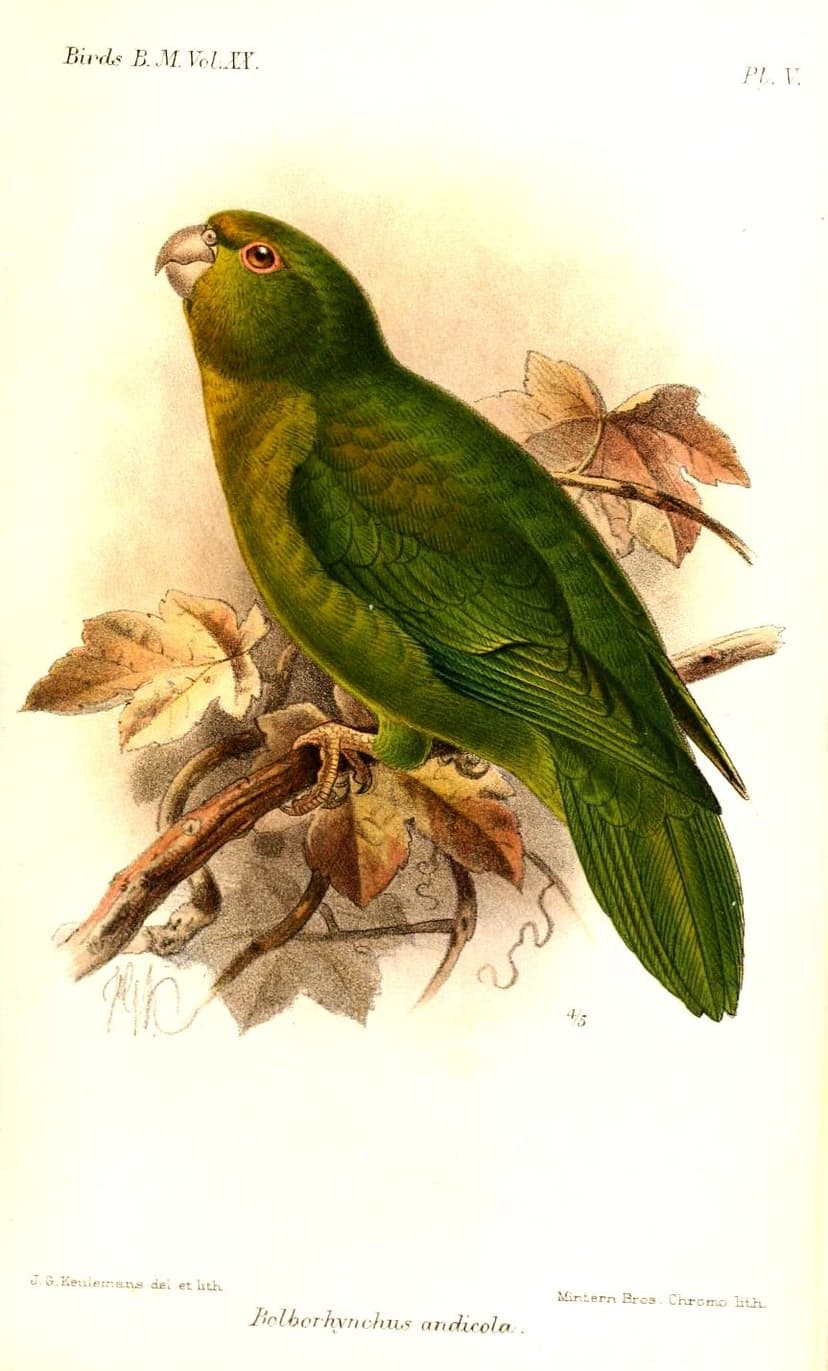
Andean parakeet
The Andean parakeet is a species of parrot found in the Andes mountains of Argentina, Bolivia, and Peru. Adults are predominantly green with a yellow tinge, and they inhabit high-altitude environments such as cloud forests and woodlands.
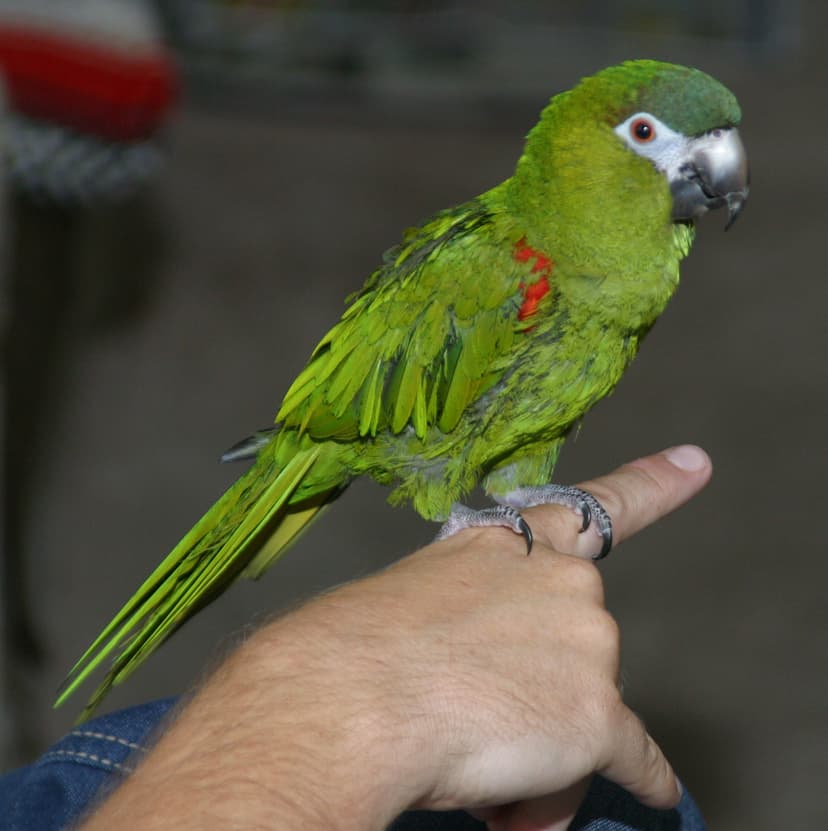
Northern Red-shouldered Macaw
The Northern Red-shouldered Macaw is a small, green South American parrot, notable for being the smallest species within the macaw family. It inhabits tropical lowlands and savannas across several South American countries and is distinguished by the red coverts on its wings, which develop at puberty. These macaws are frequently bred in captivity and are known for their vocalizations and ability to mimic speech.

Golden-collared macaw
The golden-collared macaw, also known as the yellow-collared macaw, is a small, primarily green parrot native to Central and South America. It is distinguished by a vibrant yellow collar on the back of its neck, a feature that becomes more pronounced with age. Often referred to as a "mini-macaw" in aviculture, this species is known for its social nature and intelligence.