
Red-bellied macaw
The Red-bellied macaw is a medium-sized parrot native to tropical South America, distinguished by a prominent maroon patch on its belly. It is critically dependent on the moriche palm for sustenance and shelter, inhabiting swamp forests and palm groves. This species is the largest of the "mini-macaws" and is known for its reedy, high-pitched calls.
Key Facts
- ›The red-bellied macaw is the largest of the commonly known "mini-macaws."
- ›Its habitat is primarily moriche palm swamp forests and savannas with palm groves.
- ›The species is critically dependent on the moriche palm for roosting, feeding, and nesting.
- ›Red-bellied macaws have a distinctive maroon patch on their lower abdomen.
- ›They are known for their reedy, high-pitched screams.
- ›The IUCN lists the red-bellied macaw as 'least concern,' though wild populations appear to be declining.
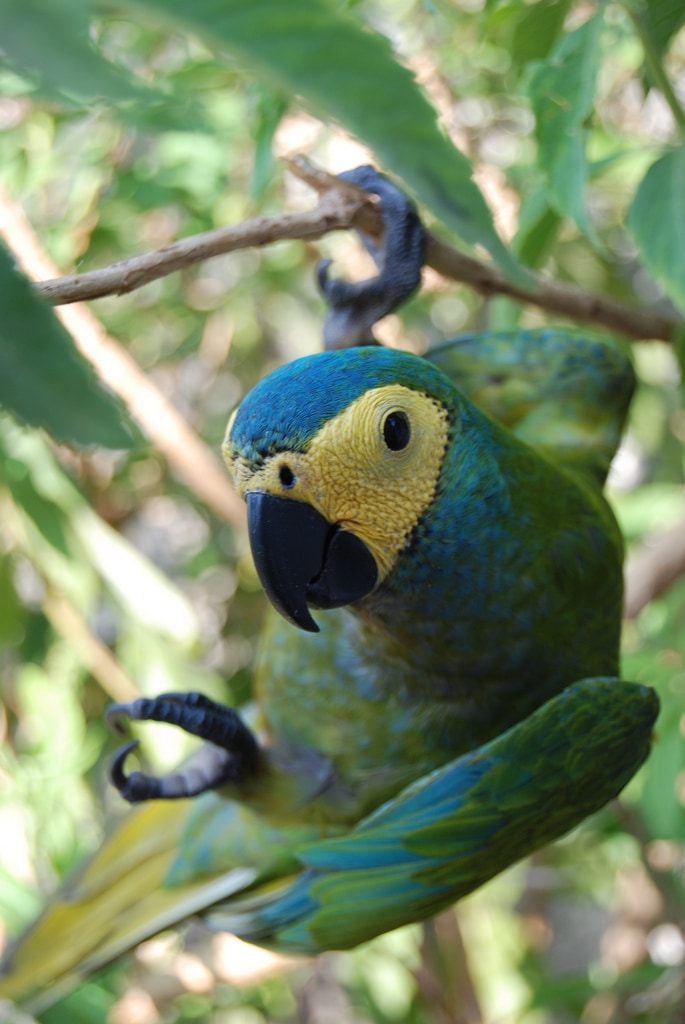
Guacamaya Manilata, Mini-Macaw
South America, Trinidad
Moriche Palm Swamp Forests, Sandy Savannahs With Palm Groves
Green, Maroon, Mustard-Yellow, Grey, Bluish, Olive Yellow
Large Maroon Patch On the Belly, Bare Mustard-Yellow Facial Skin, Bluish Forehead
Fruit of the Moriche Palm, Seeds of the Moriche Palm, Fruit of the Caribbean Royal Palm, Seeds of the Caribbean Royal Palm
High-Strung
Reedy, High-Pitched Screams
Cavities of Dead Moriche Palm Trees
About Red-bellied macaw
The Red-bellied macaw, scientifically known as Orthopsittaca manilatus, is a medium-sized parrot that stands out as the largest among the commonly referred to "mini-macaws." Its most distinctive feature is a prominent maroon patch on its lower abdomen, which gives the species its name. These birds are native to the tropical regions of South America, with a range extending through the Amazon Basin into countries like Brazil, Colombia, Peru, and Bolivia, and also including the island of Trinidad.
Habitat and Dependence on Moriche Palms
The Red-bellied macaw's survival is critically linked to the moriche palm (Mauritia flexuosa). Their primary habitat consists of moriche palm swamp forests and sandy savannahs dotted with palm groves. They rely almost entirely on these palms for essential needs: roosting communally in large numbers within woodpecker holes in dead palm trees, feeding on their fruit and seeds, and nesting in the cavities of dead moriche palms. This specialized dependence makes them particularly vulnerable to habitat destruction.
Description and Dimorphism
Adult Red-bellied macaws typically measure around 46 cm (18 inches) in length and weigh about 300 g (11 oz). Their plumage is predominantly green, accented by bare, mustard-yellow skin on the face and cere, and a bluish forehead. The chin, throat, and upper chest are greyish with green scalloping, leading to the characteristic maroon belly. Their irises are dark brown, and they possess dark grey beaks and legs. While males and females share identical plumage, males are generally larger with bigger heads. Juveniles are duller than adults and can be distinguished by a grey beak with a noticeable white stripe along the culmen.
Diet and Vocalizations
The diet of the Red-bellied macaw is highly specialized, consisting almost exclusively of the fruit and seeds of the moriche palm and, in Trinidad, the Caribbean royal palm. These food sources are rich in carbohydrates and beta-carotene. In terms of vocalization, they are known for their reedy, high-pitched screams, and they roost communally in large groups within palm tree hollows.
Breeding and Life Cycle
The breeding cycle of the Red-bellied macaw involves nesting in cavities of dead moriche palm trees. A clutch typically comprises two to four white eggs, with the female incubating them for approximately 27 days. The chicks develop in the nest for about 77 days after hatching before fledging. Young macaws reach sexual maturity between two and three years of age.
Conservation and Aviculture Challenges
While the Red-bellied macaw is currently listed as 'Least Concern' by the IUCN, wild populations are observed to be declining. Threats include the clearing of moriche palms for various uses and capture for the pet trade. Keeping these birds in captivity presents significant challenges due to their high-strung nature and specialized diet, leading to high mortality rates in both wild-caught and captive-bred individuals. Efforts to maintain them in aviculture require specialized feeding and housing methods that closely mimic their natural environment.
Source: Wikipedia ↗
Frequently Asked Questions
What does a red-bellied macaw look like?
The red-bellied macaw is mostly green with a large maroon patch on its belly. It has bare, mustard-yellow skin on its face and cere, dark brown irises, and a bluish forehead. Its tail is long and tapered, and adults have dark grey beaks and legs.
Where do red-bellied macaws live?
These macaws are found throughout tropical Amazonian South America, including parts of Brazil, Colombia, Peru, Bolivia, and the Guianas. They also inhabit the Caribbean island of Trinidad. Their preferred habitat is moriche palm swamp forests and sandy savannahs with palm groves.
What do red-bellied macaws eat?
Their diet consists almost exclusively of the fruit and seeds of the moriche palm and the Caribbean royal palm. These food sources are high in carbohydrates and beta-carotene.
How do red-bellied macaws breed?
Red-bellied macaws nest in cavities of dead moriche palm trees. A clutch typically contains two to four white eggs. The female incubates the eggs for about 27 days, and the chicks fledge approximately 77 days after hatching.
Are red-bellied macaws easy to keep as pets?
It is extremely difficult to keep red-bellied macaws alive in captivity due to their high-strung personality and specialized diet. Their high carbohydrate, low fat diet and the challenges of replicating their natural food sources contribute to low survival rates in captivity.
What is the conservation status of the red-bellied macaw?
The red-bellied macaw is listed as 'least concern' by the IUCN. However, while locally common, wild populations are reportedly declining due to habitat destruction and capture for the pet trade.
Related Parrot species

Finsch's parakeet
Finsch's parakeet, also known as the crimson-fronted parakeet, is a species of parrot native to Central America, primarily found in Nicaragua, Costa Rica, and Panama. It is distinguished by its predominantly green plumage, a striking red forehead, and red flecks on its wings and head, as well as its habit of feeding on fruits, flowers, and grains like maize and sorghum.
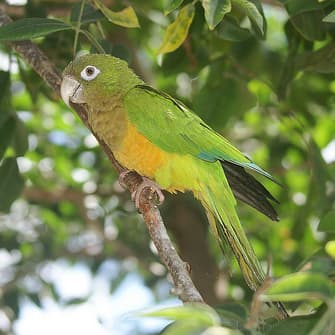
Caatinga parakeet
The Caatinga parakeet is a species of parrot endemic to eastern Brazil, found in dry landscapes characterized by thorny vegetation. It is distinguished by its predominantly green plumage with yellow-orange underparts and a pale brown forecrown, and it is known for its high-pitched screeching flight calls. While its diet is not fully investigated, it includes fruits, cactus, and agricultural crops.

Bonaparte's parakeet
Bonaparte's parakeet is a species of parrot found exclusively in the Brazilian state of Amazonas, south of the Solimões River. This primarily green parakeet is distinguished by its dark red belly, rump, and tail-tip, along with pale grey scaling on its chest and a dark maroon crown and cheeks. It is a social bird that inhabits tropical humid lowland forests and is known to feed on fruits, seeds, and flowers.