
Red-crowned amazon
The Red-crowned amazon, also known as the red-crowned parrot, is an endangered parrot native to northeastern Mexico and historically to southern Texas. It is distinguished by its vibrant green plumage, bright red forehead and crown, and blue streaks behind its eyes. Due to habitat destruction and illegal trapping for the pet trade, its wild populations are critically low, though feral populations have established in urban areas of the United States.
Key Facts
- ›Endangered species native to northeastern Mexico.
- ›Distinctive bright red forehead and crown.
- ›Threatened by illegal pet trade and habitat loss.
- ›Can live over 50 years in captivity.
- ›Nests in tree cavities.
- ›Not sexually dimorphic, requiring genetic testing for sex identification.

Red-Crowned Parrot, Green-Cheeked Amazon, Mexican Red-Headed Parrot
North America
Lowland Forests
Bright Red Forehead and Crown, Dark Blue Streak Behind the Eyes, Light Green Cheeks, White Eye-Ring
Seeds, Fruits, Flowers, Nectar
Affectionate, Playful, Mischievous, Curious, Hardy
- Characteristic Screeching
- Mimic Sounds Such As Microwave, Telephone, Or Other Pets
Tree Cavities
About Red-crowned amazon
The Red-crowned amazon (Amazona viridigenalis), also commonly known as the red-crowned parrot or green-cheeked amazon, is a species of parrot native to the lowland forests of northeastern Mexico and historically to southern Texas in the United States. This species is characterized by its predominantly green plumage, distinguished by a vibrant red forehead and crown, a dark blue streak extending behind its eyes, and light green cheeks. Splashes of red and blue may also be present on the underside of their wings.
Status and Distribution
The Red-crowned amazon is classified as an endangered species, with wild populations estimated to be between 2,000 and 4,300 mature individuals in 1994, and a continuing decrease in numbers. The primary threats to their survival are the illegal trapping of birds for the international pet trade and the extensive destruction of their natural forest habitat. While their native range is northeastern Mexico, feral populations have successfully established in urban areas of the United States, including southern California, southern Florida, and Hawaii, and a significant population exists in Los Angeles.
Description and Behavior
Adult Red-crowned amazons typically measure between 28–33 cm (11–13 inches) in length with a wingspan of 38–41 cm (15–16 inches), and weigh around 270 grams. Their eyes are a notable feature, with irises ranging from bright yellow to deep red in adults, while juveniles have gray eyes. A white eye-ring enhances their appearance. Unlike some other Amazon parrot species, Red-crowned amazons are not sexually dimorphic, meaning males and females have a similar appearance, and sex can only be accurately determined through genetic testing. These parrots are highly social creatures, often gathering in large flocks and being most vocal during the morning and evening hours, particularly when moving to new feeding grounds. Their diet in the wild consists of seeds, fruits, flowers, and nectar.
Reproduction and Aviculture
Red-crowned amazons typically reach sexual maturity around five years of age. They form monogamous pairs, mating for life, and nest in tree cavities. Females lay an average of four eggs, which they incubate for approximately 28 days. Chicks fledge, or begin flying, at around nine weeks old. These parrots are popular in aviculture and can make very affectionate pets when provided with adequate attention and stimulation. They are known for their curiosity and can be mischievous. In captivity, they are known to mimic a variety of sounds and voices, though they often excel at imitating sounds that stand out to them personally. With proper care, Red-crowned amazons can live for over 50 years, with some individuals exceeding 70 years. Challenges in keeping them as pets include ensuring sufficient exercise and a varied diet to prevent health issues like obesity. They are generally considered hardy birds, but can experience hormonal changes during the spring breeding season, which may lead to increased nipping or screaming behavior, though this usually subsides with age.
Source: Wikipedia ↗
Frequently Asked Questions
What are the main threats to the Red-crowned amazon?
The primary threats to the Red-crowned amazon's survival are the illegal export of trapped birds for the pet trade and the destruction of their natural habitat. These factors have led to a significant decline in their wild populations.
Where is the natural habitat of the Red-crowned amazon?
The natural habitat of the Red-crowned amazon is the lowland forests of northeastern Mexico. They have also been recorded in southern Texas in the United States, though their status there is debated.
What are the distinctive physical characteristics of a Red-crowned amazon?
Red-crowned amazons are predominantly green, with striking bright red on their forehead and crown. They also have a dark blue streak behind their eyes and light green cheeks. Splashes of red and blue may be present under their wings.
How long do Red-crowned amazons typically live?
In captivity, Red-crowned amazons can live for 50 years or more, with some individuals potentially living over 70 years if provided with proper care. Lifespan in the wild is less documented but generally shorter.
Are Red-crowned amazons easy to keep as pets?
Red-crowned amazons can be affectionate and playful pets, but they require significant attention and exercise. They are known for their curiosity and can be mischievous. They are considered hardy compared to some other parrot species, but owners must address their dietary needs and provide mental stimulation to prevent health issues.
What is the conservation status of the Red-crowned amazon?
The Red-crowned amazon is considered a globally endangered species by the IUCN Red List. Its population is decreasing due to human activities.
Related Parrot species
Blue-backed parrot
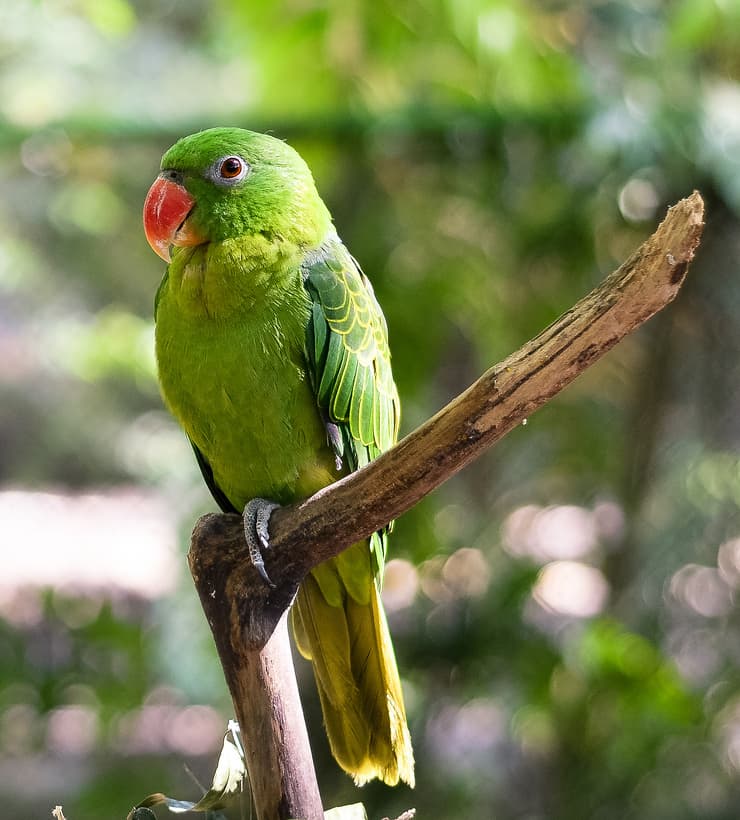
The blue-backed parrot is a large, endangered parrot species endemic to the Philippines. Primarily green with distinctive blue rump and wing bends, it is often confused with the blue-naped parrot but can be differentiated by its red iris, more pronounced sexual dimorphism, and vocalizations. Its main threats are habitat loss and trapping for the pet trade, leading to a critically low population.

Purple-naped lory
The purple-naped lory is a vibrant parrot species found exclusively on the Indonesian islands of Seram and Ambon, and potentially Haruku and Saparua. This forest-dwelling bird is distinguished by its predominantly red plumage, accented by a black cap fading to purple on its nape, green wings, blue thighs, and a distinctive yellow chest band. Sadly, its numbers are declining due to the threat of trapping for the cage-bird trade, leading to its endangered status.
Red-and-blue lory
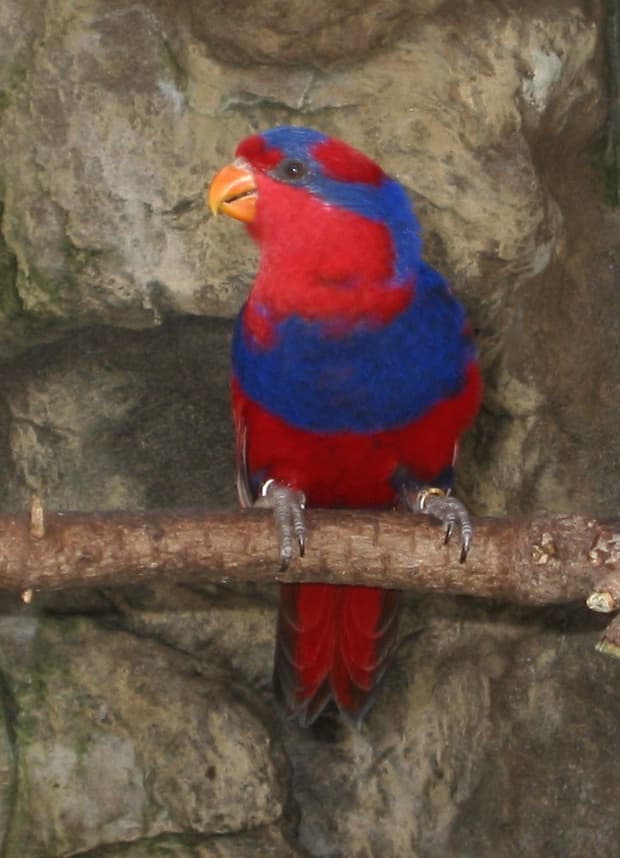
The red-and-blue lory is a small, vividly colored parrot endemic to Indonesia, specifically found on the island of Karakelong in the Talaud Islands. Its striking plumage features a mix of red, blue, purple, and black, making it easily recognizable. This species is primarily arboreal and feeds on nectar and pollen, with a significant population decline attributed to habitat loss and illegal trapping.