
Red-flanked lorikeet
Hypocharmosyna placentis·Psittaculidae
The Red-flanked lorikeet is a species of parrot found in the Moluccas, New Guinea, and the Bismarck Archipelago. It inhabits lowland and mangrove forests and is distinguished by the bright red plumage on the head and sides of adult males.
Key Facts
- ›Found in the Moluccas, New Guinea, and the Bismarck Archipelago.
- ›Inhabits subtropical or tropical moist lowland forests and mangrove forests.
- ›Adult males are characterized by red plumage on their head and sides.
- ›Formerly classified in the genus Charmosyna, it was moved to Hypocharmosyna in 2020.
- ›Five subspecies are recognized, reflecting variations across its range.

Red-Flanked Lorikeet
Moluccas, New Guinea, Bismarck Archipelago
Subtropical Or Tropical Moist Lowland Forests, Subtropical Or Tropical Mangrove Forests
Red plumage on head and sides of adult males
About Red-flanked lorikeet
The Red-flanked lorikeet, scientifically known as Hypocharmosyna placentis, is a species of parrot belonging to the family Psittaculidae. This vibrant bird is naturally found across several island regions, including the Moluccas, New Guinea, and the Bismarck Archipelago.
Natural Habitat and Distribution
This lorikeet thrives in subtropical and tropical environments, favoring moist lowland forests. Its habitat also extends to mangrove forests, indicating an adaptability to coastal and humid woodland ecosystems. The species' distribution spans a significant area within these regions of Southeast Asia and Oceania.
Taxonomy and Identification
Historically, the Red-flanked lorikeet was categorized within the genus Charmosyna. However, recent molecular phylogenetic studies published in 2020 led to its reclassification into the resurrected genus Hypocharmosyna. A key distinguishing characteristic of this species is the plumage of the adult males, which features prominent red coloration on their head and sides, providing a visually striking feature that aids in identification.
Subspecies
Five distinct subspecies of the Red-flanked lorikeet are recognized, each with a specific geographic range:
- H. p. intensior: Found in North Maluku and Gebe Island.
- H. p. ornata: Inhabits north-western New Guinea and the west Papuan Islands.
- H. p. pallidior: Occurs on Woodlark Island, the Bismarck Archipelago, Bougainville Island, and the western Solomon Islands.
- H. p. placentis: Native to South Maluku, the Aru Islands, and southern New Guinea.
- H. p. subplacens: Found in eastern New Guinea.
These subspecies highlight the variations within the species across its wide distribution.
Source: Wikipedia ↗
Frequently Asked Questions
What is the scientific name of the Red-flanked lorikeet?
The scientific name of the Red-flanked lorikeet is Hypocharmosyna placentis. This binomial name is used to classify it within the scientific community.
Where are Red-flanked lorikeets found naturally?
Red-flanked lorikeets are naturally found in the Moluccas, New Guinea, and the Bismarck Archipelago. Their range extends across these regions in Southeast Asia and Oceania.
What are the primary habitats of the Red-flanked lorikeet?
The natural habitats for the Red-flanked lorikeet include subtropical or tropical moist lowland forests. They are also found in subtropical or tropical mangrove forests.
What distinguishes adult male Red-flanked lorikeets?
Adult males of the Red-flanked lorikeet species are notable for their distinctive red plumage. This vibrant coloration is present on their head and the sides of their body.
How has the classification of the Red-flanked lorikeet changed?
The Red-flanked lorikeet was previously placed in the genus Charmosyna. Based on molecular phylogenetic studies, it was moved to the resurrected genus Hypocharmosyna in 2020.
Related Parrot species
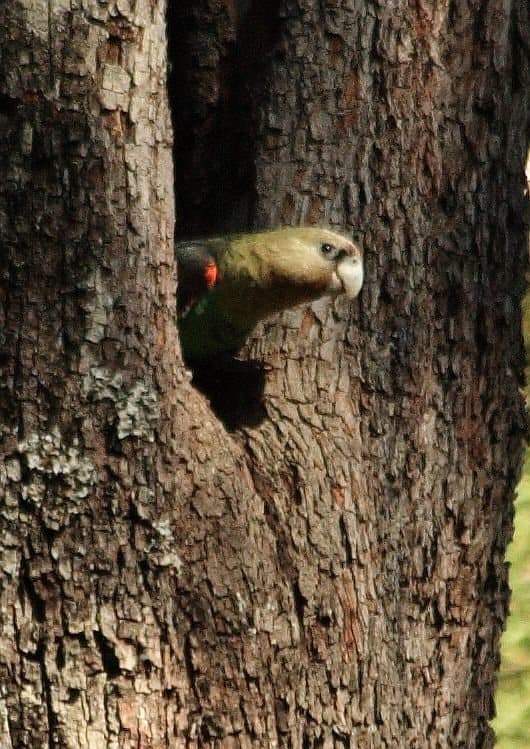
Cape parrot
The Cape parrot (Poicephalus robustus), also known as Levaillant's parrot, is a large parrot endemic to the temperate Afromontane forests of South Africa. It is distinguished by its very large beak, used for cracking hard nuts and fruit kernels, and a distinctive olive-yellow head, differentiating it from closely related savanna species. The species faces threats from habitat loss and a specific viral disease, leading to conservation efforts.
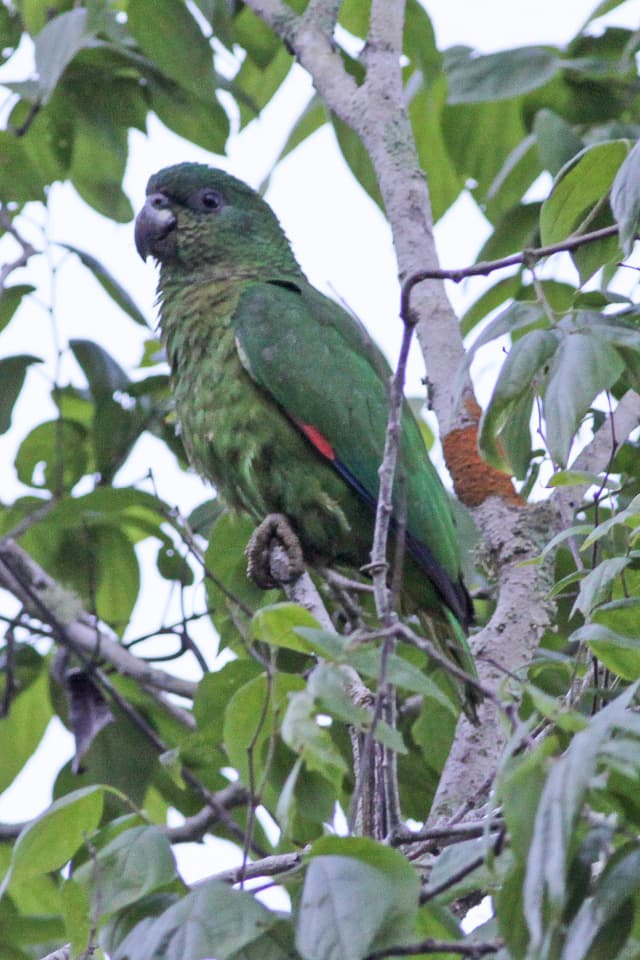
Black-billed amazon
The black-billed amazon is a small parrot endemic to Jamaica, distinguished by its predominantly green plumage and a dark, almost black bill. It is the smallest member of the Amazona parrot genus and is known for its nimble nature. This species inhabits mountainous rainforests and faces threats from habitat loss and poaching.
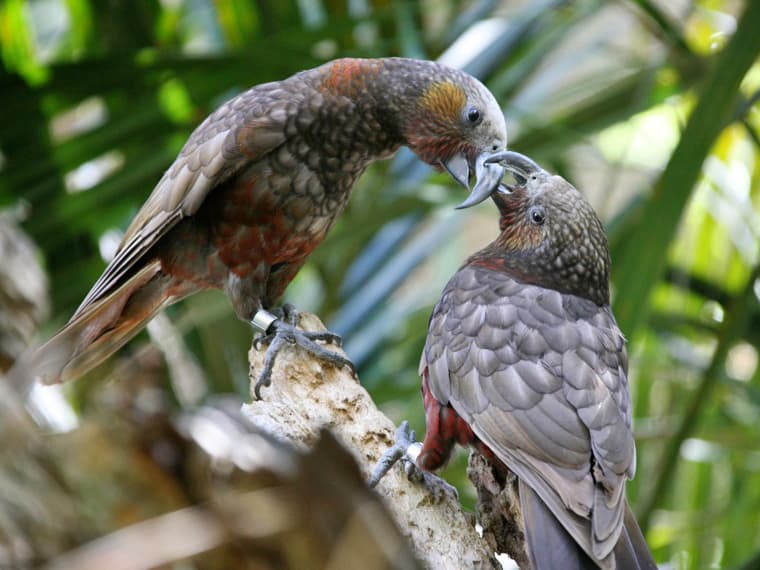
New Zealand kākā
The New Zealand kākā (Nestor meridionalis) is a large, endangered parrot native to the forests of New Zealand. Known for its distinctive brown and green plumage with scarlet flashes, it is an arboreal species that plays a vital role in its ecosystem through its varied diet, which includes fruits, seeds, nectar, and sap. Its conservation is a priority due to significant population declines caused by habitat loss and introduced predators.