
Red-fronted parrot
Poicephalus gulielmi·Psittacidae·28·3-4
The red-fronted parrot, also known as Jardine's parrot, is a medium-sized, predominantly green parrot found across extensive regions of Africa. Its distinctive red or orange plumage on the head, thighs, and wing bends varies among its three subspecies. Popular as pets due to their intelligence and vocal abilities, they are protected by CITES, making trade in wild-caught individuals illegal.
Key Facts
- ›Predominantly green plumage with variable red or orange markings on the head, thighs, and wing bends.
- ›Found across wide areas of Africa, with three recognized subspecies.
- ›Known for their ability to MIMIC speech and copy sounds, making them popular pets.
- ›Nests in tree cavities, laying typically three to four white eggs.
- ›Protected under CITES Appendix II, regulating international trade in wild-caught specimens.
- ›Size ranges from 28 cm (11 inches) in length.

Jardine's Parrot
Africa
Upper Canopy of Trees, Forests
- Variable red or orange plumage on forecrown, bend of wings, and thighs
- Scalloped appearance on black feathers due to lighter green edges
- Red-orange irises in adults
Foods found in the upper canopy of trees
- Playful
- Intelligent
- Affectionate
- Bond well with families
- Can be left alone for longer periods if occupied
Ability To Mimic Speech, Ability To Copy Sounds, Can Speak Very Clearly, Imitate Other Birds Expertly, Can Give A Shrill Call, Make Noisy Calls When Flying
Tree Cavities
About Red-fronted parrot
The red-fronted parrot, scientifically known as Poicephalus gulielmi, is a medium-sized parrot native to wide areas of Africa. Often referred to by its common alternative name, Jardine's parrot, this species is characterized by its predominantly green plumage, accented by variable amounts of red or orange on its head, thighs, and the bend of its wings, depending on the subspecies.
Description and Subspecies
Adult red-fronted parrots measure approximately 28 cm (11 inches) in length and possess a mostly green body with a short, black, squarish tail. The black feathers on their head, neck, back, and wings are edged with lighter green, creating a scalloped effect. Their irises are red-orange, and their beaks are dark grey with a horn-colored base. Juveniles have a darker, smoky appearance and brown irises, with the characteristic red or orange plumage developing with maturity. There are three recognized subspecies:
- P. g. gulielmi: Found in the Congo River basin, this subspecies exhibits orange-red coloration on its forehead, wings, and thighs. It has also been introduced to Puerto Rico.
- P. g. fantiensis: Distributed from Liberia to southern Ghana, this subspecies features an orange forecrown and orange-red or orange on the wings. It is slightly smaller than the nominate subspecies.
- P. g. massaicus: Native to the highlands of southern Kenya and northern Tanzania, this subspecies is similar to P. g. gulielmi but with less extensive orange-red coloration on the head, primarily above the beak.
Behavior and Diet
Red-fronted parrots are social birds, often observed flying swiftly in pairs or small groups above the forest, making noisy calls as they travel between roosting and feeding sites. They feed quietly within the upper canopy of trees, where their green coloration provides effective camouflage. Their diet consists of items found in this arboreal environment.
Breeding Habits
Breeding occurs in tree cavities, where the female incubates a clutch of typically three to four white eggs for about 27 days. The chicks remain in the nest for approximately 80 days before fledging.
As Pets
Often called Jardine's parrots in the pet trade, these birds are increasingly popular due to their availability and appealing traits. They are known for being playful, intelligent, and affectionate. Many are capable of speaking clearly and mimicking other sounds with remarkable accuracy. Their moderate size, temperament, and vocal abilities make them suitable companions, even for apartment dwellers, though they can emit a shrill call. Captive-bred individuals tend to form strong bonds with their families and can tolerate being left alone for longer periods if provided with sufficient stimulation.
Conservation
The population of wild red-fronted parrots in Africa is difficult to ascertain due to their vast range. A significant threat to wild populations is the trapping of birds for the pet trade. Consequently, the red-fronted parrot is listed on Appendix II of CITES (Convention on International Trade in Endangered Species of Wild Fauna and Flora), which regulates and makes illegal the trade, import, and export of all wild-caught parrots.
Source: Wikipedia ↗
Frequently Asked Questions
What are the different subspecies of the red-fronted parrot?
Three subspecies are recognized: P. g. gulielmi, found in the Congo River basin; P. g. fantiensis, distributed from Liberia to southern Ghana; and P. g. massaicus, endemic to the highlands of southern Kenya and northern Tanzania.
What is the typical size and appearance of a red-fronted parrot?
The red-fronted parrot is about 28 cm (11 inches) long and is mostly green with a short, black, squarish tail. Black feathers on the head, neck, back, and wings have lighter green edges, giving a scalloped appearance. The amount of red or orange on the head, wings, and thighs varies by subspecies.
What is the natural habitat of the red-fronted parrot?
Red-fronted parrots are found across wide areas of Africa, inhabiting diverse regions. Specifically, subspecies have distinct origins, with some endemic to the Congo River basin, others distributed from Liberia to Ghana, and one found in the highlands of Kenya and Tanzania.
What do red-fronted parrots eat?
They feed quietly in the upper canopy of trees. While specific dietary items are not detailed, their feeding behavior suggests a diet consisting of items found in tree foliage.
Are red-fronted parrots good pets?
Yes, red-fronted parrots, often called Jardine's parrots, are popular pets due to their playful, intelligent, and affectionate nature. They can speak clearly and imitate other birds, and captive-bred birds bond well with families.
What are the conservation concerns for red-fronted parrots?
The primary conservation concern is trapping of wild birds for the pet trade, which can threaten wild populations. They are protected by CITES Appendix II, making the trade, import, and export of wild-caught parrots illegal.
How long does it take for red-fronted parrot chicks to leave the nest?
Chicks of the red-fronted parrot leave the nest approximately 80 days after hatching. The female incubates the eggs for about 27 days before hatching occurs.
Related Parrot species

Duchess lorikeet
The Duchess lorikeet (Vini margarethae) is a species of parrot native to the Solomon Islands archipelago. This vibrantly colored bird, primarily bright red with distinctive yellow and purple markings, inhabits lowland and montane forests, as well as plantations. It is currently listed as Least Concern but faces threats from habitat loss and potential large-scale pet trade.
Orange-cheeked parrot
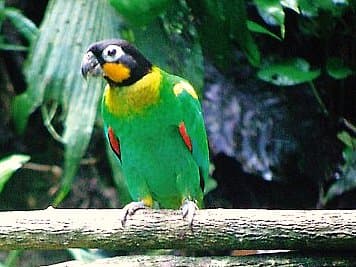
The orange-cheeked parrot, also known as Barraband's parrot, is a species of parrot native to the Amazonian Andes and humid lowland forests of the Amazon Basin in South America. Its distinctive features include an olive throat and breast, yellow thighs, and varying shades of orange on its wings and cheeks, with a notable white eye-ring. This species faces threats from habitat loss due to deforestation in its native range.
Blue-and-yellow macaw
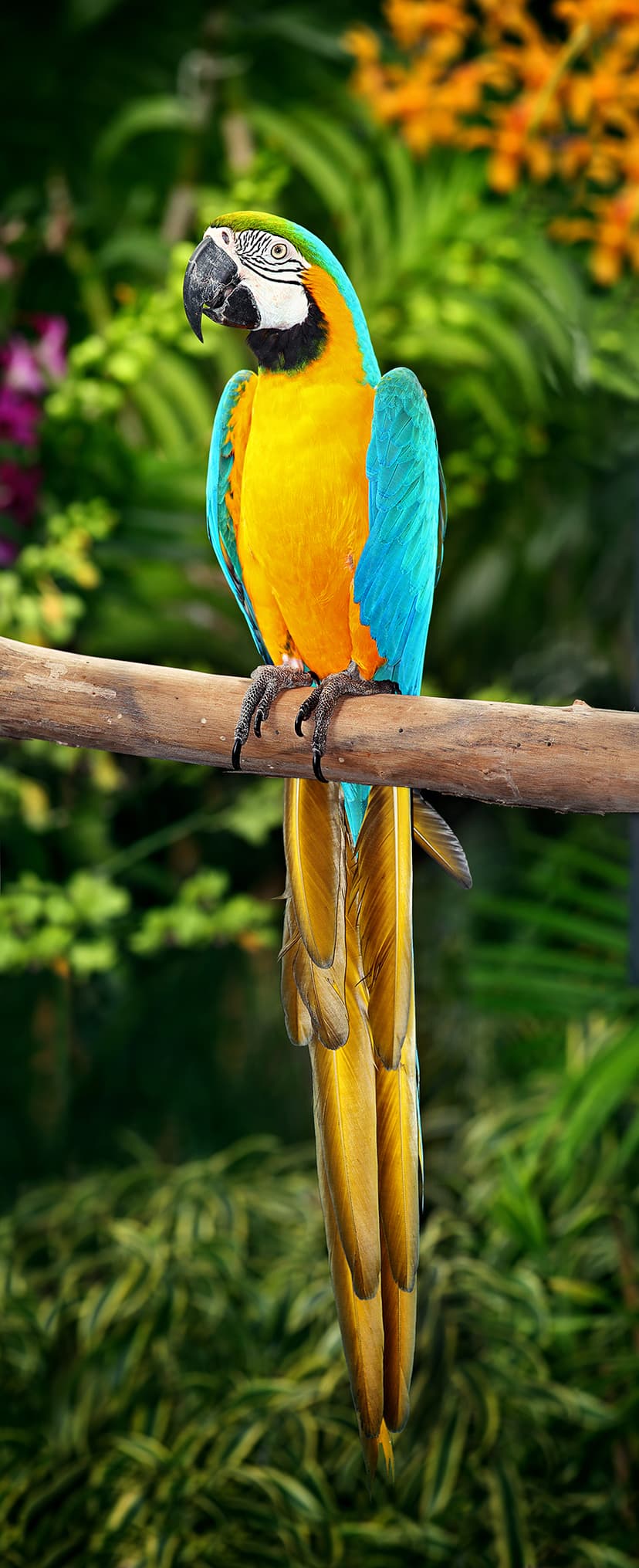
The blue-and-yellow macaw, also known as the blue-and-gold macaw, is a large Neotropical parrot native to the forests, woodlands, and savannahs of tropical Central and South America, including Trinidad. It is distinguished by its vibrant blue upperparts, yellow to orange underparts, and a green crown, making it one of the most popular and commonly kept macaw species in aviculture due to its striking appearance and ability to bond with humans.