
Red-lored amazon
Amazona autumnalis·Psittacidae·32–35·310–480
The Red-lored amazon, scientifically known as Amazona autumnalis, is a species of parrot native to the tropical Americas, ranging from eastern Mexico to Ecuador. This vibrant green parrot is distinguished by its red forehead and often yellow cheeks, with a blue crown. It is a popular pet species, known for its ability to mimic speech and its potential for a long lifespan.
Key Facts
- ›Primarily green plumage with a red forehead and blue crown.
- ›Found in humid evergreen to semi-deciduous forests.
- ›Diet consists of fruits, nuts, and seeds.
- ›Nests in tree cavities, typically laying 3-4 white eggs.
- ›Can live up to 80 years.
- ›Commonly kept as pets and known for vocalizations and mimicry.
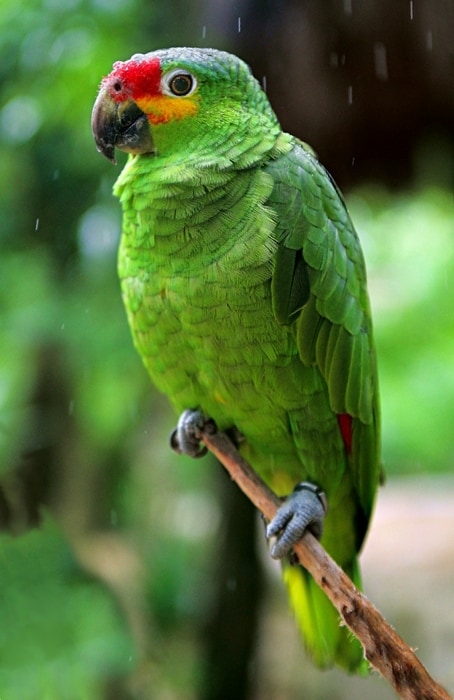
Red-Lored Parrot
North America, Central America, South America
Humid Evergreen Forests, Semi-Deciduous Forests
Red Forehead, Yellow Cheeks, Blue Crown
Fruits, Nuts, Seeds
Devoted, Can Be Aggressive Without Training, Curious
Tendency To Vocalize Loudly, Can Be Fairly Good Talkers
Tree Cavities
About Red-lored amazon
The Red-lored amazon, scientifically classified as Amazona autumnalis, is a vibrantly colored parrot native to the tropical regions of the Americas. Its natural range extends from eastern Mexico southward to Ecuador, where it inhabits humid evergreen and semi-deciduous forests, typically at altitudes up to 1,100 meters. While historically absent from certain areas, it has shown an ability to adapt to human-altered environments and has even established feral populations in some locations.
Description and Characteristics
This species is characterized by its predominantly green plumage, a striking red forehead, and a blue crown. Some subspecies also feature yellow cheeks, which may be adorned with red spots. Adult males and females are visually indistinguishable in their coloration. Juveniles can be identified by less extensive red on their forehead, reduced yellow on the cheeks, and dark irises, which lighten with age. The Red-lored amazon typically measures between 32 and 35 centimeters in length and weighs between 310 and 480 grams.
Diet and Breeding
In the wild, the Red-lored amazon's diet comprises a variety of fruits, nuts, and seeds. For those kept as pets, a balanced diet is essential, including high-quality pellets, seed mixes, and daily servings of bird-safe fresh fruits and vegetables. These parrots construct their nests in tree cavities. A clutch usually consists of three to four white eggs, which the female incubates for approximately 26 days. The young typically fledge, or leave the nest for the first time, about 60 days after hatching.
Conservation and Aviculture
The Red-lored amazon has faced population declines in some regions due to trapping for the cagebird trade, particularly in parts of Mexico and Venezuela. Despite this, the species is relatively common in aviculture and is a popular pet in the Americas. They are known for their potential to become devoted companions and their ability to mimic human speech. However, like many amazon parrots, they can be quite vocal and may exhibit aggressive behavior if not properly trained from a young age. Their lifespan in captivity can be considerable, often reaching up to 80 years.
Source: Wikipedia ↗
Frequently Asked Questions
What is the scientific name of the Red-lored amazon?
The scientific name of the Red-lored amazon is Amazona autumnalis. It was first described by Carl Linnaeus in 1758.
Where do Red-lored amazons naturally live?
Red-lored amazons are native to tropical regions of the Americas, from eastern Mexico south to Ecuador. They inhabit humid evergreen to semi-deciduous forests.
What do Red-lored amazons eat in the wild?
In their natural habitat, their diet includes fruits, nuts, and seeds. Like all parrots, their diet in captivity should be varied and include high-quality pellets, seeds, and fresh fruits and vegetables.
How long do Red-lored amazons live?
The average lifespan of a Red-lored amazon is up to 80 years. This long lifespan is typical for many parrot species, especially when well-cared for in captivity.
Do male and female Red-lored amazons look different?
No, adult males and females of the Red-lored amazon do not differ in plumage. Juveniles can be distinguished by having less yellow on their cheeks, less red on the forehead, and dark irises.
Are Red-lored amazons good pets?
Red-lored amazons are fairly common pet parrots and can be devoted companions. They are known for their ability to mimic speech, though they can also vocalize loudly and may bite if not properly trained from a young age.
Related Parrot species
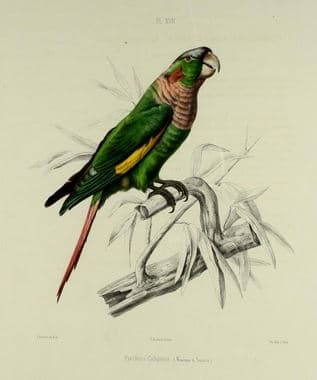
Flame-winged parakeet
The flame-winged parakeet, also known as the brown-breasted parakeet, is a medium-sized parrot endemic to the eastern Andean slopes of Colombia. This species is distinguished by its bright yellow primary coverts and bluish primaries, with vivid yellow and orange-red wing markings visible in flight, which give it its common name. It is currently facing threats from habitat loss and fragmentation, leading to a declining population.

Golden-collared macaw
The golden-collared macaw, also known as the yellow-collared macaw, is a small, primarily green parrot native to Central and South America. It is distinguished by a vibrant yellow collar on the back of its neck, a feature that becomes more pronounced with age. Often referred to as a "mini-macaw" in aviculture, this species is known for its social nature and intelligence.
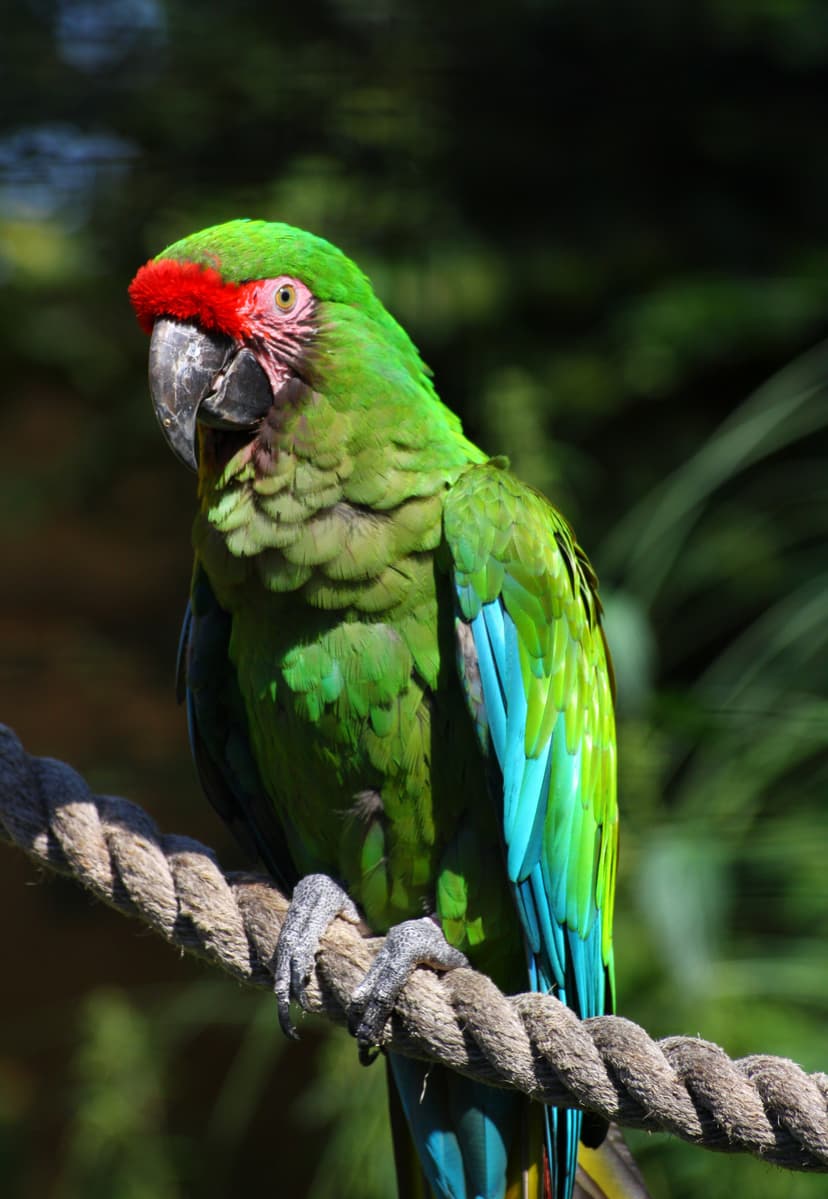
Military macaw
The military macaw (Ara militaris) is a medium to large parrot recognized by its predominantly green plumage accented with blue and yellow, and a distinctive red forehead patch, reminiscent of a military uniform. Native to a range stretching from west-central Mexico down to northern Argentina and Bolivia, these macaws are known for their loud vocalizations and social behavior. While facing conservation challenges, they are also commonly found in captivity due to their relative ease of breeding and long lifespan.