
Ceratotherium
herbivore·Near Threatened·Perissodactyla·Ceratotherium
Ceratotherium is a genus of rhinoceroses within the family Rhinocerotidae. It is most famously represented by the extant species, the white rhinoceros (Ceratotherium simum). The genus is closely related to Diceros, which includes the black rhinoceros, and both are part of the tribe Dicerotini.
Key Facts
- ›Ceratotherium is a genus of rhinoceroses, belonging to the family Rhinocerotidae.
- ›The most well-known species within this genus is the white rhinoceros, Ceratotherium simum.
- ›Ceratotherium is taxonomically closer to the genus Diceros (black rhinoceros) than to other living rhinoceroses.
- ›Fossil species such as Ceratotherium mauritanicum and Ceratotherium germanoafricanum have been identified from various African locations.
- ›The genus name Ceratotherium is derived from Greek words meaning "horn" and "beast".
- ›The earliest known remains attributed to the white rhinoceros species date back to the Early Pleistocene in East Africa.

White Rhinoceros
Wide Mouth, Two Horns
About Ceratotherium
The genus Ceratotherium is a significant group within the rhinoceros family, Rhinocerotidae, distinguished by its prominent horns and herbivorous diet. The name itself is derived from Greek words, "keratos" meaning "horn" and "therion" meaning "beast," a direct reference to its most recognizable physical attribute.
Taxonomy and Relatives
Ceratotherium is most closely aligned with the genus Diceros, which encompasses the black rhinoceros. Together, these genera form the tribe Dicerotini, a classification that highlights their shared evolutionary history. While the white rhinoceros (Ceratotherium simum) is the sole surviving species within this genus, paleontological evidence reveals a history of extinct relatives. Fossil species such as Ceratotherium mauritanicum, known from Pleistocene North Africa, and Ceratotherium germanoafricanum from East Africa, illustrate the genus's broader past distribution and diversity. The precise ancestral relationships of these extinct species to the modern white rhinoceros are subjects of ongoing scientific investigation and differing interpretations.
Evolutionary History
The earliest known fossil remains attributed to the white rhinoceros species date back to the Early Pleistocene epoch in East Africa, approximately one to two million years ago. This period marks the emergence of the lineage that would evolve into the species we recognize today. The study of fossil Ceratotherium species provides crucial insights into the diversification and geographical spread of rhinoceroses across Africa and into parts of Asia and Europe in prehistoric times.
Source: Wikipedia ↗
Frequently Asked Questions
What is the meaning of the name Ceratotherium?
The genus name Ceratotherium is derived from ancient Greek. 'Keratos' means 'horn' and 'therion' means 'beast', reflecting the prominent horn characteristic of rhinoceroses.
Which living species belongs to the genus Ceratotherium?
The only extant species within the genus Ceratotherium is the white rhinoceros, scientifically known as Ceratotherium simum.
What is the relationship between Ceratotherium and the black rhinoceros?
Ceratotherium is closely related to the genus Diceros, which contains the black rhinoceros. Both genera form the tribe Dicerotini, indicating a shared evolutionary lineage.
Are there any extinct species within the Ceratotherium genus?
Yes, several fossil species have been assigned to the genus Ceratotherium. These include Ceratotherium mauritanicum from North Africa and Ceratotherium germanoafricanum from East Africa, among others.
When did the white rhinoceros first appear?
The earliest fossil remains attributed to the white rhinoceros species date back to the Early Pleistocene period in East Africa, approximately 1 to 2 million years ago.
Related Perissodactyl species

Diceros
Diceros is a genus of rhinoceros that includes the living black rhinoceros and several extinct species. It is taxonomically closer to the genus Ceratotherium (which includes the white rhinoceros) than to other living rhinoceroses. The oldest known species assigned to this genus dates back to the Early Miocene.

Dicerorhinus
Dicerorhinus is a genus within the rhinoceros family (Rhinocerotidae) that currently includes only one living species, the Sumatran rhinoceros. This genus is distinguished by its two horns and hairy coat, and it is believed to have originated in central Myanmar during the Late Miocene. Historically, Dicerorhinus served as a 'wastebasket taxon,' meaning many species were initially placed within it but have since been reclassified into other genera.
Rhinoceros
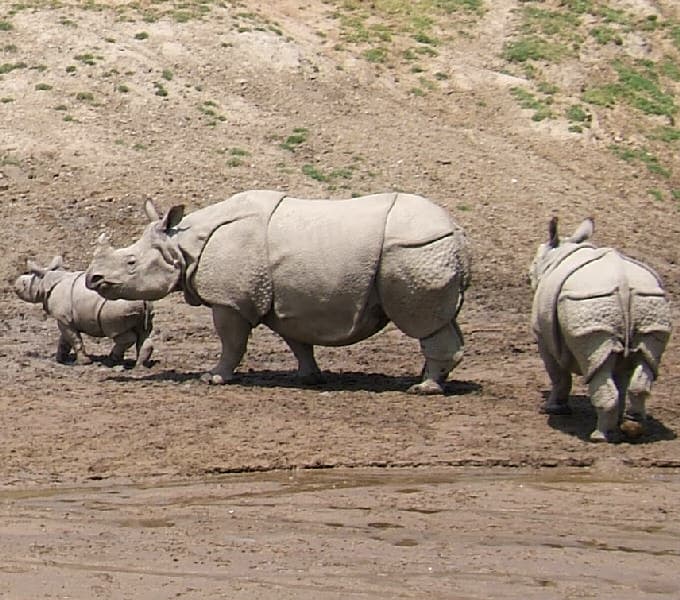
Rhinoceros is a genus of one-horned rhinoceroses, distinguished by a single horn on their snout. This genus, established by Carl Linnaeus in 1758, currently includes two living species: the Indian rhinoceros and the Javan rhinoceros. Both species are critically endangered, with the Javan rhinoceros being one of the most threatened large mammals globally.