
Rhinoceros
herbivore·Critically Endangered·Perissodactyla·Rhinoceros
Rhinoceros is a genus of one-horned rhinoceroses, distinguished by a single horn on their snout. This genus, established by Carl Linnaeus in 1758, currently includes two living species: the Indian rhinoceros and the Javan rhinoceros. Both species are critically endangered, with the Javan rhinoceros being one of the most threatened large mammals globally.
Key Facts
- ›The genus Rhinoceros contains two extant species: the Indian rhinoceros and the Javan rhinoceros.
- ›The name "Rhinoceros" originates from Greek words meaning "nose" and "horn".
- ›Both living species within the genus are highly endangered.
- ›The Javan rhinoceros is among the most critically endangered large mammals in the world.
- ›Fossil remains of the genus date back to the Late Miocene, approximately 8-9 million years ago.
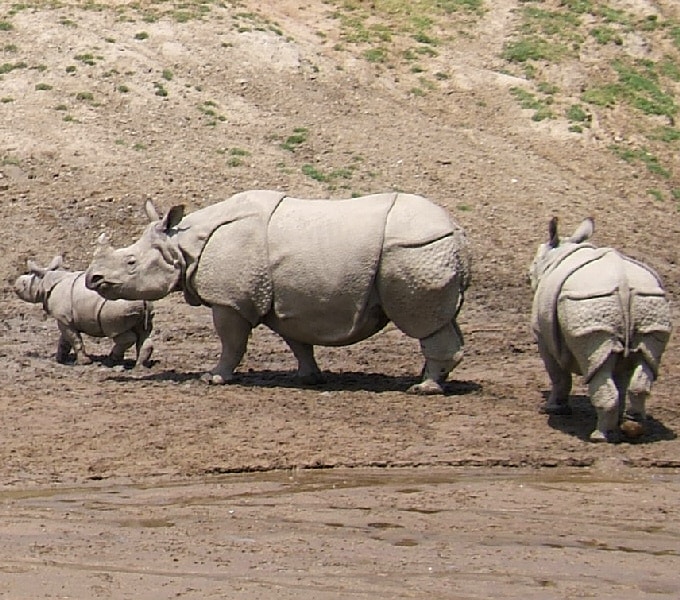
One-Horned Rhinoceroses
Possess A Single Horn On Their Nose.
Forests, Grasslands, Swamps
Indian Subcontinent, Southeast Asia, Indonesia
Single Horn
About Rhinoceros
Rhinoceros: The One-Horned Giants
The genus Rhinoceros encompasses the rhinoceroses characterized by a single horn situated on their snout. Established by the renowned Swedish taxonomist Carl Linnaeus in 1758, this genus currently includes two living species: the Indian rhinoceros (Rhinoceros unicornis) and the Javan rhinoceros (Rhinoceros sondaicus).
Etymology
The name "Rhinoceros" itself is derived from the Ancient Greek words "rhino-" (meaning "of the nose") and "kerás" (meaning "horn"), a direct reflection of their most prominent physical feature.
Classification and Extant Species
Within the family Rhinocerotidae, the genus Rhinoceros is distinct. The two extant species are:
- Indian rhinoceros (Rhinoceros unicornis): Found across the Indian subcontinent.
- Javan rhinoceros (Rhinoceros sondaicus): Primarily located in Southeast Asia and on the island of Java, Indonesia.
Conservation Status
Both living species within the genus Rhinoceros face severe threats to their survival. The Javan rhinoceros, in particular, is one of the most critically endangered large mammals in the world, with a severely depleted population estimated at only around 60 individuals surviving in their native habitat.
Evolutionary History
The fossil record indicates that the genus Rhinoceros has a long evolutionary history, with the earliest known remains dating back to the Late Miocene epoch, approximately 8 to 9 million years ago. Several extinct species have also been identified from fossil sites across Asia.
Physical Characteristics
The defining characteristic of rhinoceroses in this genus is the presence of a single, prominent horn on their nasal bone. Their robust build and thick skin are also notable features associated with these large herbivores.
Source: Wikipedia ↗
Frequently Asked Questions
What does the scientific name "Rhinoceros" mean?
The scientific name Rhinoceros is derived from the Ancient Greek words "rhino-" meaning "of the nose" and "kerás" meaning "horn". This directly refers to the single horn characteristic of these animals.
How many living species are in the genus Rhinoceros?
The genus Rhinoceros currently comprises two living species: the Indian rhinoceros (Rhinoceros unicornis) and the Javan rhinoceros (Rhinoceros sondaicus).
What is the conservation status of the Javan rhinoceros?
The Javan rhinoceros is critically endangered, making it one of the most endangered large mammals globally. Only an estimated 60 individuals remain, primarily in Java, Indonesia.
When do the earliest remains of the genus Rhinoceros date back to?
The earliest known remains attributed to the genus Rhinoceros are from the Late Miocene epoch, with fossils found in Myanmar dating to approximately 8 to 9 million years ago.
Are there any extinct species within the Rhinoceros genus?
Yes, the genus Rhinoceros includes several extinct species, such as R. sivalensis, R. platyrhinus, and R. sinensis, with fossil evidence found in various parts of Asia.
Related Perissodactyl species

Dicerorhinus
Dicerorhinus is a genus within the rhinoceros family (Rhinocerotidae) that currently includes only one living species, the Sumatran rhinoceros. This genus is distinguished by its two horns and hairy coat, and it is believed to have originated in central Myanmar during the Late Miocene. Historically, Dicerorhinus served as a 'wastebasket taxon,' meaning many species were initially placed within it but have since been reclassified into other genera.

Diceros
Diceros is a genus of rhinoceros that includes the living black rhinoceros and several extinct species. It is taxonomically closer to the genus Ceratotherium (which includes the white rhinoceros) than to other living rhinoceroses. The oldest known species assigned to this genus dates back to the Early Miocene.

Ceratotherium
Ceratotherium is a genus of rhinoceroses within the family Rhinocerotidae. It is most famously represented by the extant species, the white rhinoceros (Ceratotherium simum). The genus is closely related to Diceros, which includes the black rhinoceros, and both are part of the tribe Dicerotini.