
Dicerorhinus
herbivore·Critically Endangered·Perissodactyla·Dicerorhinus
Dicerorhinus is a genus within the rhinoceros family (Rhinocerotidae) that currently includes only one living species, the Sumatran rhinoceros. This genus is distinguished by its two horns and hairy coat, and it is believed to have originated in central Myanmar during the Late Miocene. Historically, Dicerorhinus served as a 'wastebasket taxon,' meaning many species were initially placed within it but have since been reclassified into other genera.
Key Facts
- ›Dicerorhinus is a genus of rhinoceroses with only one surviving species.
- ›The sole extant species is the Sumatran rhinoceros (Dicerorhinus sumatrensis).
- ›The genus is characterized by having two horns.
- ›It is believed to have originated in central Myanmar.
- ›Many extinct species once assigned to Dicerorhinus have been moved to other genera.
- ›The Sumatran rhinoceros is known for its hairy coat and relatively small size compared to other rhinos.

Sumatran Rhinoceros
Two Horns, Hairy Coat
Myanmar
Two Horns, Hairy Coat
About Dicerorhinus
Dicerorhinus is a genus of rhinoceroses belonging to the family Rhinocerotidae. It is most recognized for containing a single extant species, the Sumatran rhinoceros (Dicerorhinus sumatrensis), alongside several extinct species. The genus is characterized by the presence of two horns on its snout.
Origins and Taxonomy
Evidence suggests that the Dicerorhinus genus likely originated in central Myanmar during the Late Miocene epoch. Historically, the genus was treated as a "wastebasket taxon," a classification for species that did not clearly fit elsewhere. Through revisions by various researchers, many species previously assigned to Dicerorhinus have been transferred to other genera, such as Stephanorhinus, Dihoplus, Caementodon, Lartetotherium, and Rusingaceros, reflecting a more refined understanding of rhinoceros evolutionary relationships.
The Sumatran Rhinoceros
The sole surviving member of the genus, the Sumatran rhinoceros, is notable for its relatively small size compared to other rhinoceros species and for its distinctive hairy coat. This species is critically endangered, facing significant threats to its survival. Its habitat and specific behaviors are subjects of ongoing study and conservation efforts.
Source: Wikipedia ↗
Frequently Asked Questions
How many species are in the Dicerorhinus genus?
The Dicerorhinus genus currently consists of a single extant species: the Sumatran rhinoceros. Several extinct species were historically included, but many have been reclassified into different genera.
What is the most well-known species in the Dicerorhinus genus?
The most well-known and only living species in the Dicerorhinus genus is the Sumatran rhinoceros (Dicerorhinus sumatrensis). It is recognizable by its two horns and hairy coat.
Where did the Dicerorhinus genus originate?
The genus Dicerorhinus is thought to have originated in central Myanmar during the Late Miocene epoch. This region is considered the ancestral homeland for this group of rhinoceroses.
What does it mean for Dicerorhinus to be a 'wastebasket taxon'?
Historically, Dicerorhinus was considered a 'wastebasket taxon,' meaning it was a convenient classification for species that did not clearly fit into other established genera. Over time, scientific revisions have re-assigned many of these species to more appropriate genera.
What are some distinctive physical features of the Sumatran rhinoceros?
The Sumatran rhinoceros, the only living member of the Dicerorhinus genus, is characterized by its two horns and a notably hairy coat. It is also one of the smaller rhinoceros species.
Related Perissodactyl species
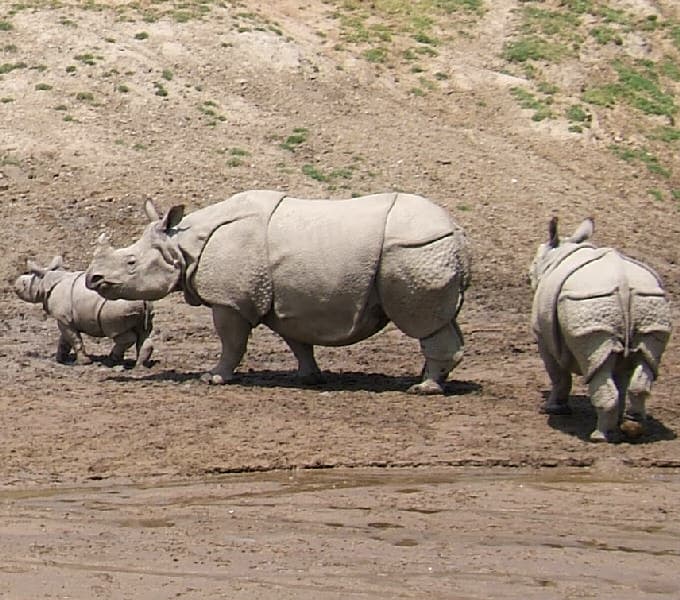
Rhinoceros
Rhinoceros is a genus of one-horned rhinoceroses, distinguished by a single horn on their snout. This genus, established by Carl Linnaeus in 1758, currently includes two living species: the Indian rhinoceros and the Javan rhinoceros. Both species are critically endangered, with the Javan rhinoceros being one of the most threatened large mammals globally.

Diceros
Diceros is a genus of rhinoceros that includes the living black rhinoceros and several extinct species. It is taxonomically closer to the genus Ceratotherium (which includes the white rhinoceros) than to other living rhinoceroses. The oldest known species assigned to this genus dates back to the Early Miocene.

Ceratotherium
Ceratotherium is a genus of rhinoceroses within the family Rhinocerotidae. It is most famously represented by the extant species, the white rhinoceros (Ceratotherium simum). The genus is closely related to Diceros, which includes the black rhinoceros, and both are part of the tribe Dicerotini.