
Diceros
Herbivore·Not specified·Perissodactyla·Diceros
Diceros is a genus of rhinoceros that includes the living black rhinoceros and several extinct species. It is taxonomically closer to the genus Ceratotherium (which includes the white rhinoceros) than to other living rhinoceroses. The oldest known species assigned to this genus dates back to the Early Miocene.
Key Facts
- ›Diceros is a genus of rhinoceros containing the extant black rhinoceros and extinct species.
- ›It is closely related to the genus Ceratotherium, which includes the white rhinoceros.
- ›The oldest species attributed to Diceros, 'Diceros' australis, existed in the Early Miocene.
- ›Fossil species such as Diceros praecox and Diceros primaevus have been identified from Miocene and Pliocene deposits in Africa and Algeria, respectively.
- ›Diceros gansuensis is a species reported from the Late Miocene of China.
- ›The earliest remains of the modern black rhinoceros, Diceros bicornis, are found in East Africa.

Black Rhinoceros
Two-Horned Rhinoceros
Various Miocene and Pliocene African Habitats, Late Miocene Chinese Habitats
Africa, China
Possesses Two Horns
About Diceros
The genus Diceros is a group of rhinoceroses that encompasses the living black rhinoceros (Diceros bicornis) and several extinct species. This genus is taxonomically positioned closer to Ceratotherium, which includes the white rhinoceros, than to other extant rhinoceros genera, forming the tribe Dicerotini.
Fossil Record
The fossil history of Diceros extends back to the Early Miocene, with the species 'Diceros' australis found in Namibia, dating approximately 17 to 18 million years ago. While this species is known from limited remains and its precise placement within the genus has been debated, it represents the earliest known member attributed to Diceros. Other extinct species assigned to the genus include Diceros praecox from the Late Miocene of Sub-Saharan Africa, which some researchers suggest may be an ancestor of the modern black rhinoceros. Diceros primaevus is known from the Late Miocene of Algeria, and Diceros douariensis has been found in the Late Miocene of Tunisia and potentially Ethiopia, though some place this species within Ceratotherium. A notable discovery outside of Africa is Diceros gansuensis, identified from the Late Miocene deposits of China.
Modern Representative
The most well-known member of the genus is the black rhinoceros (Diceros bicornis). The earliest fossil evidence for this species has been dated to the Late Miocene in East Africa, although some analyses suggest its origins might be as recent as the Early Pleistocene in Kenya. The black rhinoceros is characterized by its two prominent horns.
Source: Wikipedia ↗
Frequently Asked Questions
What living species is included in the genus Diceros?
The genus Diceros contains the extant black rhinoceros, scientifically known as Diceros bicornis. This species is the only living representative of the genus.
What is the taxonomic relationship of Diceros to other rhinoceroses?
Diceros is more closely related to the genus Ceratotherium, which contains the white rhinoceros, than to other living rhinoceroses. Together, they form the tribe Dicerotini.
When does the oldest known species assigned to Diceros date from?
The oldest species suggested to belong to the genus Diceros is 'Diceros' australis, which lived during the Early Miocene. This fossil species is estimated to be around 17-18 million years old.
Are there extinct species within the Diceros genus?
Yes, the genus Diceros includes several extinct species in addition to the living black rhinoceros. These include Diceros praecox, Diceros primaevus, Diceros douariensis, and Diceros gansuensis, found in various African and Asian fossil sites.
Where have fossils of Diceros species been found?
Fossils assigned to the Diceros genus have been discovered in various locations, including Namibia, Sub-Saharan Africa, Algeria, Tunisia, Ethiopia, and China, dating from the Early Miocene to the Pliocene.
Related Perissodactyl species

Ceratotherium
Ceratotherium is a genus of rhinoceroses within the family Rhinocerotidae. It is most famously represented by the extant species, the white rhinoceros (Ceratotherium simum). The genus is closely related to Diceros, which includes the black rhinoceros, and both are part of the tribe Dicerotini.

Dicerorhinus
Dicerorhinus is a genus within the rhinoceros family (Rhinocerotidae) that currently includes only one living species, the Sumatran rhinoceros. This genus is distinguished by its two horns and hairy coat, and it is believed to have originated in central Myanmar during the Late Miocene. Historically, Dicerorhinus served as a 'wastebasket taxon,' meaning many species were initially placed within it but have since been reclassified into other genera.
Rhinoceros
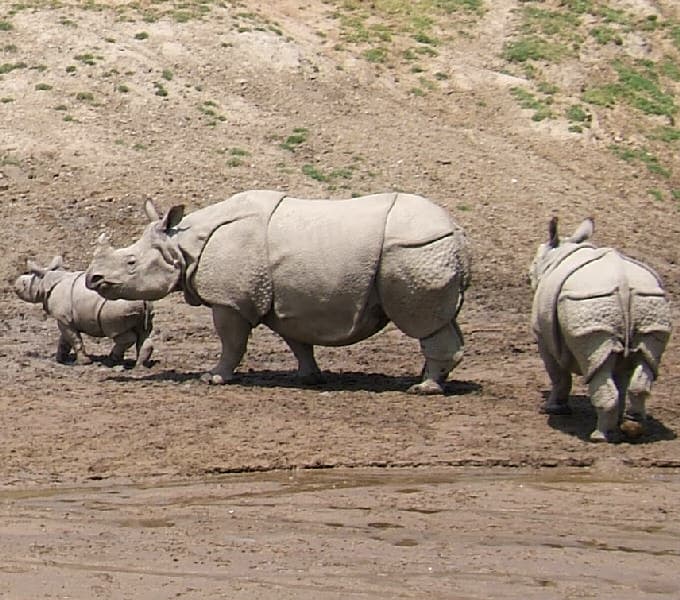
Rhinoceros is a genus of one-horned rhinoceroses, distinguished by a single horn on their snout. This genus, established by Carl Linnaeus in 1758, currently includes two living species: the Indian rhinoceros and the Javan rhinoceros. Both species are critically endangered, with the Javan rhinoceros being one of the most threatened large mammals globally.