
Equus
Herbivore (primarily grazers)·Perissodactyla·Equus
Equus is the sole living genus within the Equidae family, encompassing all species of horses, asses, and zebras. Originating in North America, this genus spread globally and is characterized by slender legs, long heads, and manes. All species are herbivores, primarily grazers, with unique social structures that vary from harem systems to territorial arrangements.
Key Facts
- ›Equus is the only extant genus in the Equidae family, including horses, asses, and zebras.
- ›The genus originated in North America and spread to other continents during the Pleistocene epoch.
- ›All Equus species are herbivores, primarily grazers, with adaptations for processing vegetation.
- ›Wild equine social structures include harem systems with one male and multiple females, or territorial systems where males establish areas that attract females.
- ›Human activities, including habitat destruction and conflicts, have significantly threatened wild equine populations.
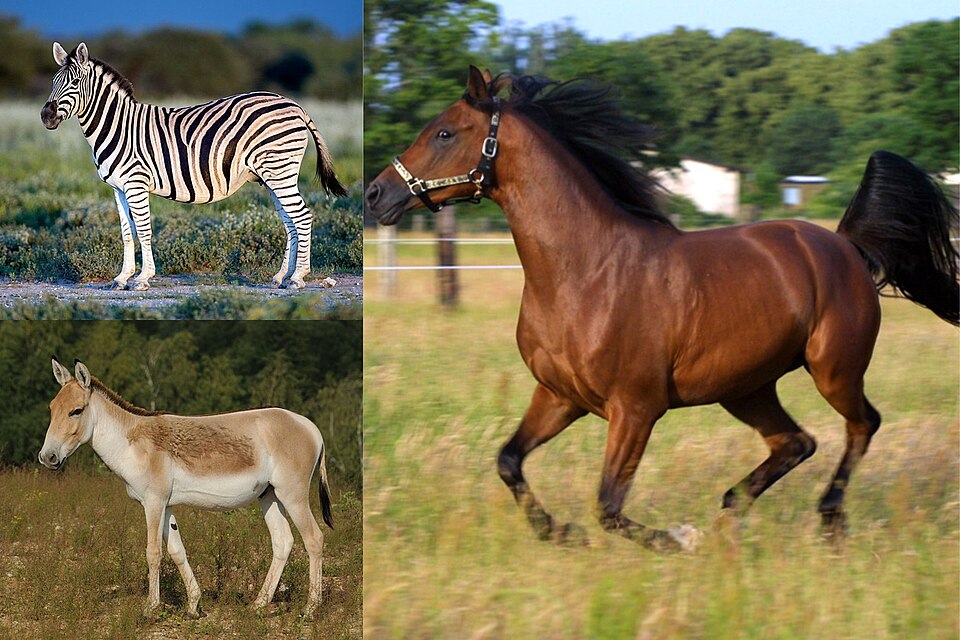
Horse, Ass, Zebra
- Slender Legs
- Long Heads
- Relatively Long Necks
- Manes
- Long Tails
- Dentition Adapted For Grazing With Large Incisors and Ridged Molars
- Males Have Spade-Shaped Canines
- Adaptations For Running and Long-Distance Travel
- Dun-Colored Coat With Primitive Markings Like Dorsal Stripes and Leg Striping Observed In Wild Species
- Erect Manes and Long Tails Ending In A Tuft of Hair
- Coats Can Be Thick In Winter and Shed Seasonally
Lush Grasslands, Savannas, Mountainous Areas, Thorny Scrubland, Arid Environments With Scattered Vegetation, Rocky Deserts, Dry Deserts
Africa, Asia, North America, South America, Worldwide
- Single Digit On Each Foot
- Vascular Penis Lacking A Baculum
- Ability To Communicate Through Complex Facial Expressions
- Some Species Possess Zebra-Like Striping For Fly Protection
About Equus
What is Equus?
Equus is the sole living genus within the mammal family Equidae, a group commonly known as odd-toed ungulates. This genus encompasses all extant species of horses, asses (donkeys), and zebras. The genus originated in North America and subsequently dispersed across the globe during the Pleistocene epoch. Equines are characterized by their slender legs, long heads, necks, and tails, typically adorned with manes.
Biology and Behavior
All species within the Equus genus are herbivores, primarily subsisting on grasses and sedges. They possess digestive systems adapted to process lower-quality vegetation. Wild equines exhibit two main social structures: a harem system, where a single adult male leads a group of females and their offspring, and a territorial system, where males establish territories that attract females. Communication among equines involves a combination of vocalizations, such as snorts and whinnies, and visual displays, including facial expressions and body postures. Their physical characteristics are adapted for running and covering long distances, with specialized dentition for grazing.
Human Relations and Conservation
The domestication of the horse dates back to around 4000–3500 BCE, with donkeys domesticated by nomadic pastoral people in North Africa over 5,000 years ago. Attempts to domesticate zebras were largely unsuccessful. Unfortunately, human activities have had a profound impact on wild equine populations, leading to significant threats such as habitat destruction and conflicts with local people and livestock. Consequently, wild equine populations have been greatly reduced and scattered across their former ranges.
Source: Wikipedia ↗
Frequently Asked Questions
What is the genus Equus?
Equus is the genus that includes all living species of horses, asses, and zebras. It is the only surviving genus within the Equidae family. These animals are known as odd-toed ungulates.
Where did Equus originate?
The genus Equus is believed to have originated in North America. From there, it dispersed into the Old World and South America during the Early and Middle Pleistocene epochs.
What do Equus species eat?
All species within the genus Equus are herbivores. They are primarily grazers, preferring grasses and sedges. However, they can also consume bark, leaves, buds, and fruits when their preferred food is scarce.
How do Equus species communicate?
Equines communicate both visually and vocally. Vocalizations include snorting for alarm, squealing when in pain or play fighting, and species-specific calls like whinnying, nickering, or barking. Visual communication involves facial expressions and body postures, such as ear and tail positions.
What are the main social structures in Equus species?
Wild equines exhibit two primary social structures: a harem system, where one male leads several females and their young, and a territorial system, where males establish territories that attract females. In both systems, females care for offspring, and males may also participate.
Are there any domestic species within the genus Equus?
Yes, two domestic species are recognized within the genus Equus: the domestic horse (Equus caballus) and the domestic donkey (Equus asinus). Their feral descendants are also found worldwide.
What are the conservation concerns for wild Equus populations?
Wild equine populations face significant threats from habitat destruction and conflicts with humans and livestock. These factors have led to a decimation of their populations across many former ranges since the 20th century.
Related Perissodactyl species

Diceros
Diceros is a genus of rhinoceros that includes the living black rhinoceros and several extinct species. It is taxonomically closer to the genus Ceratotherium (which includes the white rhinoceros) than to other living rhinoceroses. The oldest known species assigned to this genus dates back to the Early Miocene.

Equidae
Equidae, commonly known as the horse family, encompasses horses, asses, zebras, and numerous extinct relatives. This family originated in North America over 50 million years ago, evolving from small, multi-toed ungulates into larger, single-toed animals. All currently existing species belong to the genus Equus, and the family is part of the order Perissodactyla.

Ceratotherium
Ceratotherium is a genus of rhinoceroses within the family Rhinocerotidae. It is most famously represented by the extant species, the white rhinoceros (Ceratotherium simum). The genus is closely related to Diceros, which includes the black rhinoceros, and both are part of the tribe Dicerotini.