
Alouatta
Atelidae·South America·South and Central American forests
Howler monkeys (genus Alouatta) are the most widespread primate genus in the Neotropics, native to South and Central American forests. They are distinguished by their exceptionally loud howls, which can be heard from great distances, and are primarily folivores with significant frugivory. As among the largest of the New World monkeys, they play a crucial role in seed dispersal.
Key Facts
- ›Primarily folivores, meaning they eat leaves, but also consume significant amounts of fruit.
- ›Possess enlarged hyoid bones that amplify their characteristic loud howls.
- ›Have prehensile tails that can support their entire body weight, aiding in arboreal locomotion.
- ›Exhibit trichromatic color vision, a trait that evolved independently in both males and females.
- ›Are the most widespread primate genus in the Neotropics, found across South and Central American forests.
- ›Play a vital role in seed dispersal due to their diet and locomotion.

Tropical Rainforest, Forest Canopy
Folivore, Frugivore, Buds, Flowers, Nuts, Eggs
Arboreal, Quadrupedal, Terrestrial
Enlarged Hyoid Bone For Vocalizations, Prehensile Tail, Trichromatic Color Vision In Both Sexes
Human Predation, Habitat Destruction, Illegal Wildlife Trade, Capture For Pets Or Zoo Animals
About Alouatta
Alouatta: The Howler Monkeys
The genus Alouatta, commonly known as howler monkeys, represents the most widespread primate genus found throughout the Neotropics. Native to the forests of South and Central America, these primates are notable for their impressive vocalizations, the "howls" that give them their name, which can carry for considerable distances through dense vegetation. They are among the largest of the New World monkeys, sharing this distinction with other genera like muriquis, spider monkeys, and woolly monkeys.
Anatomy and Physiology
Howler monkeys possess short snouts and wide-set, rounded nostrils. Their sense of smell is acute, capable of detecting food sources up to 2 kilometers away. A defining characteristic is their tail; while their body length ranges from 56 to 92 cm (excluding the tail), their tails can be of equal or even greater length. Like many New World monkeys, they feature prehensile tails, which are essential for navigating their arboreal environment and for manipulating food. Uniquely among New World monkeys, both male and female howler monkeys have trichromatic color vision, a trait that evolved independently. Males are typically heavier than females.
Their vocal abilities are facilitated by an enlarged and pneumatized hyoid bone, a rare instance of postcranial pneumaticity. This anatomical feature allows for the amplification of their deep, guttural calls. The size of the hyoid bone is linked to social dynamics, with larger hyoids potentially indicating a greater investment in precopulatory traits and vocal displays for territory defense.
Diet and Locomotion
Howler monkeys are primarily folivores, meaning their diet consists mainly of leaves, particularly from the upper canopy. They supplement this with fruits, buds, and flowers, acting as significant seed dispersal agents as many seeds pass through their digestive system intact. Their locomotion is predominantly quadrupedal, moving along the tops of branches and utilizing their strong prehensile tails for balance and support, especially when young. While largely arboreal, they also travel on the ground, and sitting and resting are frequent activities.
Social Behavior and Communication
Socially, most howler species live in groups of six to fifteen individuals, typically comprising one to three adult males and multiple females. Group composition can influence male anatomy, with larger groups often having males with smaller hyoids and larger testes, suggesting different reproductive strategies. Vocal communication is paramount, with males calling at dawn and throughout the day. These howls serve to maintain intergroup spacing, protect territories, and potentially guard mates. They can also communicate information about resource availability and the location of neighbors.
Relationship with Humans and Conservation
Historically, howler monkeys held cultural significance for ancient civilizations like the Maya, who viewed them as divine patrons of artisans and depicted them in art and mythology. While generally not aggressive, some species can be difficult in captivity. Threats to their populations are substantial, including human predation, widespread habitat destruction, and the illegal wildlife trade for pets and zoo animals. These factors contribute to ongoing conservation concerns for various howler monkey species.
Source: Wikipedia ↗
Frequently Asked Questions
What are howler monkeys known for?
Howler monkeys are most famous for their incredibly loud vocalizations, or howls, which can travel for miles through dense forests. These sounds are used for communication, territory defense, and mate attraction.
What do howler monkeys eat?
Their diet consists primarily of leaves, making them folivores, but they also consume a significant amount of fruit, buds, and flowers. They are careful to avoid toxic leaves and will occasionally raid nests for eggs.
Where do howler monkeys live?
Howler monkeys are native to the forests of South and Central America, making them the most widespread primate genus in the Neotropics. They inhabit various forest types, from dense rainforests to areas with more open canopy.
What is the social structure of howler monkeys?
Most howler monkey species live in groups of six to fifteen individuals, typically consisting of one to three adult males and multiple females. However, some species, like the mantled howler monkey, can form larger groups.
How do howler monkeys move?
Howler monkeys are primarily arboreal and move quadrupedally along the tops of branches, often using their strong prehensile tails for support. They can also travel on the ground, and sitting and resting are frequent postures.
What are the main threats to howler monkeys?
The primary threats to howler monkeys include human predation, habitat destruction due to deforestation, the illegal wildlife trade, and capture for the pet or zoo animal markets.
Related Primate species

Ateles
Spider monkeys, belonging to the genus Ateles, are New World monkeys found in the tropical forests of Central and South America. They are distinguished by their long limbs, lack of thumbs, and highly prehensile tails, which they use to hang from branches, giving them a spider-like appearance. These intelligent and social primates are primarily frugivorous and play a crucial role in seed dispersal.
Brachyteles
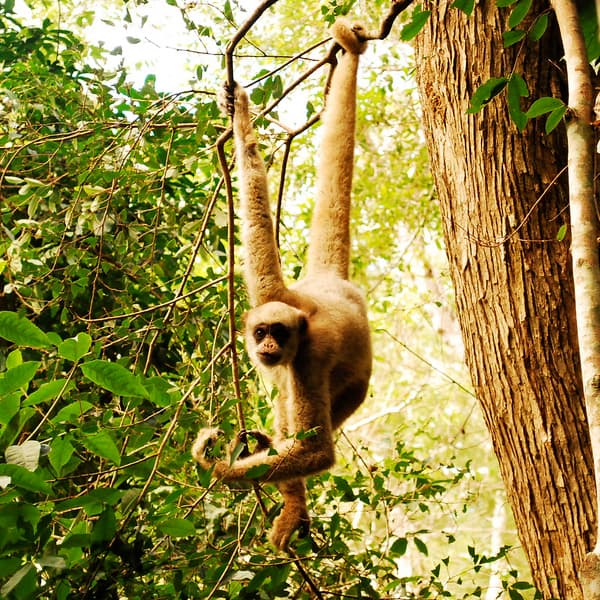
The muriquis, also known as woolly spider monkeys, are the largest New World monkeys, belonging to the genus Brachyteles. Closely related to spider monkeys and woolly monkeys, these primates are primarily found in southeastern Brazil, often inhabiting coffee estates. One species, the northern muriqui, is among the most endangered primates globally.
Aotus
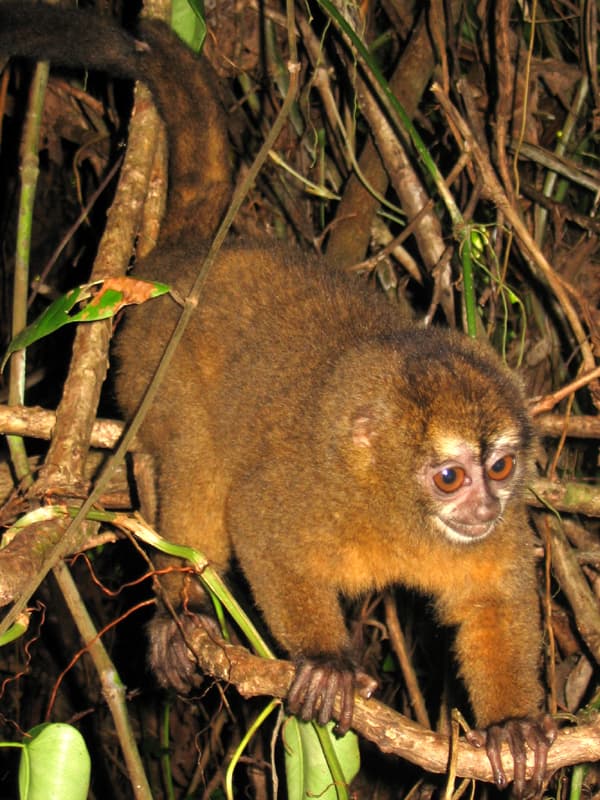
Night monkeys, also known as owl monkeys or douroucoulis, are the sole living members of the Aotidae family and are distinguished as the only truly nocturnal monkeys. Found across Panama and South America, these primates inhabit various forest types and are characterized by their large eyes adapted for low-light vision. They live in small family groups and are known for their complex vocalizations and social monogamy.