
Ateles
Atelidae·South America·Varies by species (Vulnerable, Endangered, Critically Endangered)·From southern Mexico to Brazil
Spider monkeys, belonging to the genus Ateles, are New World monkeys found in the tropical forests of Central and South America. They are distinguished by their long limbs, lack of thumbs, and highly prehensile tails, which they use to hang from branches, giving them a spider-like appearance. These intelligent and social primates are primarily frugivorous and play a crucial role in seed dispersal.
Key Facts
- ›Spider monkeys are New World monkeys native to Central and South America.
- ›They possess long, spindly limbs and a prehensile tail, lacking thumbs.
- ›Their diet consists mainly of fruits, supplemented by leaves, flowers, and insects.
- ›Spider monkeys are highly social animals, living in groups that split into smaller subgroups for foraging.
- ›They are considered among the most intelligent New World monkeys.
- ›All species of spider monkeys are currently under threat, with one critically endangered.

Tropical Forests, Moist Evergreen Forests, Primary Rainforest, Upper Canopy of Rainforests
Frugivore, Leaves, Flowers, Insects
Arboreal, Brachiation, Quadrupedal
- Prehensile Tail
- Reduced Or Non-Existent Thumbs
- Long, Spindly Limbs
- Deftly Prehensile Tails With Hairless, Grooved Tips
- Highly Developed Clitoris In Females
Habitat Destruction, Hunting By Local Human Populations, Malaria
About Ateles
Spider Monkeys (Ateles)
Spider monkeys, belonging to the genus Ateles, are a group of New World monkeys renowned for their distinctive appearance and remarkable agility in arboreal environments. Native to the tropical forests of Central and South America, ranging from southern Mexico down to Brazil, these primates are easily recognized by their disproportionately long, slender limbs and the absence of thumbs on their hands. Their most striking feature is their powerfully prehensile tail, which is highly flexible and possesses a hairless, grooved tip similar to fingerprints, allowing it to grasp branches with the dexterity of a fifth hand. This adaptation, combined with their long arms, enables them to move through the high canopy with a gait that resembles a spider dangling from a web, hence their common name.
These monkeys are among the largest New World primates, and they inhabit the upper layers of the rainforest, foraging in the high canopy between 25 to 30 meters above the ground. Their diet is predominantly frugivorous, with fruits making up the vast majority of their food intake, though they will also consume leaves, flowers, and insects when necessary. This reliance on fruit and their need for large tracts of undisturbed primary rainforest make them particularly vulnerable to habitat loss. Spider monkeys play a significant ecological role as seed dispersers, as they swallow fruits whole, with seeds eventually being excreted and fertilized.
Socially, spider monkeys live in loose groups, typically comprising 15 to 25 individuals, though these groups can sometimes number up to 30 or 40. During the day, these larger groups often break up into smaller subgroups for foraging. Research suggests they are among the most intelligent New World monkeys, a trait attributed to their complex social systems and the cognitive demands of their frugivorous diet, which requires them to remember the locations and fruiting times of numerous plant species. They communicate through a variety of vocalizations, including barks when threatened, and also use postures and stances. All seven species within the genus Ateles are currently facing significant threats, with conservation statuses ranging from vulnerable to critically endangered, primarily due to habitat destruction from logging and land clearing, as well as hunting by local human populations.
Source: Wikipedia ↗
Frequently Asked Questions
What makes spider monkeys unique?
Spider monkeys are unique due to their long, spindly limbs and their lack of thumbs, which, along with their prehensile tails, gives them a spider-like appearance and allows them to move through trees with great agility. Their prehensile tails act as a fifth limb for grasping branches.
What do spider monkeys eat?
Their diet is primarily frugivorous, meaning they eat fleshy fruits, which can make up 71 to 83 percent of their food intake. When fruits are scarce, they will also consume leaves, flowers, and insects.
How do spider monkeys communicate?
Spider monkeys communicate through postures and stances to convey intentions. They also vocalize, producing barks when threatened, and other sounds like whinnies and screams.
What is the social structure of spider monkeys?
Spider monkeys are social animals that live in loose groups, typically ranging from 15 to 40 individuals. These larger groups often split into smaller subgroups during the day for foraging, with subgroup size varying based on food availability and predation risk.
Are spider monkeys endangered?
Yes, all species of spider monkeys are under threat. The IUCN Red List categorizes one species as vulnerable, five as endangered, and one as critically endangered, primarily due to habitat destruction and hunting.
What is the intelligence level of spider monkeys?
Meta-analyses of primate cognition studies have indicated that spider monkeys are the most intelligent New World monkeys. This is thought to be linked to their complex social systems and their frugivorous diet, which requires them to remember fruit locations and availability.
Related Primate species
Brachyteles
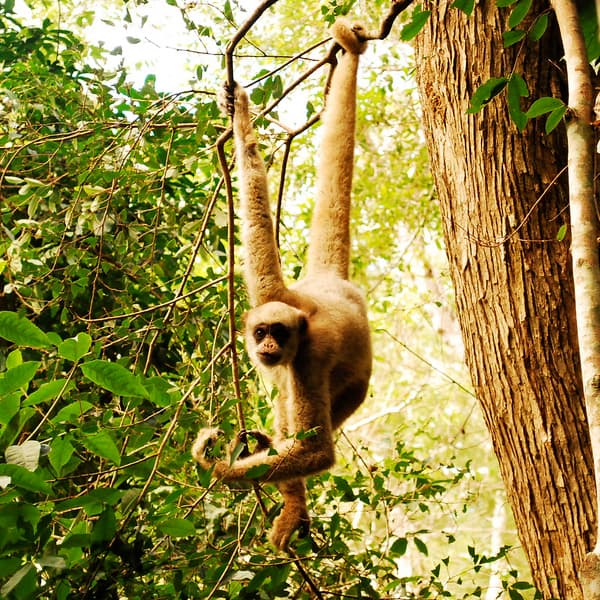
The muriquis, also known as woolly spider monkeys, are the largest New World monkeys, belonging to the genus Brachyteles. Closely related to spider monkeys and woolly monkeys, these primates are primarily found in southeastern Brazil, often inhabiting coffee estates. One species, the northern muriqui, is among the most endangered primates globally.

Alouatta
Howler monkeys (genus Alouatta) are the most widespread primate genus in the Neotropics, native to South and Central American forests. They are distinguished by their exceptionally loud howls, which can be heard from great distances, and are primarily folivores with significant frugivory. As among the largest of the New World monkeys, they play a crucial role in seed dispersal.
Aotus
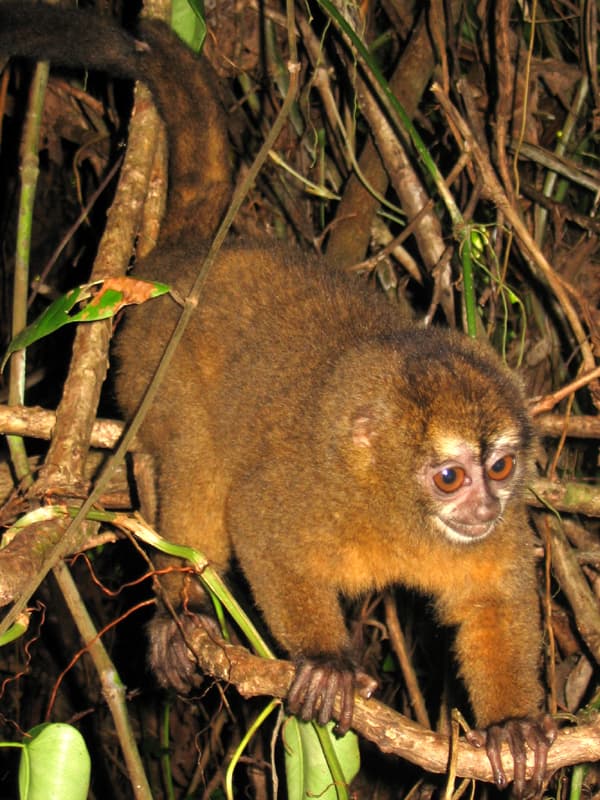
Night monkeys, also known as owl monkeys or douroucoulis, are the sole living members of the Aotidae family and are distinguished as the only truly nocturnal monkeys. Found across Panama and South America, these primates inhabit various forest types and are characterized by their large eyes adapted for low-light vision. They live in small family groups and are known for their complex vocalizations and social monogamy.