
Aotus
Aotidae·South America·Varies by species (Endangered, Vulnerable, Least Concern, Data Deficient)·Panama and much of South America (e.g., Colombia, Ecuador, Peru, Brazil, Paraguay, Argentina, Bolivia, Venezuela)
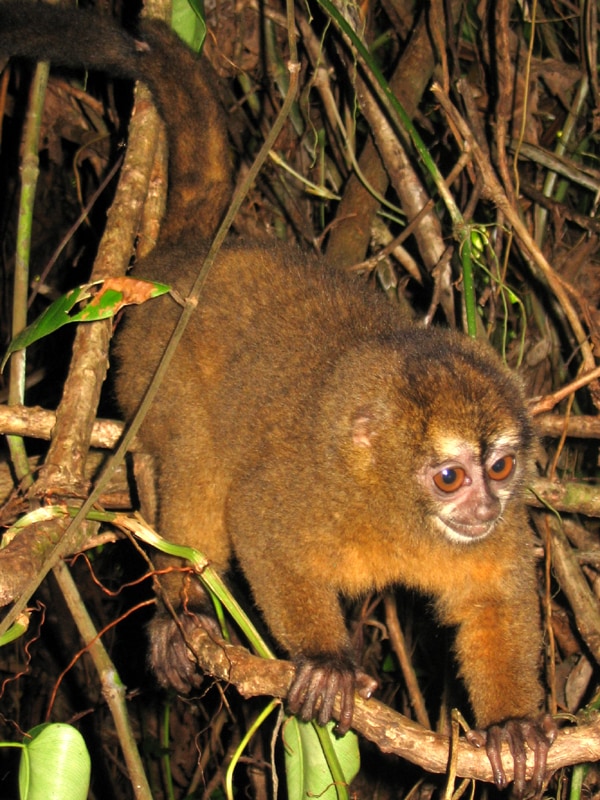
Night monkeys, also known as owl monkeys or douroucoulis, are the sole living members of the Aotidae family and are distinguished as the only truly nocturnal monkeys. Found across Panama and South America, these primates inhabit various forest types and are characterized by their large eyes adapted for low-light vision. They live in small family groups and are known for their complex vocalizations and social monogamy.
Key Facts
- ›The only truly nocturnal monkey species.
- ›Possess large eyes for enhanced night vision.
- ›Live in small family groups of a mated pair and their offspring.
- ›Are socially monogamous with males as primary caregivers.
- ›Rely heavily on olfaction for foraging and communication.
- ›Threatened by habitat loss, the pet trade, and biomedical research.
Primary Forests, Secondary Forests, Tropical Rainforests, Cloud Forests
Frugivore, Folivore, Insectivore
Arboreal, Quadrupedal
- Large Eyes For Nocturnal Vision
- Ears Are Difficult To See
- Monochromatic Vision
- Reliance On Olfaction For Foraging and Communication
- Male Primary Caregiver
Habitat Loss, Pet Trade, Hunting For Bushmeat, Biomedical Research
About Aotus
Night Monkeys (Genus Aotus)
Night monkeys, also known by the common names owl monkeys or douroucoulis, represent the sole living genus, Aotus, within the family Aotidae. They are distinguished as the only primate group that is truly nocturnal, exhibiting activity exclusively during the nighttime hours. This adaptation is supported by their notably large eyes, which are crucial for enhanced vision in low-light conditions.
Distribution and Habitat
The genus Aotus is found across Panama and extends throughout much of South America. Their natural habitats are diverse, encompassing primary and secondary forests, tropical rainforests, and cloud forests, with some species inhabiting altitudes up to 2,400 meters (7,900 ft). A key distinction in their distribution is that gray-necked species are generally found north of the Amazon River, while red-necked species are located south of it.
Physical and Behavioral Characteristics
Night monkeys possess large brown eyes, and their genus name, Aotus, reflects their ears being largely concealed. While their vision is adapted for night, they have monochromatic vision and lack the ability to perceive color. They are known for their varied vocalizations and live in small family groups, typically comprising a mated pair and their immature offspring. These primates are socially monogamous, with males acting as the primary caregivers for infants.
Diet and Ecology
Primarily frugivorous, night monkeys also incorporate leaves and insects into their diet. They employ a technique of using their palm to flatten insects against tree branches before consumption. Their reliance on olfaction is significant, aiding in foraging and communication, with olfactory organs being larger than those of many diurnal primates. This acute sense of smell is vital for identifying ripe fruits and navigating their environment.
Conservation and Research
Night monkeys face considerable threats, including habitat loss, the illegal pet trade, and hunting for bushmeat. Furthermore, they are susceptible to Plasmodium falciparum, the human malaria parasite, leading to their use in biomedical research for malaria studies. The conservation status of night monkey species varies, with some listed as Endangered, others as Vulnerable, and some as Least Concern by the IUCN, highlighting the varied pressures on different populations.
Source: Wikipedia ↗
Frequently Asked Questions
What makes night monkeys unique among primates?
Night monkeys are the only primate species that are truly nocturnal, meaning they are active exclusively at night. They have evolved large eyes to see in the dark and a specialized olfactory system for foraging and communication in low light conditions.
What is the social structure of night monkeys?
Night monkeys live in small family groups typically consisting of a mated pair and their immature offspring. They are socially monogamous, forming strong pair bonds, and males play a significant role as the primary caregivers for their young.
What do night monkeys eat?
Their diet is primarily frugivorous, meaning they eat fruits. However, they also consume leaves and insects, with juveniles and females showing a particular aptitude for catching insects. They may also forage on flowers when other food sources are scarce.
Where are night monkeys found?
Night monkeys are distributed across Panama and a significant portion of South America, including countries like Colombia, Ecuador, Peru, Brazil, Paraguay, Argentina, Bolivia, and Venezuela. They inhabit various forest types, from tropical rainforests to cloud forests.
What are the main threats facing night monkeys?
Night monkeys face several significant threats, including habitat loss due to deforestation, the illegal pet trade, and hunting for bushmeat. They are also notably impacted by malaria and are used in biomedical research, which can also pose risks.
How do night monkeys navigate and find food at night?
Night monkeys rely heavily on their sense of smell to locate food and communicate. Their large eyes help with vision in low light, and they use scent marking to navigate routes and indicate food sources. They also have good spatial resolution for detecting visual cues at night.
Related Primate species

Ateles
Spider monkeys, belonging to the genus Ateles, are New World monkeys found in the tropical forests of Central and South America. They are distinguished by their long limbs, lack of thumbs, and highly prehensile tails, which they use to hang from branches, giving them a spider-like appearance. These intelligent and social primates are primarily frugivorous and play a crucial role in seed dispersal.

Alouatta
Howler monkeys (genus Alouatta) are the most widespread primate genus in the Neotropics, native to South and Central American forests. They are distinguished by their exceptionally loud howls, which can be heard from great distances, and are primarily folivores with significant frugivory. As among the largest of the New World monkeys, they play a crucial role in seed dispersal.
Brachyteles
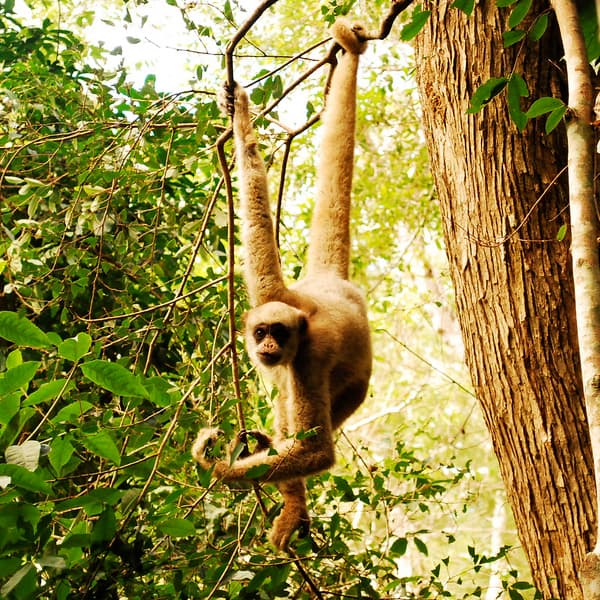
The muriquis, also known as woolly spider monkeys, are the largest New World monkeys, belonging to the genus Brachyteles. Closely related to spider monkeys and woolly monkeys, these primates are primarily found in southeastern Brazil, often inhabiting coffee estates. One species, the northern muriqui, is among the most endangered primates globally.