
Brachyteles
Atelidae·South America·Southeastern Brazil
The muriquis, also known as woolly spider monkeys, are the largest New World monkeys, belonging to the genus Brachyteles. Closely related to spider monkeys and woolly monkeys, these primates are primarily found in southeastern Brazil, often inhabiting coffee estates. One species, the northern muriqui, is among the most endangered primates globally.
Key Facts
- ›The largest species of New World monkeys.
- ›Closely related to spider monkeys and woolly monkeys.
- ›Primarily inhabit coffee estates in southeastern Brazil.
- ›Males and females are of similar size and weight.
- ›The northern muriqui is one of the most endangered monkey species.
- ›Also known as woolly spider monkeys.
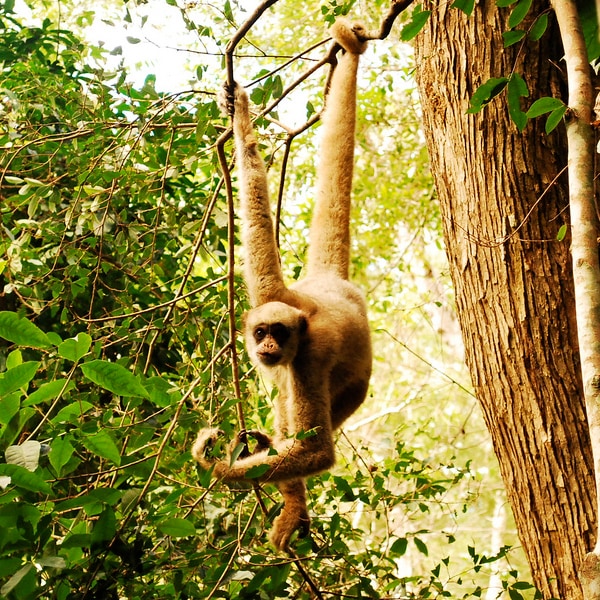
Forests, Coffee Estates
Arboreal, Brachiation, Quadrupedal
Largest New World Monkeys, Woolly Spider Monkey Appearance
About Brachyteles
The genus Brachyteles encompasses the muriquis, a group of primates commonly referred to as woolly spider monkeys. These primates hold the distinction of being the largest species of New World monkeys. They are taxonomically closely related to both spider monkeys and woolly monkeys, sharing characteristics with both groups.
Distribution and Habitat
Muriquis are found primarily in the southeastern region of Brazil. Their natural habitat includes forests, and they have also been observed to inhabit coffee estates within this area. This specialized habitat preference can make them particularly vulnerable to changes in land use.
Conservation Status
Conservation is a significant concern for the genus Brachyteles. Specifically, the northern muriqui is recognized as one of the most endangered monkey species globally. The survival of both species within the genus is precarious, highlighting the urgent need for conservation efforts.
Physical Characteristics
A notable feature of muriquis is the absence of significant sexual dimorphism in terms of size and weight; males and females are approximately the same size and weigh similarly. Their physical adaptations allow for arboreal locomotion, including brachiation and quadrupedal movement through the trees.
Source: Wikipedia ↗
Frequently Asked Questions
What are muriquis?
Muriquis are the monkeys of the genus Brachyteles, also known as woolly spider monkeys. They are the largest species of New World monkeys and are closely related to spider monkeys and woolly monkeys.
Where do muriquis live?
Muriquis primarily live in southeastern Brazil. They are often found inhabiting coffee estates in this region.
Are muriquis endangered?
Yes, the northern muriqui is considered one of the most endangered monkey species in the world. Both species are facing significant conservation challenges.
What is the relationship between Brachyteles and woolly spider monkeys?
Brachyteles is the scientific genus name for the monkeys commonly known as muriquis or woolly spider monkeys. They are closely related to both spider monkeys and woolly monkeys.
Are male and female muriquis different in size?
No, male muriquis are the same size and weight as females. Sexual dimorphism in size is not a characteristic of this genus.
Related Primate species

Ateles
Spider monkeys, belonging to the genus Ateles, are New World monkeys found in the tropical forests of Central and South America. They are distinguished by their long limbs, lack of thumbs, and highly prehensile tails, which they use to hang from branches, giving them a spider-like appearance. These intelligent and social primates are primarily frugivorous and play a crucial role in seed dispersal.

Alouatta
Howler monkeys (genus Alouatta) are the most widespread primate genus in the Neotropics, native to South and Central American forests. They are distinguished by their exceptionally loud howls, which can be heard from great distances, and are primarily folivores with significant frugivory. As among the largest of the New World monkeys, they play a crucial role in seed dispersal.
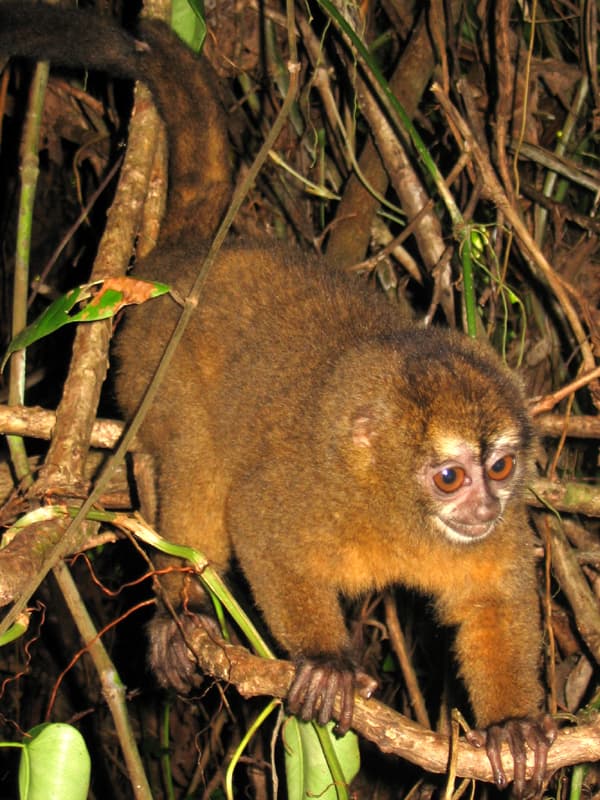
Aotus
Night monkeys, also known as owl monkeys or douroucoulis, are the sole living members of the Aotidae family and are distinguished as the only truly nocturnal monkeys. Found across Panama and South America, these primates inhabit various forest types and are characterized by their large eyes adapted for low-light vision. They live in small family groups and are known for their complex vocalizations and social monogamy.