
Accipiter cooperii
Cooper's hawk is a medium-sized hawk native to North America, ranging from southern Canada to Mexico. It is known for its exceptional agility, which it uses to hunt agile prey like birds and small mammals. Distinctive features include its blue-gray or brown-gray plumage, a long, barred tail with a white tip, and forward-set eyes adapted for precise hunting.
Key Facts
- ›Cooper's hawk is a medium-sized hawk found across North America.
- ›Males are significantly smaller than females, exhibiting pronounced sexual dimorphism.
- ›Its diet primarily consists of small to medium-sized birds, supplemented by small mammals and reptiles.
- ›They prefer to nest in tall trees with dense canopy cover.
- ›The species was named in honor of ornithologist William Cooper by Charles Lucien Bonaparte in 1828.
- ›Population numbers are increasing as of 2024, despite historic declines due to human activities.
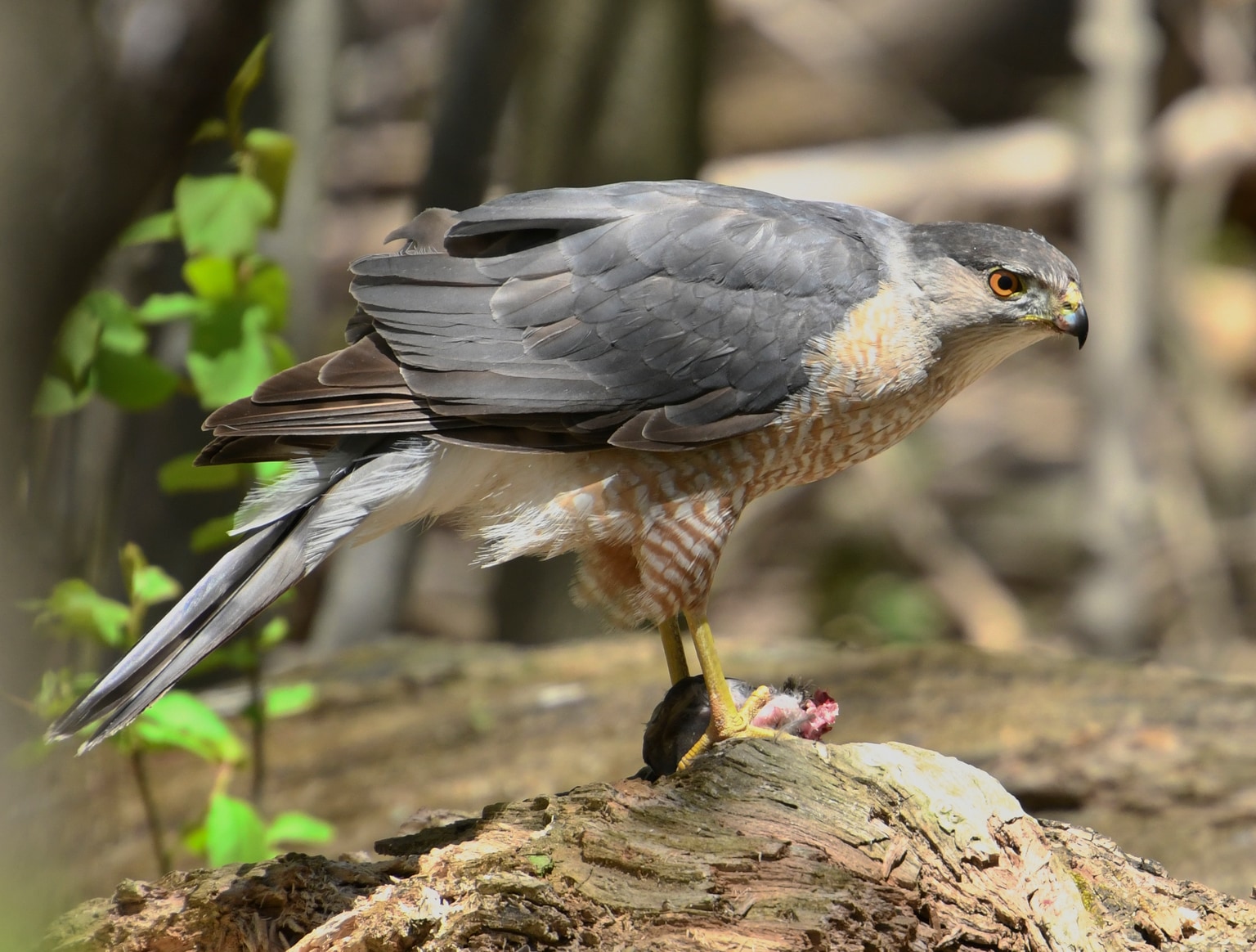
Big Blue Darter, Chicken Hawk, Flying Cross, Hen Hawk, Quail Hawk, Striker, Swift Hawk
Woodlands, Forests with dense canopy cover, Urban and suburban areas with mature trees
North America, Canada, United States, Mexico
- Medium-sized hawk
- Moderate-length wings
- Long, graduated or wedge-shaped tail
- Long, moderately thick legs and toes
- Relatively large, squarish-looking head
- Short but robust hooked bill
- Adult plumage: Blue-gray or brown-gray above, rufous to cinnamon banded underside
- Juvenile plumage: Dark brown above, streaked underside
- Eyes: Light orange to red in adults, yellow in juveniles
- Wingspan typically less than twice the total length
- Rounded wings in flight
- Long, rounded tail in flight
Small-To-Medium-Sized Birds, Small Mammals, Reptiles
Agile Flight Through Dense Vegetation, Surprise Attacks, High-Speed Pursuits
Birds, Small Mammals, Reptiles
Pesticides, Chemical Pollution
About Accipiter cooperii
Cooper's Hawk (Astur cooperii)
Cooper's hawk, scientifically known as Astur cooperii, is a medium-sized hawk native to the North American continent, with a range extending from southern Canada to Mexico. This species was formerly classified under the genus Accipiter but has been placed in the genus Astur based on recent molecular phylogenetic studies.
Description and Physical Characteristics
Cooper's hawks are characterized by their moderate wingspan, long tails, and relatively long legs. Adult plumage typically features a blue-gray or brown-gray coloration on the upperparts, contrasted by a rufous to cinnamon-banded underside. Their tails are long and barred, often ending in a conspicuous white tip. A distinctive feature is their forward-set eyes, which are light orange to red in adults and yellow in juveniles, facilitating excellent depth perception for hunting. Significant sexual dimorphism is present, with females being considerably larger than males, a trait common among Astur and Accipiter species, potentially allowing for efficient food gathering and brooding roles.
Diet and Hunting Behavior
The primary diet of Cooper's hawks consists of small-to-medium-sized birds, though they also commonly prey on small mammals and occasionally reptiles. Their hunting strategy relies heavily on agility, using their swift, direct flight with stiff beats and short glides to pursue prey, often through dense vegetation. Their ability to maneuver effectively in complex environments has led to common names such as "big blue darter" and "swift hawk."
Habitat and Distribution
Cooper's hawks are found across North America, inhabiting woodlands and forests with dense canopy cover. They can also adapt to urban and suburban environments where mature trees are available. Fossil evidence suggests their ancestors colonized North America as early as 0.5 to 1 million years ago.
Reproduction and Conservation
These hawks prefer to nest in tall trees with ample foliage. Breeding attempts can be affected by poor weather, predators, and anthropogenic factors, particularly the use of industrial pesticides and chemical pollution, which caused historic population declines. However, as of 2024, the population of Cooper's hawks is reported to be increasing, indicating a recovery from past threats.
Source: Wikipedia ↗
Frequently Asked Questions
What is Cooper's hawk?
Cooper's hawk is a medium-sized hawk native to North America. It is scientifically known as *Astur cooperii* and is recognized for its agile hunting style.
Where does Cooper's hawk live?
This species is found throughout the North American continent, with its range extending from southern Canada down to Mexico.
What does Cooper's hawk eat?
Cooper's hawks primarily hunt small to medium-sized birds. They also commonly prey on small mammals and occasionally consume reptiles.
How can I identify Cooper's hawk?
Adults are typically blue-gray or brown-gray above with a barred tail and rufous-banded underside. Juveniles are brown with streaking. A key feature is their long tail and relatively short, rounded wings, which aid in their agile flight.
Are male and female Cooper's hawks different?
Yes, there is significant sexual dimorphism. Female Cooper's hawks are considerably larger than males, often being about 20% larger linearly and up to 40% heavier.
What are some other names for Cooper's hawk?
Cooper's hawk is also known by several other common names, including big blue darter, chicken hawk, flying cross, hen hawk, quail hawk, striker, and swift hawk.
What are the nesting habits of Cooper's hawk?
Cooper's hawks prefer to build their nests in tall trees that offer extensive canopy cover. They typically raise two to four fledglings per breeding attempt, with success influenced by environmental conditions.
Related Raptor species
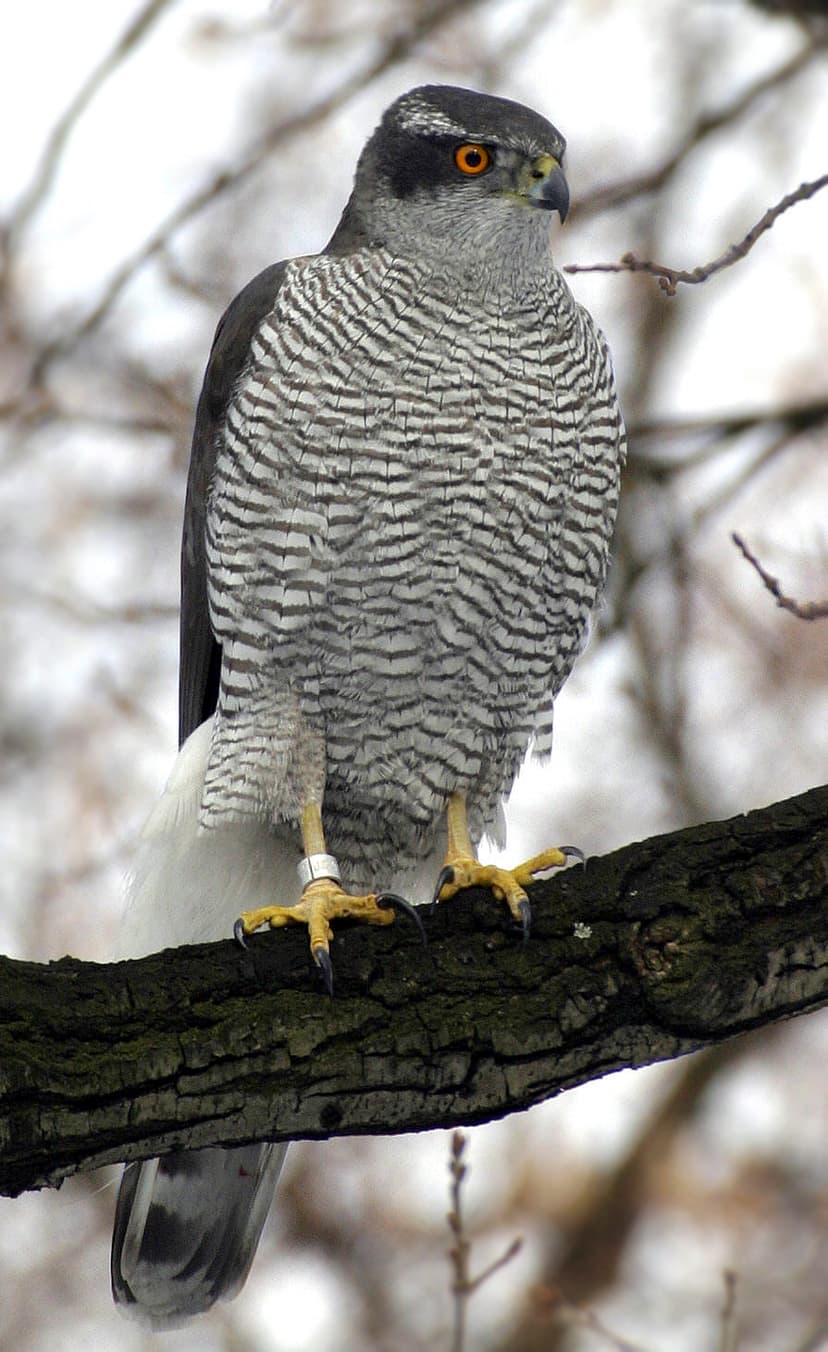
Accipiter gentilis
The Eurasian goshawk (Astur gentilis) is a medium-large bird of prey found across temperate Eurasia. It is recognized by its broad wings, long tail, and distinctively barred plumage. This species is known for its agility in wooded environments and is the sole goshawk in most of its range, often simply called "goshawk".
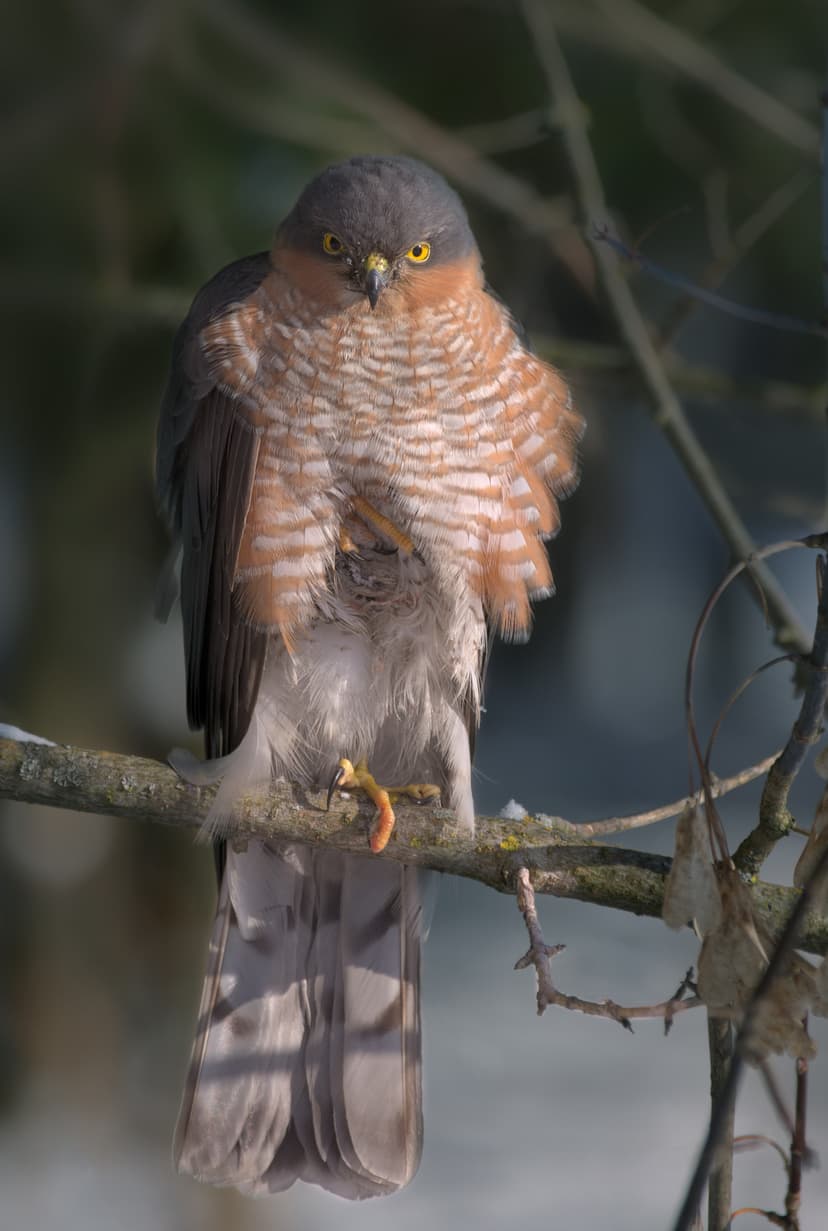
Accipiter nisus
The Eurasian sparrowhawk (Accipiter nisus) is a small bird of prey found across the temperate and subtropical regions of the Old World. It is distinctive for the significant size difference between sexes, with females being much larger than males, and for its specialized hunting of woodland birds, though it also adapts to urban environments. Once threatened by organochlorine insecticides, its populations have recovered and it is now considered of least concern.
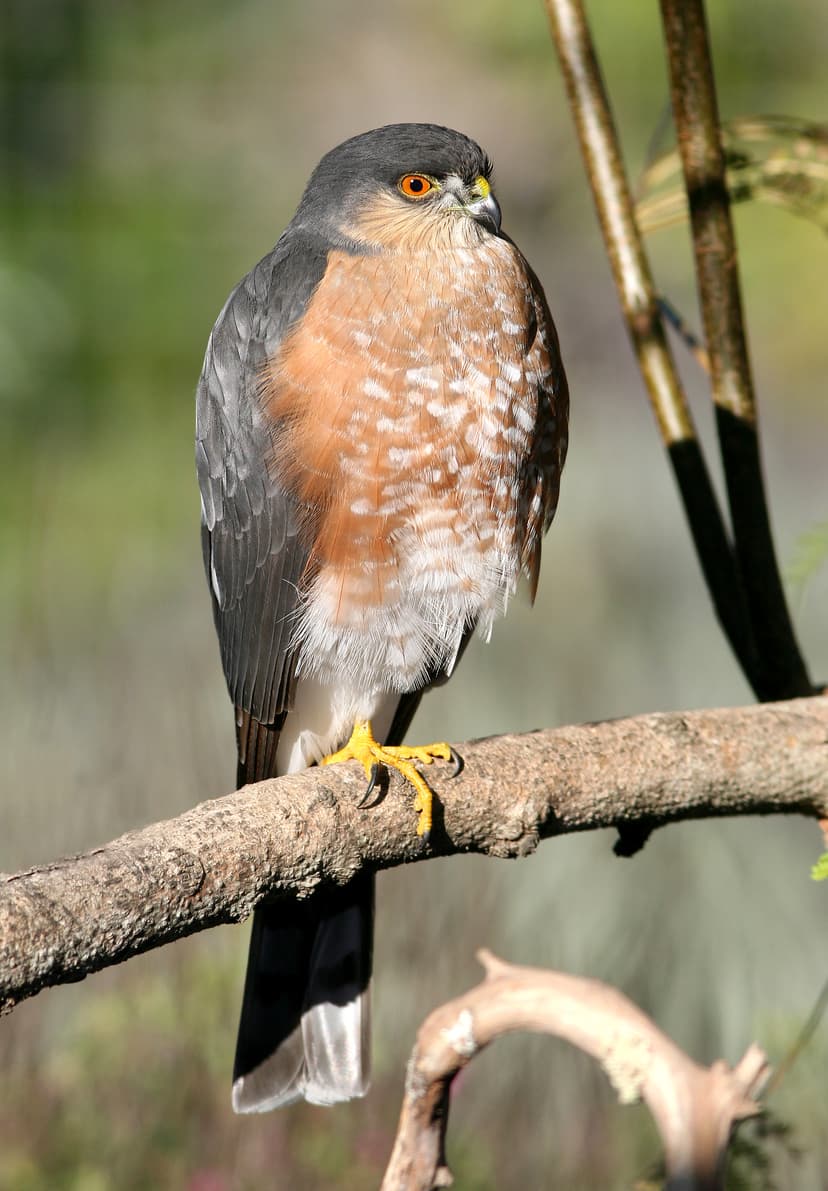
Accipiter striatus
The sharp-shinned hawk (Accipiter striatus) is a small hawk found across North and South America. It is known for its small size, with males being the smallest hawks in the United States and Canada, and its remarkable agility in hunting small birds within dense vegetation. Its taxonomy is complex, with some authorities considering several southern populations to be distinct species.