
Accipiter striatus
Least Concern (for the widespread nominate group, though specific subspecies vary)·Hawk
The sharp-shinned hawk (Accipiter striatus) is a small hawk found across North and South America. It is known for its small size, with males being the smallest hawks in the United States and Canada, and its remarkable agility in hunting small birds within dense vegetation. Its taxonomy is complex, with some authorities considering several southern populations to be distinct species.
Key Facts
- ›Males are the smallest hawks in the us and Canada, measuring 23-30 cm with a wingspan of 42-58 cm.
- ›Females are significantly larger than males, averaging 30% longer and over 50% heavier.
- ›Primarily preys on small birds, including various songbirds, and is adept at hunting in dense vegetation.
- ›The species' taxonomy is debated, with some advocating for splitting southern populations into separate species.
- ›Declined in the MID-20th century due to pesticides like DDT, but has since rebounded in many areas.
- ›The Puerto Rican subspecies (Accipiter striatus venator) is listed as endangered.
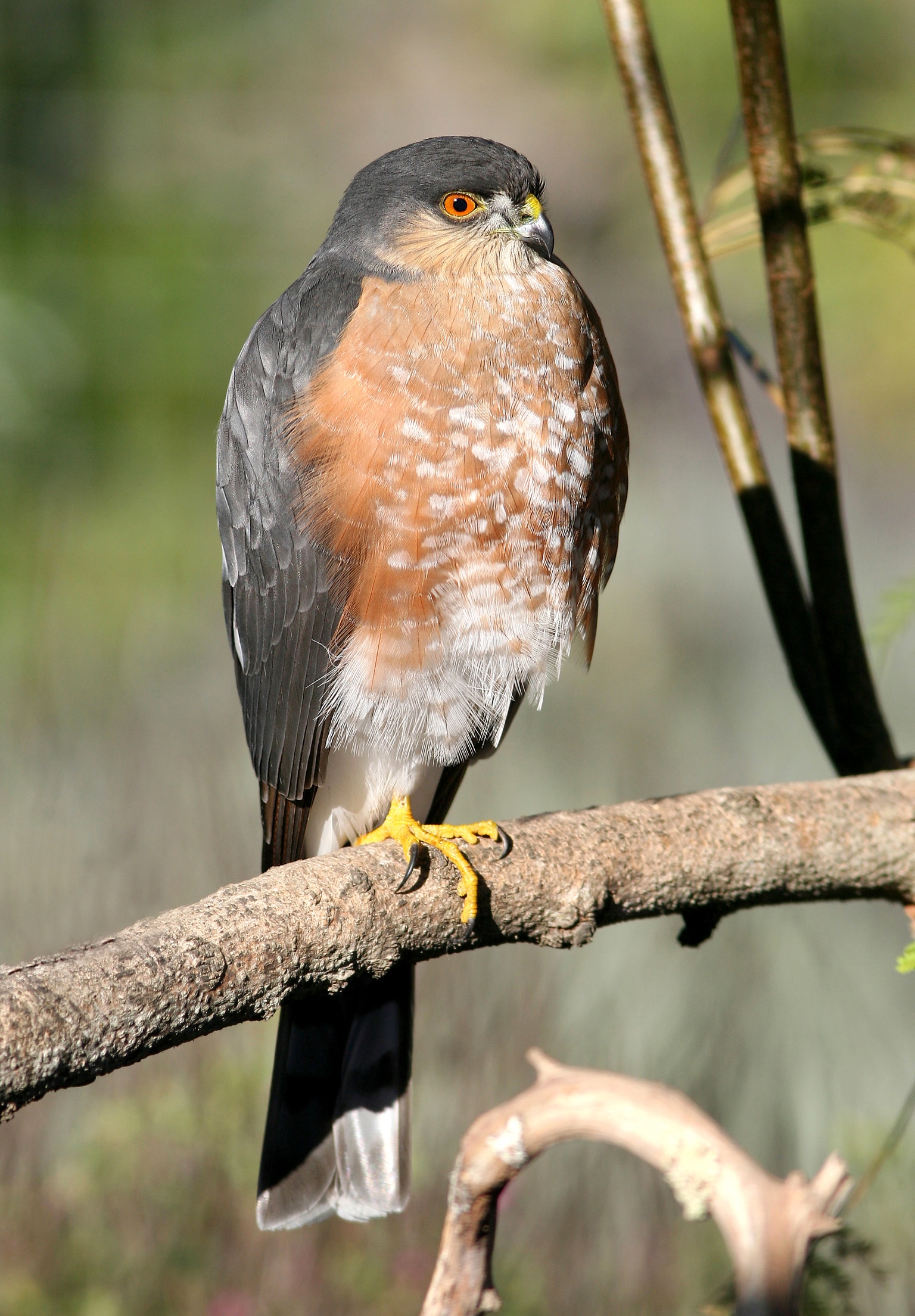
Northern Sharp-Shinned Hawk, Sharpie
Woodland, Forest, Boreal Forests, Temperate Highlands, Tropical Highlands, Subtropical Lowlands, Subtropical Highlands
North America, Central America, South America, Greater Antilles
- Small hawk with short, broad wings and a medium-length tail.
- Males: 23-30 cm long, 42-58 cm wingspan, 82-115 g.
- Females: 29-37 cm long, 58-68 cm wingspan, 150-219 g.
- Adult plumage varies by subspecies, but generally includes blue-grey upperparts and barred rufous or tawny underparts.
- Juveniles have dark brownish upperparts with rufous edging and streaked brown underparts.
- Long, slender yellow legs and a hooked black bill with a yellowish cere.
- Tail is banded in blackish and gray, often with a white tip.
- Iris color varies from dark orange to red in adults, and yellowish in juveniles.
Small Birds, Larger Birds, Rodents, Lizards, Frogs, Snakes, Large Insects, Bats
- Surprise attacks from cover.
- Quick flights through dense vegetation.
- Exploiting backyard bird feeders for prey congregations.
Sparrows, Wood-Warblers, Finches, Wrens, Nuthatches, Tits, Icterids, Thrushes, Anna's Hummingbird, Ruffed Grouse, American Robins, Flickers
Pesticides, Habitat Loss, Predation By Larger Raptors, Invasive Predators
About Accipiter striatus
Accipiter striatus: The Sharp-shinned Hawk
The sharp-shinned hawk, scientifically known as Accipiter striatus, is a small and agile raptor distributed across North America, Central America, South America, and the Greater Antilles. It is colloquially often nicknamed the "sharpie." Males are notably the smallest hawks found in the United States and Canada, though the species as a whole averages larger than some Neotropical species. The taxonomy of Accipiter striatus is complex and not fully resolved, with some authorities proposing that certain southern populations represent distinct species, such as the white-breasted hawk (A. chionogaster), plain-breasted hawk (A. ventralis), and rufous-thighed hawk (A. erythronemius).
Physical Characteristics and Behavior
Sharp-shinned hawks are characterized by their small size, short broad wings, and medium-length tails. Sexual dimorphism is pronounced, with females being significantly larger and heavier than males. Adult plumage varies among subspecies but typically features blue-grey upperparts and underparts barred with rufous or tawny colors. Juveniles exhibit dark brownish upperparts with rufous edging and streaked brown underparts. These hawks possess long, slender yellow legs and a hooked black bill. Their primary hunting method involves surprising and capturing prey, often small birds, by flying quickly through dense vegetation, a technique that requires considerable agility and can be hazardous.
Diet and Hunting
The diet of the sharp-shinned hawk consists predominantly of small birds, ranging from hummingbirds to larger species like the ruffed grouse. Males tend to target smaller avian prey, while females pursue larger birds, minimizing direct competition between the sexes. They are known to exploit backyard bird feeders to access abundant congregations of ideal prey. In addition to birds, they will occasionally prey on rodents, lizards, frogs, snakes, and large insects, with bats also recorded as prey. Their hunting prowess is particularly evident in their ability to navigate thickets swiftly.
Distribution and Habitat
This species is found in a wide array of woodland and forest types across its extensive range. The nominate group is widespread in North America, inhabiting forested areas and migrating south in winter. Other subspecies are found in highland regions from Mexico to the Andes and in tropical and subtropical areas of South America. They inhabit altitudes ranging from near sea level to over 4,000 meters, preferring coniferous forests, broad-leaved woodlands, and temperate or tropical highlands.
Reproduction
Sharp-shinned hawks build stick nests in large conifer or dense deciduous trees. Clutch sizes typically range from 4 to 5 eggs, though up to 8 have been recorded. The incubation period averages around 30 days. After hatching, the female broods the young for 16 to 23 days while the male defends the territory and provides food. The fledglings remain dependent on their parents for about four weeks after leaving the nest. Breeding behaviors are generally secretive, aimed at avoiding predation by larger raptors.
Conservation Status
Historically, sharp-shinned hawk populations declined significantly in the mid-20th century due to pesticide use, particularly DDT. However, populations in the United States and Canada have largely rebounded, potentially exceeding historical numbers, attributed to pesticide bans and the availability of prey from bird feeders. Despite this recovery, certain subspecies face conservation challenges. The Puerto Rican subspecies, Accipiter striatus venator, is listed as endangered. Other resident subspecies in the Greater Antilles are uncommon and decreasing, while the status of some southern subspecies like A. chionogaster is considered potentially problematic due to their limited ranges, though they remain fairly common locally. Other subspecies, such as A. ventralis and A. erythronemius, are considered fairly common and currently safe.
Source: Wikipedia ↗
Frequently Asked Questions
What is the sharp-shinned hawk's scientific name?
The scientific name for the sharp-shinned hawk is Accipiter striatus. However, its taxonomy is complex, and some authorities suggest splitting it into multiple species, which would affect the scientific names of those considered separate.
Where does the sharp-shinned hawk live?
The sharp-shinned hawk is widespread across North America, Central America, South America, and the Greater Antilles. Its distribution varies by subspecies, with some populations resident and others migratory.
What does the sharp-shinned hawk eat?
The sharp-shinned hawk primarily feeds on small birds, such as sparrows, warblers, and finches, but will also take larger prey like grouse. Occasionally, they consume rodents, lizards, frogs, snakes, and large insects.
How large is a sharp-shinned hawk?
Males are small, measuring 23-30 cm in length with a wingspan of 42-58 cm. Females are notably larger, measuring 29-37 cm in length with a wingspan of 58-68 cm.
What are the conservation concerns for this species?
While populations in the US and Canada have rebounded after a decline due to pesticides, the Puerto Rican subspecies is endangered. Some resident subspecies in the Greater Antilles are uncommon and decreasing, while others are considered safe but potentially at risk due to limited ranges.
Related Raptor species
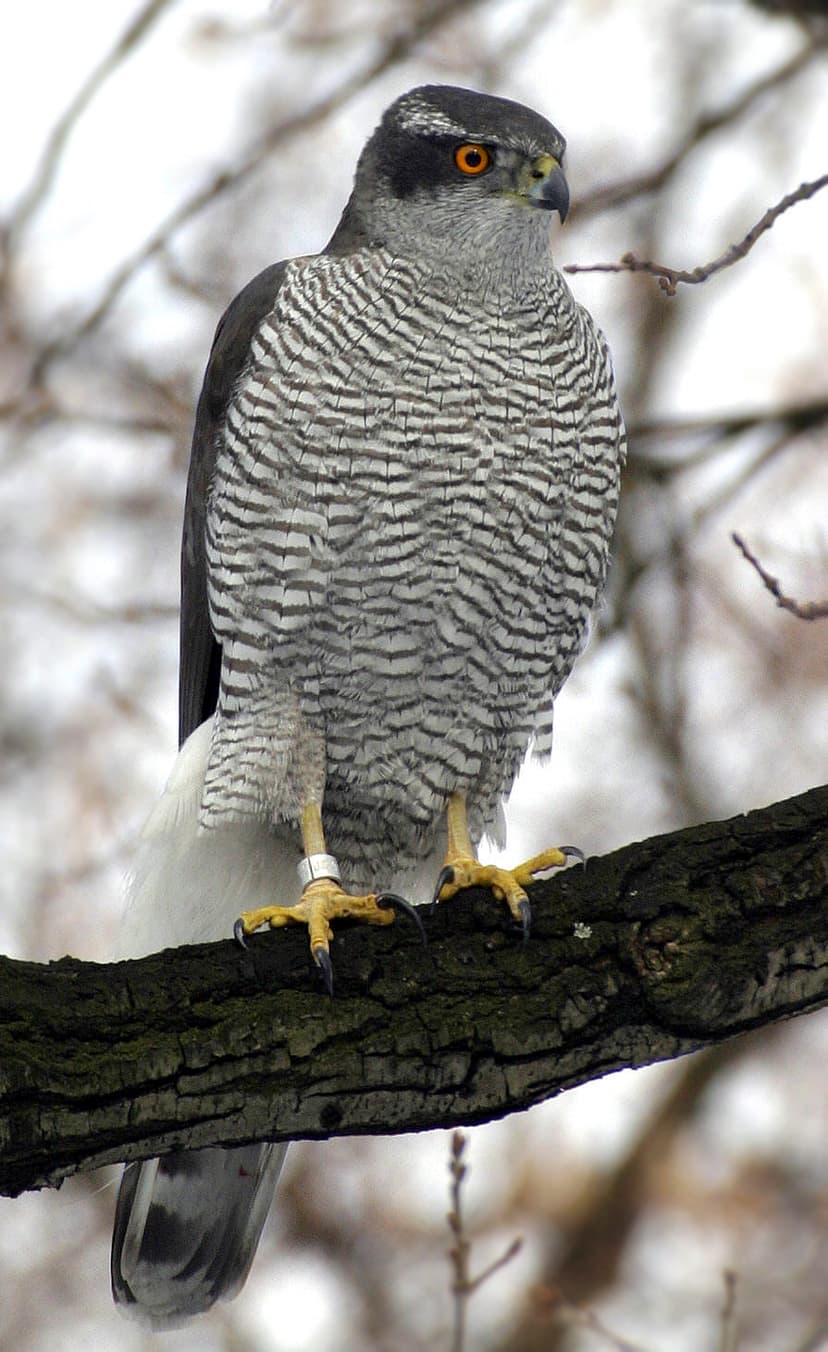
Accipiter gentilis
The Eurasian goshawk (Astur gentilis) is a medium-large bird of prey found across temperate Eurasia. It is recognized by its broad wings, long tail, and distinctively barred plumage. This species is known for its agility in wooded environments and is the sole goshawk in most of its range, often simply called "goshawk".
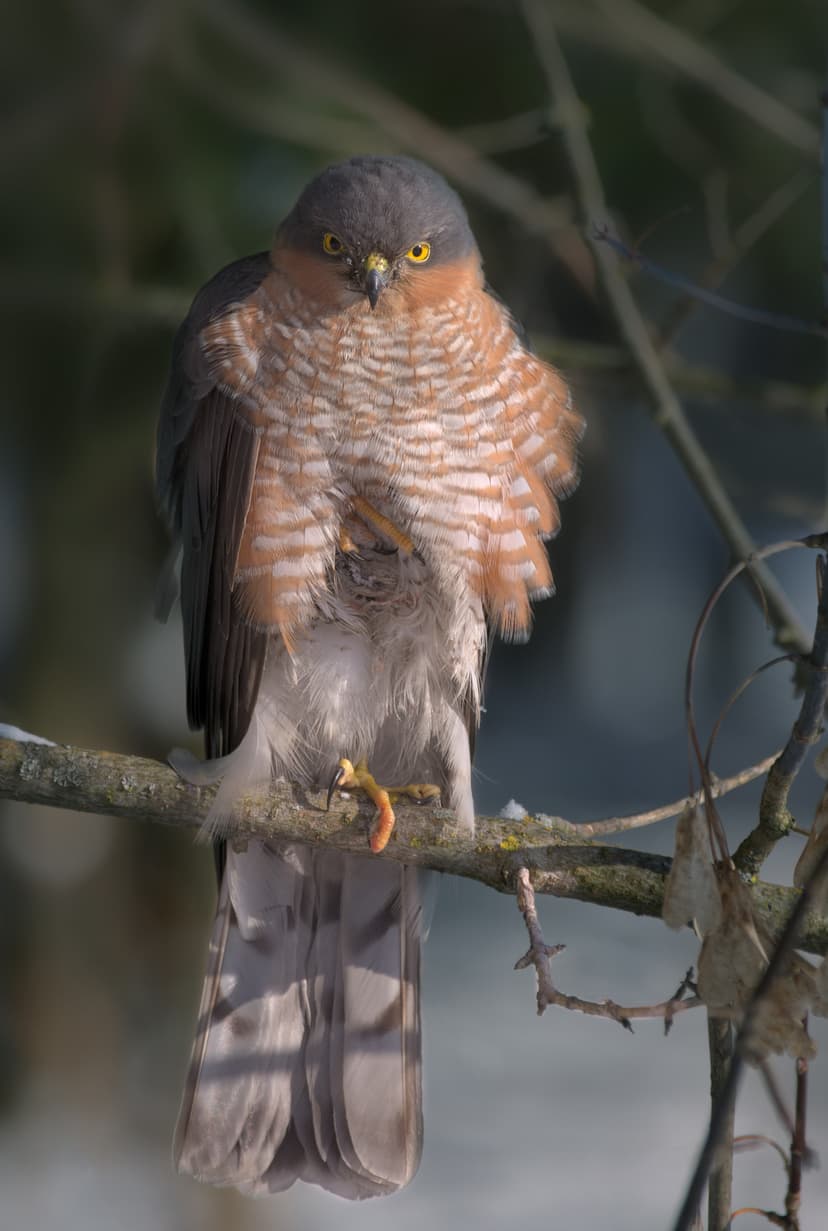
Accipiter nisus
The Eurasian sparrowhawk (Accipiter nisus) is a small bird of prey found across the temperate and subtropical regions of the Old World. It is distinctive for the significant size difference between sexes, with females being much larger than males, and for its specialized hunting of woodland birds, though it also adapts to urban environments. Once threatened by organochlorine insecticides, its populations have recovered and it is now considered of least concern.
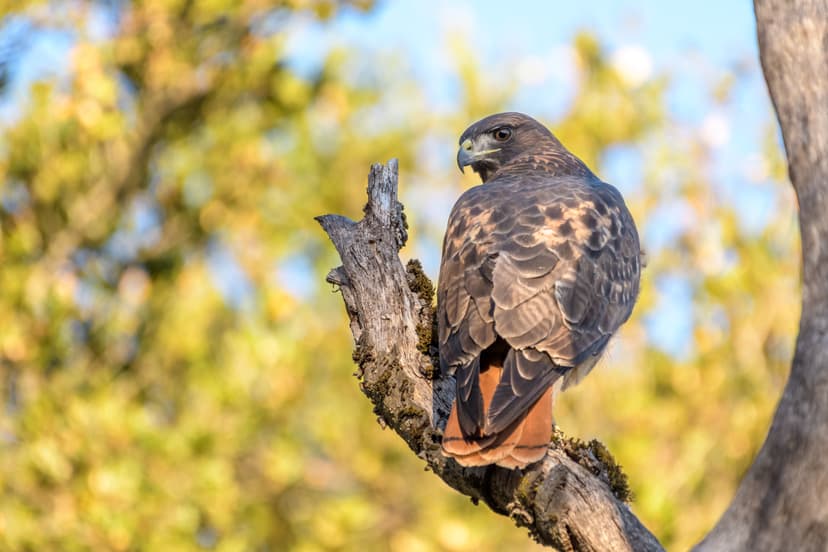
Buteo jamaicensis
The red-tailed hawk (Buteo jamaicensis) is a common and widespread bird of prey found throughout North America, from Alaska to Panama. It is known for its distinctive brick-red tail and adaptable nature, thriving in diverse habitats including deserts, forests, and urban areas. This hawk is legally protected across Canada, Mexico, and the United States.