
Accipiter gentilis
The Eurasian goshawk (Astur gentilis) is a medium-large bird of prey found across temperate Eurasia. It is recognized by its broad wings, long tail, and distinctively barred plumage. This species is known for its agility in wooded environments and is the sole goshawk in most of its range, often simply called "goshawk".
Key Facts
- ›Inhabits temperate regions across Eurasia, from forests to more urbanized areas.
- ›Possesses short, broad wings and a long tail for maneuverability in wooded habitats.
- ›Exhibits significant sexual dimorphism, with females being considerably larger than males.
- ›Plumage varies geographically, with northern populations generally paler and southern ones darker.
- ›Primarily a resident species, though populations from colder climates migrate south for the winter.
- ›The scientific name 'gentilis' refers to the historical association of goshawks with nobility for falconry.
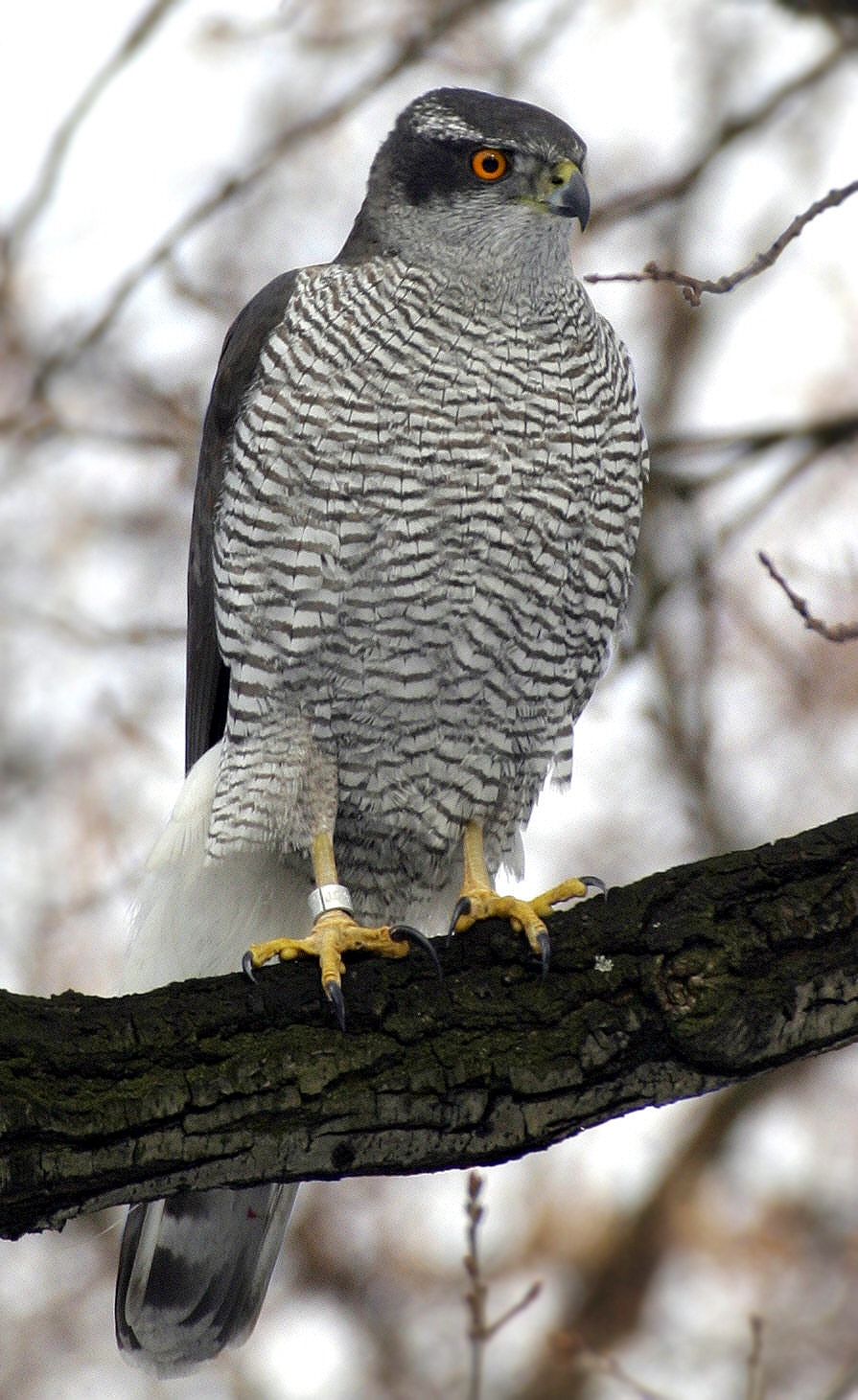
Goshawk, Northern Goshawk
Deciduous Forests, Coniferous Forests, Wooded Urban Areas, Shelter-Belts, Copses
Eurasia, Europe, Asia, Northwestern Africa
- Medium-large bird of prey
- Relatively short, broad wings
- Long tail
- Blue-grey or brownish-grey upperparts
- Dark barring or streaking on grey or white underparts
- White eye stripe
- Juveniles are solid to mildly streaky brown above
- Adults typically have orange eyes, juveniles pale yellow
- Significant sexual dimorphism with females larger than males
Birds, Mammals
About Accipiter gentilis
Eurasian Goshawk (Astur gentilis)
The Eurasian goshawk, scientifically known as Astur gentilis, is a formidable medium-large bird of prey inhabiting the temperate zones of Eurasia. It is a member of the Accipitridae family, which includes other diurnal raptors like eagles and buzzards. This species is often simply referred to as "goshawk" due to its status as the sole species of goshawk across most of its extensive range, with the exception of a small area in southern Asia.
Distribution and Habitat
The Eurasian goshawk is widely distributed across Eurasia, found in most areas of Europe (excluding Ireland and Iceland) and across much of Russia into Siberia. Its southern limits extend to northwestern Morocco, Corsica, Sardinia, Italy, Greece, Turkey, the Caucasus, parts of China, Tibet, the Himalayas, and Japan. While primarily a forest dweller, preferring both deciduous and coniferous woods, the Eurasian goshawk has shown a remarkable adaptation to human-altered landscapes. It can be found in urbanized areas with small woods, shelter-belts, and copses, and has even been observed thriving in large European cities. They inhabit various altitudes, typically up to the tree line of mountain ranges.
Physical Characteristics
A defining feature of the Eurasian goshawk is its specialized morphology for agile flight within wooded environments: short, broad wings and a long tail. Adults typically display blue-grey or brownish-grey upperparts with dark barring or streaking on a grey or white underside. A distinctive white eye stripe, or supercilium, is present. Juveniles are usually a more uniform brown above. A notable characteristic is significant sexual dimorphism, with females being substantially larger and heavier than males. This size difference can be quite pronounced, with females sometimes weighing more than double that of males. Their eyes are pale yellow in juveniles, maturing to a typical orange in adults.
Behavior and Ecology
The Eurasian goshawk is predominantly a resident species, though individuals from colder northern regions undertake southward migrations during winter. They are known to call mainly during courtship or the nesting season, with adults producing chattering notes. Males have distinct vocalizations, including a fast, high-pitched call when delivering food and a croaking sound. The species exhibits a relatively high degree of individual variation in plumage, more so than its smaller relative, the Eurasian sparrowhawk. This variability is thought to be linked to higher genetic diversity within the larger goshawk population.
Source: Wikipedia ↗
Frequently Asked Questions
What is the scientific name for the Eurasian goshawk?
The scientific name for the Eurasian goshawk is Astur gentilis. It was formerly placed in the genus Accipiter but was moved to the resurrected genus Astur following molecular phylogenetic studies.
Where does the Eurasian goshawk live?
The Eurasian goshawk is widely distributed across temperate Eurasia, found in most of Europe and across most of Russia into Siberia. Its range extends to northwestern Africa, Turkey, the Caucasus, parts of China, Tibet, the Himalayas, and Japan.
What are the main physical characteristics of the Eurasian goshawk?
Eurasian goshawks have relatively short, broad wings and a long tail, aiding in forest maneuverability. Adults are typically blue-grey or brownish-grey above with dark barring below, while juveniles are usually brown. They have a white eye stripe and develop orange eyes with age.
How large are Eurasian goshawks?
Eurasian goshawks exhibit significant sexual dimorphism. Males typically measure 46 to 63 cm in length with an 89 to 122 cm wingspan, while females are larger, measuring 58 to 69 cm long with a 108 to 127 cm wingspan. Females can be more than twice as heavy as males.
What habitat does the Eurasian goshawk prefer?
This species favors both deciduous and coniferous forests and can adapt to a variety of wooded environments. Uniquely among goshawks, they can inhabit fairly urbanized areas with small woods, shelter-belts, and copses, and have been observed in large European cities.
Is the Eurasian goshawk migratory?
The Eurasian goshawk is mainly a resident species, meaning most individuals stay in the same area year-round. However, birds from colder northern regions do migrate south for the winter to find warmer conditions.
Related Raptor species
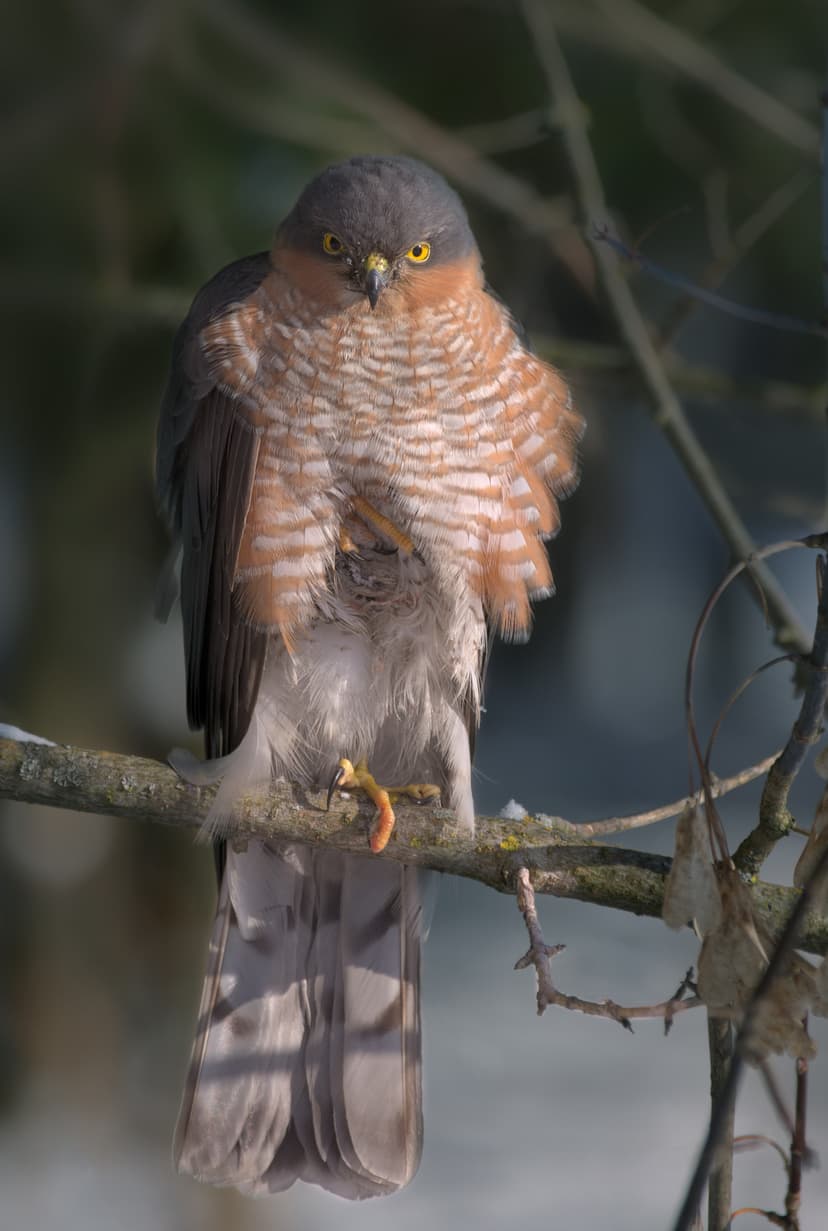
Accipiter nisus
The Eurasian sparrowhawk (Accipiter nisus) is a small bird of prey found across the temperate and subtropical regions of the Old World. It is distinctive for the significant size difference between sexes, with females being much larger than males, and for its specialized hunting of woodland birds, though it also adapts to urban environments. Once threatened by organochlorine insecticides, its populations have recovered and it is now considered of least concern.
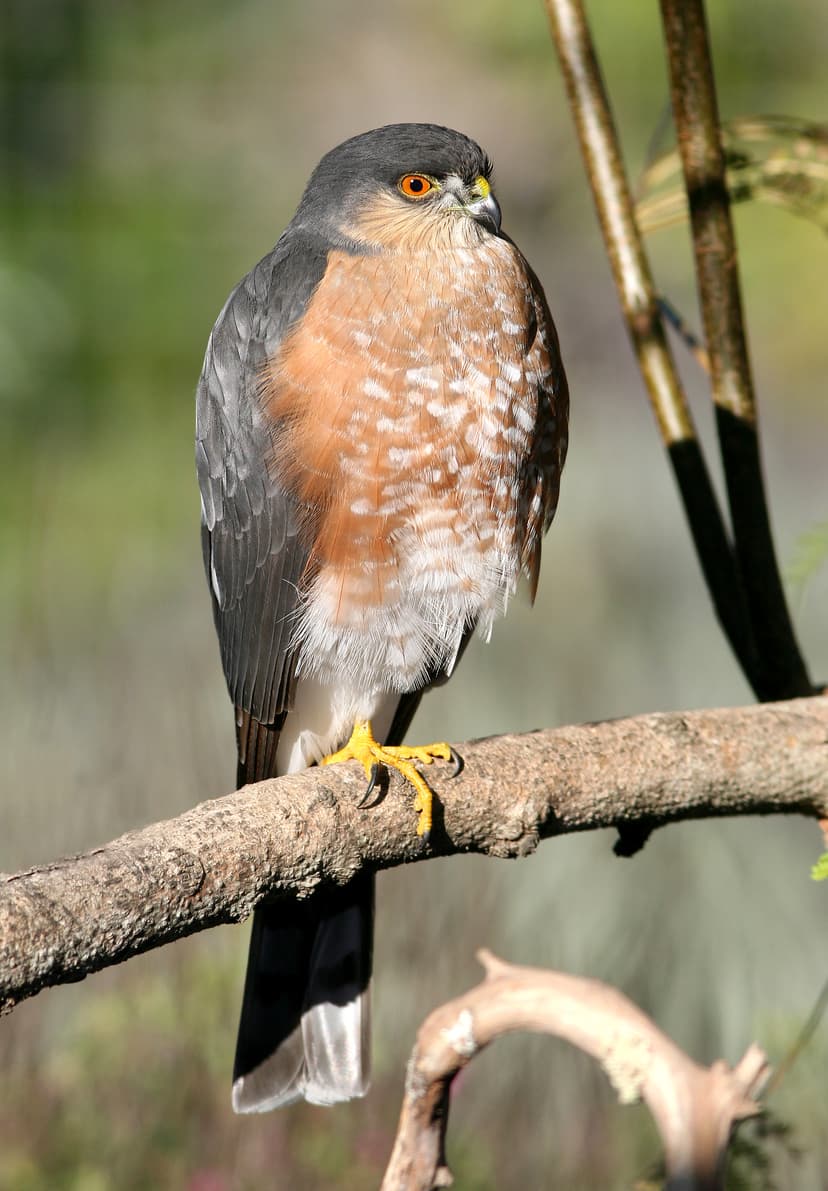
Accipiter striatus
The sharp-shinned hawk (Accipiter striatus) is a small hawk found across North and South America. It is known for its small size, with males being the smallest hawks in the United States and Canada, and its remarkable agility in hunting small birds within dense vegetation. Its taxonomy is complex, with some authorities considering several southern populations to be distinct species.
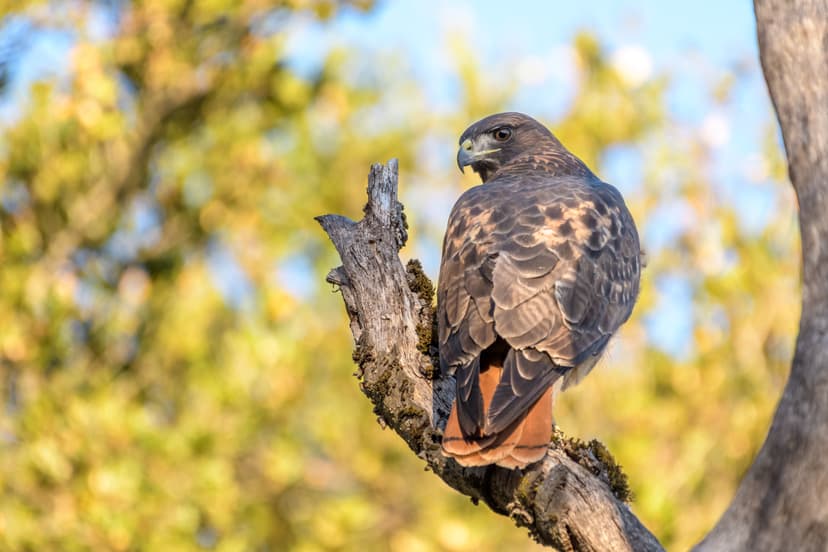
Buteo jamaicensis
The red-tailed hawk (Buteo jamaicensis) is a common and widespread bird of prey found throughout North America, from Alaska to Panama. It is known for its distinctive brick-red tail and adaptable nature, thriving in diverse habitats including deserts, forests, and urban areas. This hawk is legally protected across Canada, Mexico, and the United States.