
Accipiter nisus
The Eurasian sparrowhawk (Accipiter nisus) is a small bird of prey found across the temperate and subtropical regions of the Old World. It is distinctive for the significant size difference between sexes, with females being much larger than males, and for its specialized hunting of woodland birds, though it also adapts to urban environments. Once threatened by organochlorine insecticides, its populations have recovered and it is now considered of least concern.
Key Facts
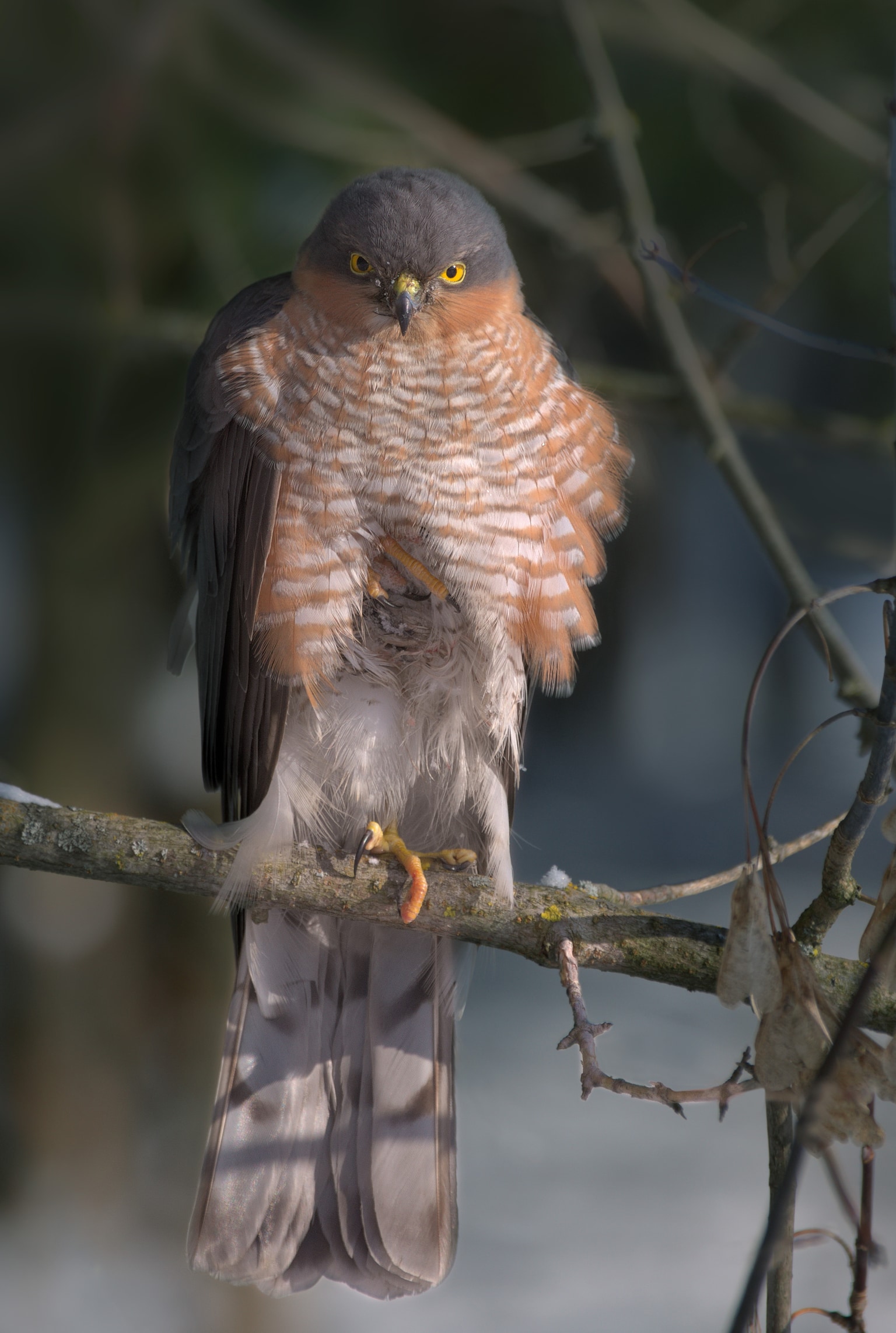
- ›Adult males are bluish-grey above with orange-barred underparts, while females and juveniles are brown with brown barring.
- ›Females are up to 25% larger than males, a significant sexual dimorphism.
- ›It specializes in hunting woodland birds but is adaptable and hunts garden birds in urban areas.
- ›Males typically prey on smaller birds like tits and finches, while females catch larger birds such as thrushes and starlings.
- ›Northern populations migrate south for winter, while southern populations are resident.
- ›Its population significantly declined after WWII due to organochlorine insecticides but has since recovered.
Northern Sparrowhawk, Sparrowhawk
Woodland, Forest Edges, Open Country With Scattered Trees, Urban Gardens, Parks
Europe, Asia, North Africa, Subtropical Regions of the Old World
- Small bird of prey with short, broad wings and a long tail.
- Adult males: Bluish-grey upperparts, finely red-barred underparts, orange-yellow to orange-red irides.
- Adult females: Much larger than males, dark brown or greyish-brown upperparts, brown-barred underparts, bright yellow to orange irides.
- Juveniles: Warm brown above with rusty fringes, coarsely barred or spotted brown below, pale yellow eyes.
- Countershading helps break up outline.
- Long legs and toes adapted for catching birds; middle toe is very long and can grip objects securely.
Small Woodland Birds, Garden Birds, Tits, Finches, Sparrows, Buntings, Thrushes, Starlings, Occasionally Small Mammals, Rarely Insects
Surprise Attack Using Cover, Short-Stay-Perch-Hunting, High Soaring and Stooping, Contour-Hugging In Flight, Still-Hunting, Low Quartering, Hunting By Sound, Hunting On Foot, Flipping Upside-Down To Grab Prey, Following Prey Through Vegetation
Tits, Finches, Sparrows, Buntings, Thrushes, Starlings, House Sparrows, Great Tits, Common Blackbirds, Wood Pigeons, Mice, Voles
Habitat Loss, Egg-Collecting, Illegal Hunting, Past Impact of Organochlorine Insecticides, Persecution By Humans
About Accipiter nisus
Eurasian Sparrowhawk
The Eurasian sparrowhawk, scientifically known as Accipiter nisus, is a small but formidable bird of prey found throughout the temperate and subtropical regions of the Old World. Its presence spans across Europe, Asia, and parts of North Africa, inhabiting a variety of environments from dense woodlands to urban gardens.
Physical Distinctiveness
One of the most striking characteristics of the Eurasian sparrowhawk is its pronounced sexual dimorphism; females are significantly larger and heavier than males, a trait unusual in many vertebrate species but common among raptors that hunt other birds. Adult males display bluish-grey upperparts and finely red-barred underparts, while females exhibit darker brown upperparts and brown-barred underparts. This size difference aids in their specialized hunting strategies.
Diet and Hunting
This raptor is a specialist predator of smaller woodland birds, though it readily adapts to hunting garden birds in towns and cities. Males typically target smaller avian prey like tits, finches, and sparrows, weighing up to 40g. Females, being larger, can take down birds up to 500g, including thrushes and starlings. Their hunting prowess is enhanced by adaptations like short, broad wings and a long tail, enabling agile maneuvering through dense vegetation. They employ surprise attacks, often using cover to ambush prey, and have been observed using various techniques including perch-hunting, contour-hugging flight, and stooping from height.
Distribution and Migration
While Eurasian sparrowhawks are resident in the southern parts of their range, populations in colder northern regions undertake seasonal migrations southward for the winter. Their habitat preference includes most woodland types, but they are also found in more open country with scattered trees and have become increasingly common in urban environments where they utilize gardens and parks.
Conservation and History
Once facing a severe population crash after the Second World War due to the widespread use of organochlorine insecticides which caused eggshell thinning and reproductive failure, the Eurasian sparrowhawk has made a remarkable recovery. Following the ban of these chemicals, populations have rebounded, leading to its classification as 'Least Concern' by the IUCN. Despite historical conflicts with humans, particularly from pigeon racers and poultry farmers, and ongoing low-level persecution in some areas, the species remains relatively common across its extensive range. The Eurasian sparrowhawk also holds cultural significance, appearing in Teutonic mythology and referenced by prominent writers.
Reproduction
Eurasian sparrowhawks typically lay four or five pale blue, brown-spotted eggs in nests constructed from twigs in trees. The incubation period lasts for approximately 33 days, after which altricial chicks hatch. The female tends to the young for the first few weeks, while the male provides the majority of the food. Chicks fledge between 24 to 28 days after hatching and remain dependent on their parents for about another month.
Source: Wikipedia ↗
Frequently Asked Questions
What is the Eurasian sparrowhawk?
The Eurasian sparrowhawk is a small bird of prey belonging to the family Accipitridae, found across much of the Old World. It is known for its agile flight through woodlands and its specialization in hunting other birds.
What makes the Eurasian sparrowhawk distinctive?
A key distinguishing feature is its pronounced sexual dimorphism, with females being considerably larger and heavier than males. It also expertly maneuvers through dense woodland to hunt its prey.
Where does the Eurasian sparrowhawk live?
It inhabits temperate and subtropical regions of the Old World, including Europe, Asia, and parts of North Africa. They are found in various habitats, from dense woodlands to more open country with scattered trees, and are increasingly common in urban gardens.
What does the Eurasian sparrowhawk eat?
This species primarily preys on other birds. Males tend to hunt smaller birds like tits and finches, while females are capable of taking larger prey such as thrushes and starlings. They are adept at surprise attacks.
What is the conservation status of the Eurasian sparrowhawk?
The Eurasian sparrowhawk is classified as 'Least Concern' by the IUCN. While its population crashed after World War II due to pesticide use, it has since recovered significantly following the ban of these chemicals.
How does the Eurasian sparrowhawk hunt?
It employs surprise attacks, often using cover like hedges and trees to ambush prey. Hunting techniques include short-stay perch hunting, contour-hugging flight, and even stooping from great heights. Its physical adaptations, such as broad wings and a long tail, allow for agile maneuvering in confined spaces.
Related Raptor species
Buteo jamaicensis
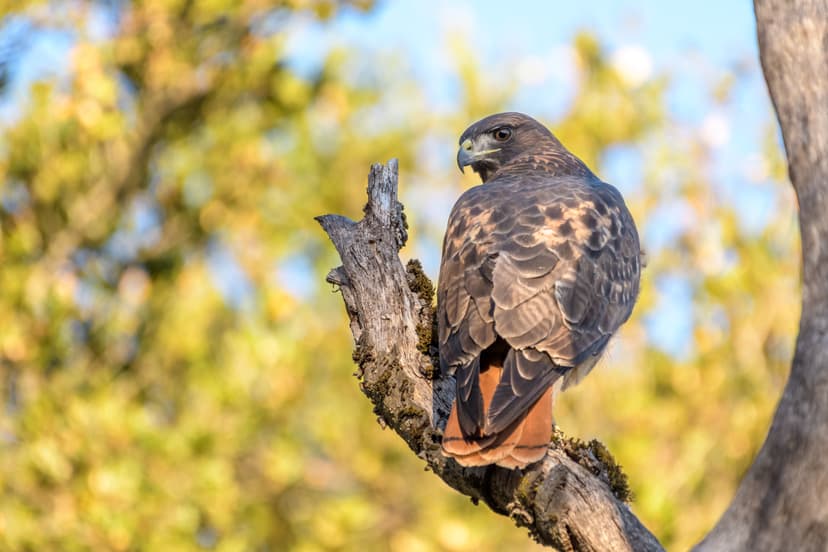
The red-tailed hawk (Buteo jamaicensis) is a common and widespread bird of prey found throughout North America, from Alaska to Panama. It is known for its distinctive brick-red tail and adaptable nature, thriving in diverse habitats including deserts, forests, and urban areas. This hawk is legally protected across Canada, Mexico, and the United States.
Buteo platypterus
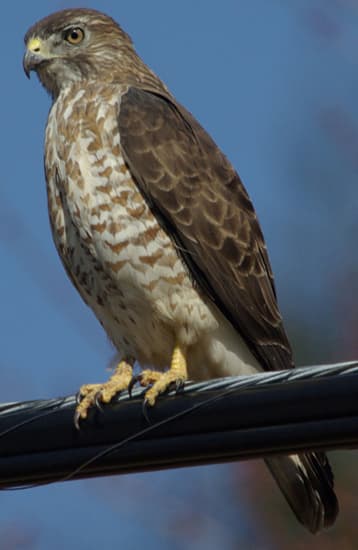
The broad-winged hawk (Buteo platypterus) is a medium-sized hawk found in North and South America, migrating south to the Neotropics during winter. They are distinctive for their relatively short, broad wings with a tapered, pointed appearance, and exhibit two color morphs: dark and light. While their overall population is increasing, some breeding populations are declining due to habitat fragmentation.
Pandion haliaetus
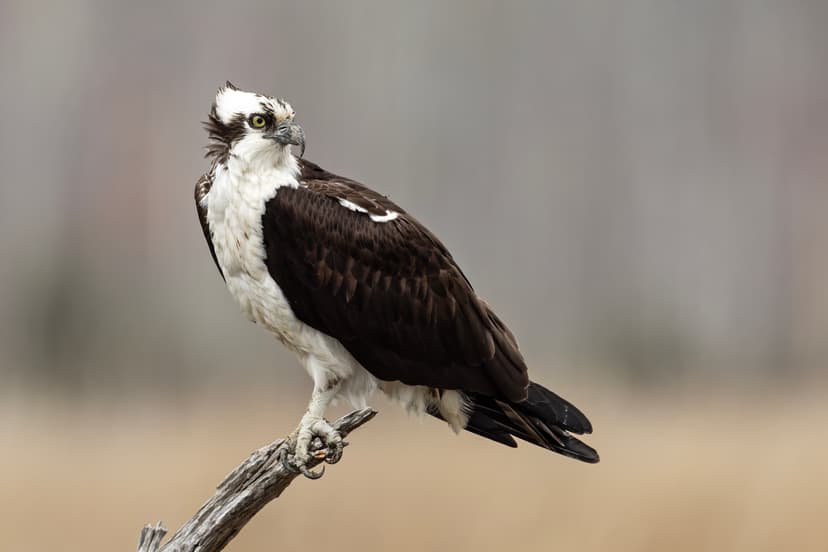
The osprey (Pandion haliaetus), also known as the sea hawk or fish hawk, is a large bird of prey found on every continent except Antarctica, distinguished by its specialized fish-eating diet and unique hunting techniques. It possesses physical adaptations such as reversible outer toes and sharp spicules on its feet to better grasp slippery prey. Ospreys are often found near bodies of water where they hunt fish, making up nearly their entire diet.