
Buteo jamaicensis
The red-tailed hawk (Buteo jamaicensis) is a common and widespread bird of prey found throughout North America, from Alaska to Panama. It is known for its distinctive brick-red tail and adaptable nature, thriving in diverse habitats including deserts, forests, and urban areas. This hawk is legally protected across Canada, Mexico, and the United States.
Key Facts
- ›One of the most common hawks in North America, legally protected by the Migratory Bird Treaty.
- ›Found from western Alaska and northern Canada south to Panama and the West Indies.
- ›Occupies a wide range of habitats including deserts, grasslands, forests, and urban areas.
- ›Distinctive feature is its brick-red tail, uniformly colored above and buff-orange below.
- ›Feeds on a variety of small animals, primarily rodents, but also birds, reptiles, and amphibians.
- ›Pairs typically stay together for life and construct stick nests in high trees or on ledges.
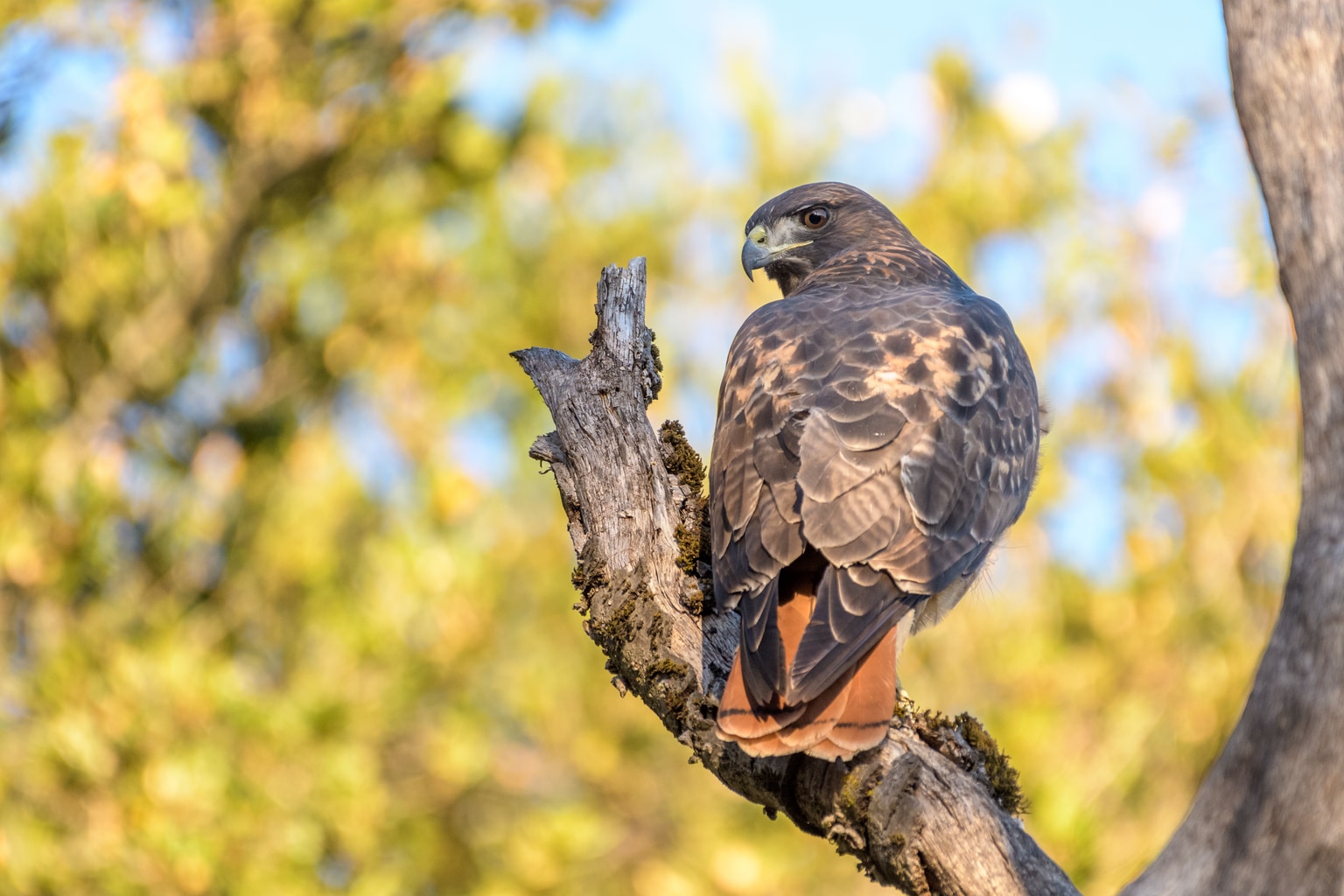
Chickenhawk
Deserts, Grasslands, Coniferous Forests, Deciduous Forests, Agricultural Fields, Urban Areas, Coastal Regions, Mountains, Foothills, Tropical Rainforests
North America, Central America, West Indies
- Stocky body with broad wings.
- Eponymous brick-red tail, uniformly red above and light buff-orange below.
- Whitish underbelly with a dark brown band across the belly formed by horizontal streaks.
- Yellow cere, legs, and feet.
- Adults have yellowish irises that darken to reddish-brown with age.
- Immature birds have tails patterned with about six darker bars.
Rodents, Lagomorphs, Birds, Reptiles, Amphibians, Fish, Crustaceans, Insects, Earthworms, Carrion
- Scanning for prey from an elevated perch and swooping down.
- Watching for prey while flying and capturing it in flight or pursuing it on the ground.
- Hunting in pairs by flushing prey from opposite sides of an area.
- Following American badgers to capture flushed prey.
Mice, Gophers, Voles, Chipmunks, Ground Squirrels, Tree Squirrels, Rabbits, Shrews, Bats, Pigeons, Quail, Corvids, Waterfowl, Snakes, Lizards, Black-Tailed Jackrabbits, Striped Skunks, Western Diamondback Rattlesnakes
- Rat traps
- Poisoned bait for rodents, which can be ingested by hawks.
About Buteo jamaicensis
Red-tailed Hawk (Buteo jamaicensis)
The red-tailed hawk, scientifically known as Buteo jamaicensis, is one of the most prevalent and widely distributed birds of prey across the Americas. Its range spans from western Alaska and northern Canada down to Panama and the West Indies, making it a familiar sight in diverse environments.
Habitat and Distribution
This adaptable hawk thrives in a vast array of habitats, including deserts, grasslands, coniferous and deciduous forests, agricultural fields, and even urban areas. It is notably absent only from regions of unbroken forest and the high Arctic. Its presence is ensured by legal protection under the Migratory Bird Treaty in Canada, Mexico, and the United States.
Physical Characteristics
As one of the largest members of the Buteo genus in North America, the red-tailed hawk typically measures 45–65 cm in length with a wingspan of 110–145 cm. Females are generally larger than males, being about 25% heavier. The species is most readily identified by its namesake tail, which is a uniform brick-red above and a light buff-orange below. Most color variations exhibit a whitish underbelly marked with a distinct dark brown band formed by streaking. The cere, legs, and feet are typically yellow.
Diet and Hunting
The red-tailed hawk's diet is varied, primarily consisting of small mammals like rodents and lagomorphs, which constitute up to 85% of their food intake. They are opportunistic hunters and will also consume birds, reptiles, fish, amphibians, and even carrion when necessary. Common hunting strategies include scanning for prey from an elevated perch and then swooping down, or spotting prey from the air and seizing it. They have also been observed hunting cooperatively.
Reproduction and Lifespan
Red-tailed hawks reach sexual maturity at two years of age and are largely monogamous, often mating with the same partner for life. They construct stick nests in high trees or on ledges, where they lay a clutch of one to five eggs in the spring. Both parents share incubation duties, and the altricial young emerge over a few days. The fledging period, from hatching to first flight, lasts approximately 42 to 46 days. While specific lifespan data is not detailed, pairs often defend nesting territories for many years.
Conservation and Threats
The red-tailed hawk is classified as 'Least Concern' due to its widespread distribution and abundance. However, populations in urban areas face threats from rodenticides, such as warfarin-based baits, which can cause internal bleeding in rodents and prove fatal if ingested by the hawks that prey on them.
Source: Wikipedia ↗
Frequently Asked Questions
What is the scientific name for the red-tailed hawk?
The scientific name for the red-tailed hawk is Buteo jamaicensis. It was first scientifically described by Johann Friedrich Gmelin in 1788 under the name Falco jamaicensis.
Where are red-tailed hawks found?
Red-tailed hawks breed throughout most of North America, from western Alaska and northern Canada down to Panama and the West Indies. They are absent only in areas of unbroken forest and the high arctic.
What does a red-tailed hawk eat?
The red-tailed hawk's diet mainly consists of small mammals, such as rodents and lagomorphs, which make up to 85% of their food. They also opportunistically consume birds, reptiles, fish, and amphibians.
How can I identify a red-tailed hawk?
Adult red-tailed hawks are identifiable by their brick-red tails, which are uniformly colored above and light buff-orange below, usually with a single dark band at the end. Immature birds have tails with about six darker bars. Their flight silhouette and yellowish irises are also characteristic.
What are the nesting habits of red-tailed hawks?
Red-tailed hawks build stick nests in large trees, on cliff ledges, or sometimes on man-made structures. They lay a clutch of one to five eggs in the spring, which are incubated by both parents. The young fledge after about 42 to 46 days.
Are red-tailed hawks migratory?
The red-tailed hawk is a partial migrant. Many populations in Canada and Alaska vacate their breeding grounds for the winter, while birds in more coastal or southern areas tend to be resident.
Related Raptor species
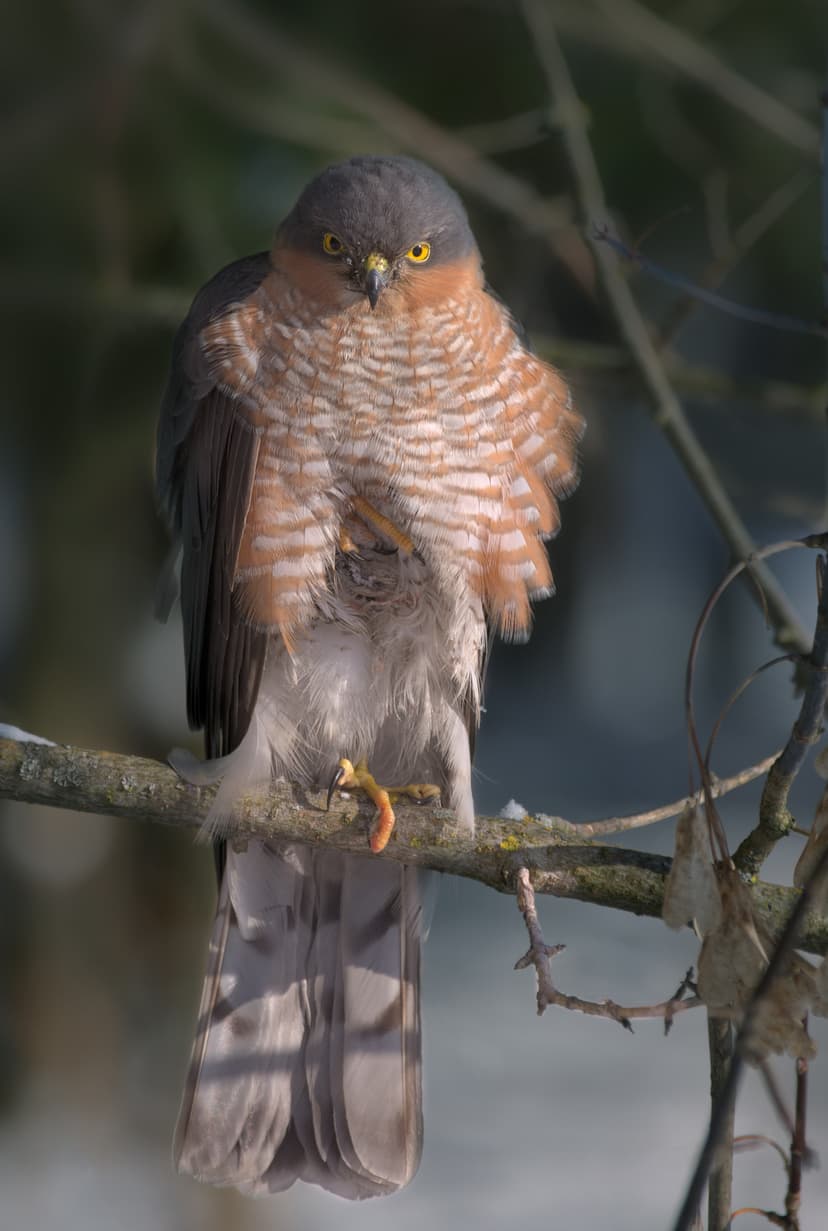
Accipiter nisus
The Eurasian sparrowhawk (Accipiter nisus) is a small bird of prey found across the temperate and subtropical regions of the Old World. It is distinctive for the significant size difference between sexes, with females being much larger than males, and for its specialized hunting of woodland birds, though it also adapts to urban environments. Once threatened by organochlorine insecticides, its populations have recovered and it is now considered of least concern.
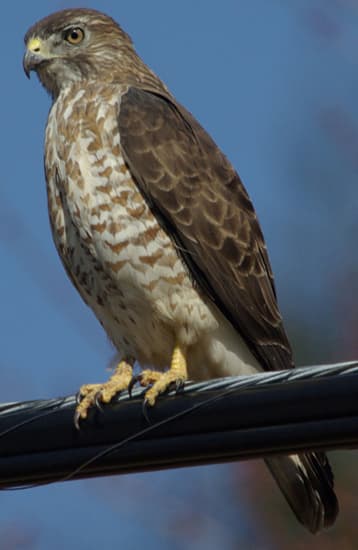
Buteo platypterus
The broad-winged hawk (Buteo platypterus) is a medium-sized hawk found in North and South America, migrating south to the Neotropics during winter. They are distinctive for their relatively short, broad wings with a tapered, pointed appearance, and exhibit two color morphs: dark and light. While their overall population is increasing, some breeding populations are declining due to habitat fragmentation.
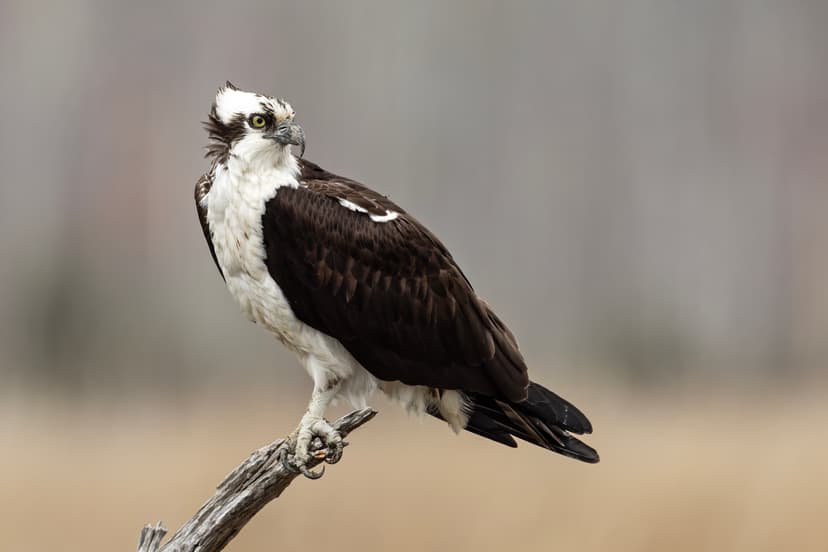
Pandion haliaetus
The osprey (Pandion haliaetus), also known as the sea hawk or fish hawk, is a large bird of prey found on every continent except Antarctica, distinguished by its specialized fish-eating diet and unique hunting techniques. It possesses physical adaptations such as reversible outer toes and sharp spicules on its feet to better grasp slippery prey. Ospreys are often found near bodies of water where they hunt fish, making up nearly their entire diet.