
Pandion haliaetus
The osprey (Pandion haliaetus), also known as the sea hawk or fish hawk, is a large bird of prey found on every continent except Antarctica, distinguished by its specialized fish-eating diet and unique hunting techniques. It possesses physical adaptations such as reversible outer toes and sharp spicules on its feet to better grasp slippery prey. Ospreys are often found near bodies of water where they hunt fish, making up nearly their entire diet.
Key Facts
- ›Ospreys are found on all continents except Antarctica.
- ›Their diet consists almost exclusively of fish.
- ›They have specialized adaptations for catching fish, including reversible outer toes and spicules on their feet.
- ›Ospreys are large raptors with a wingspan of up to 180 cm (71 in).
- ›Their conservation status is 'Least Concern' globally, though regional declines have been noted.
- ›They typically nest near water bodies on trees, rocky outcrops, or artificial platforms.
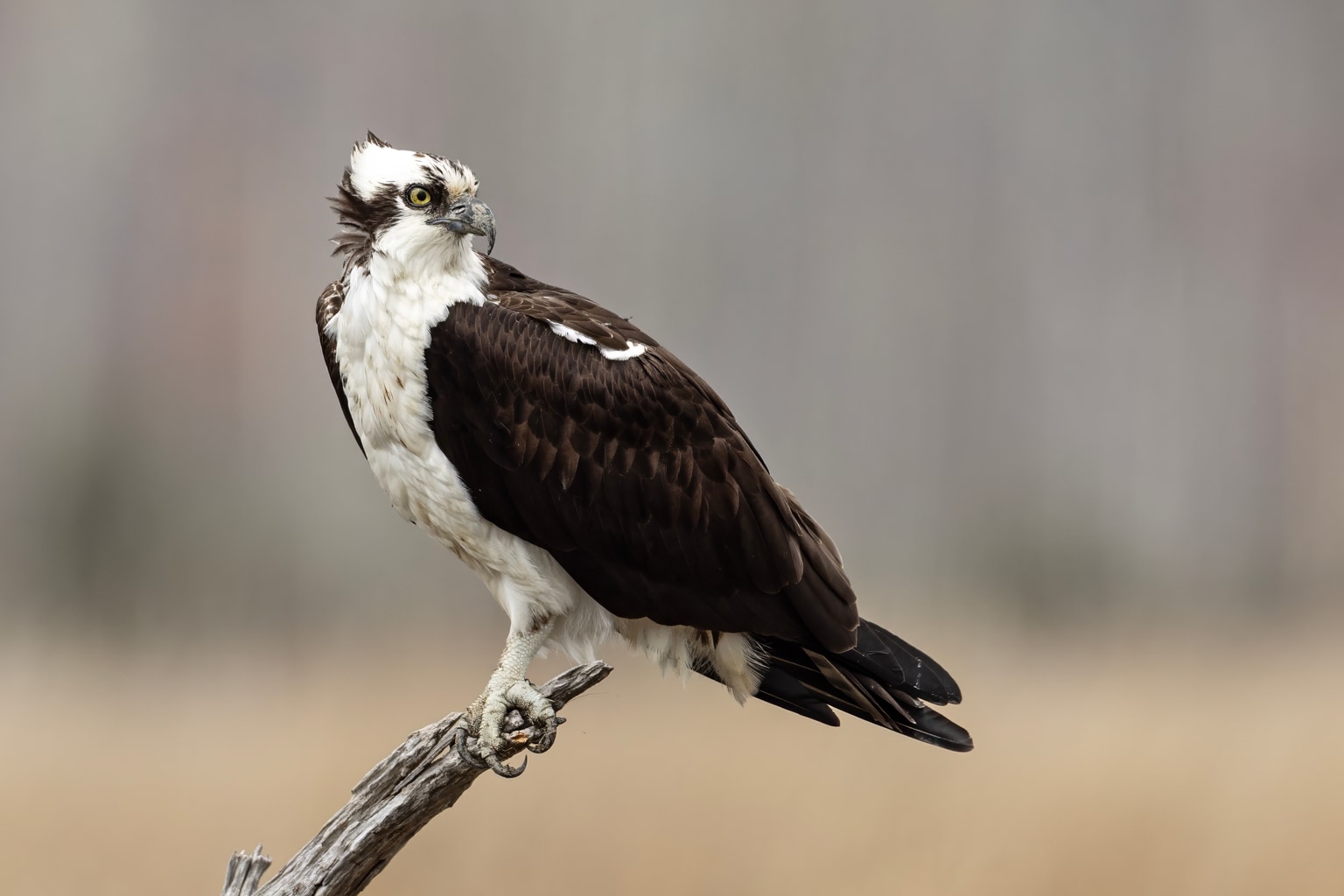
Sea Hawk, River Hawk, Fish Hawk
Near Freshwater Lakes and Rivers, Coastal Brackish Waters, Marine Coastlines, Areas With Adequate Water For Fishing
All Continents Except Antarctica, North America, South America, Europe, Africa, Asia, Australia, Pacific Islands
- Large raptor, over 60 cm in length
- Wingspan up to 180 cm
- Brown upperparts
- Greyish head and underparts
- White head with a dark mask across the eyes
- Golden to brown irises
- Black bill with a blue cere
- White feet with black talons
- Black markings on the underside of the wings
- Arched wings and drooping 'hands' in flight, giving a gull-like appearance
- Juveniles have buff fringes to plumage and a buff tone to underparts
Fish, Rodents, Rabbits, Hares, Other Mammals, Snakes, Turtles, Small Alligators, Frogs, Birds, Salamanders, Conchs, Crustaceans, Carrion
- Diving feet-first into water to catch fish
- Hovering momentarily before plunging
- Adjusting flight angle to account for visual distortion from water refraction
- Carrying fish to a perch or for longer distances
Fish, Northern Pike
Egg Collecting, Hunting of Adults, Insecticides Affecting Reproduction, Habitat Loss, Mishaps With Human Utilities, Collisions With Aircraft, Unmanaged Coastal Recreation, Encroaching Urban Development
About Pandion haliaetus
Osprey (Pandion haliaetus)
The osprey, also historically referred to as the sea hawk, river hawk, or fish hawk, is a large, fish-eating bird of prey with a remarkable cosmopolitan range, being found on every continent except Antarctica. This diurnal raptor is distinguished by its specialized physical characteristics and unique hunting behaviors, which are finely tuned to its diet, consisting almost exclusively of fish. Its ability to locate, dive for, and grasp slippery aquatic prey is unparalleled among birds of prey.
Taxonomy and Evolution
First described by Carl Linnaeus in 1758, the osprey is the sole extant species in the genus Pandion, which forms the family Pandionidae. While some taxonomic schemes place it within Accipitridae alongside hawks and eagles, molecular phylogenetic analyses indicate that Pandionidae is a sister taxon to Accipitridae, diverging approximately 50.8 million years ago. Fossil records reveal extinct species within the Pandionidae family dating back to the Oligocene epoch.
Physical Characteristics and Adaptations
Ospreys are substantial birds, typically measuring over 60 cm (24 in) in length with a wingspan reaching up to 180 cm (71 in). Their plumage is characterized by brown upperparts and predominantly greyish-white heads and underparts, often featuring a striking dark mask across the eyes. Several adaptations facilitate their piscivorous lifestyle: their outer toes are reversible, allowing them to grip prey with two toes forward and two back; their tarsi are reticulated; their talons are rounded and possess backward-facing scales that act as barbs; and their nostrils can close to prevent water ingress during dives. Their dense, oily plumage also helps prevent waterlogging.
Distribution, Habitat, and Diet
Found in temperate and tropical regions worldwide, ospreys inhabit a wide variety of environments, provided they are near a body of water offering a sufficient food supply. Their diet is overwhelmingly composed of fish, though they occasionally prey on small mammals, reptiles, amphibians, or birds. They are adept hunters, spotting prey from a distance and plunging into the water, sometimes submerging their entire bodies, to capture their meal.
Reproduction and Behavior
Ospreys typically form lifelong pair bonds and breed near freshwater lakes, rivers, or coastal waters. Nests are constructed from sticks and other debris, often on tree forks, rocky outcrops, or artificial structures like utility poles. The breeding season varies geographically. Females lay two to four eggs, which are incubated for approximately 35–43 days. Chicks fledge after 8–10 weeks. While the typical lifespan is 7–10 years, some individuals can live for over two decades.
Migration and Conservation
Many osprey populations are migratory, with European breeders wintering in Africa and North American populations migrating to South America. Australasian ospreys, however, tend to be sedentary. The species faces threats from historical hunting and egg collecting, as well as modern issues such as pesticide poisoning (which thins eggshells), habitat loss, and dangers from human infrastructure. Despite these challenges, the osprey's global population trend is not considered to be declining rapidly enough to warrant a higher threat status, leading to its classification as 'Least Concern' by the IUCN. Conservation efforts, including the provision of artificial nesting sites, have aided in population recovery in many regions.
Source: Wikipedia ↗
Frequently Asked Questions
What is an osprey?
The osprey is a large, fish-eating bird of prey with a cosmopolitan distribution. It is the sole living species in the genus Pandion and is recognized for its specialized hunting methods.
What do ospreys eat?
Ospreys are almost exclusively piscivorous, with fish comprising 99% of their diet. They are adept at catching live fish from bodies of water.
How do ospreys hunt fish?
Ospreys locate fish from the air and then dive feet-first into the water, often fully submerging themselves. They adjust their flight angle to compensate for the visual distortion caused by water refraction.
Where do ospreys live?
Ospreys inhabit temperate and tropical regions across all continents except Antarctica. They prefer habitats near bodies of water that provide an adequate food supply.
Are ospreys endangered?
Globally, the osprey is evaluated as 'Least Concern' by the IUCN Red List due to its large range and population. However, regional declines have been observed in areas like South Australia.
What are the physical characteristics of an osprey?
Ospreys are large, reaching over 60 cm in length with a wingspan of up to 180 cm. They are brown on the upperparts and greyish on the head and underparts, with a distinctive dark mask across the eyes.
Related Raptor species
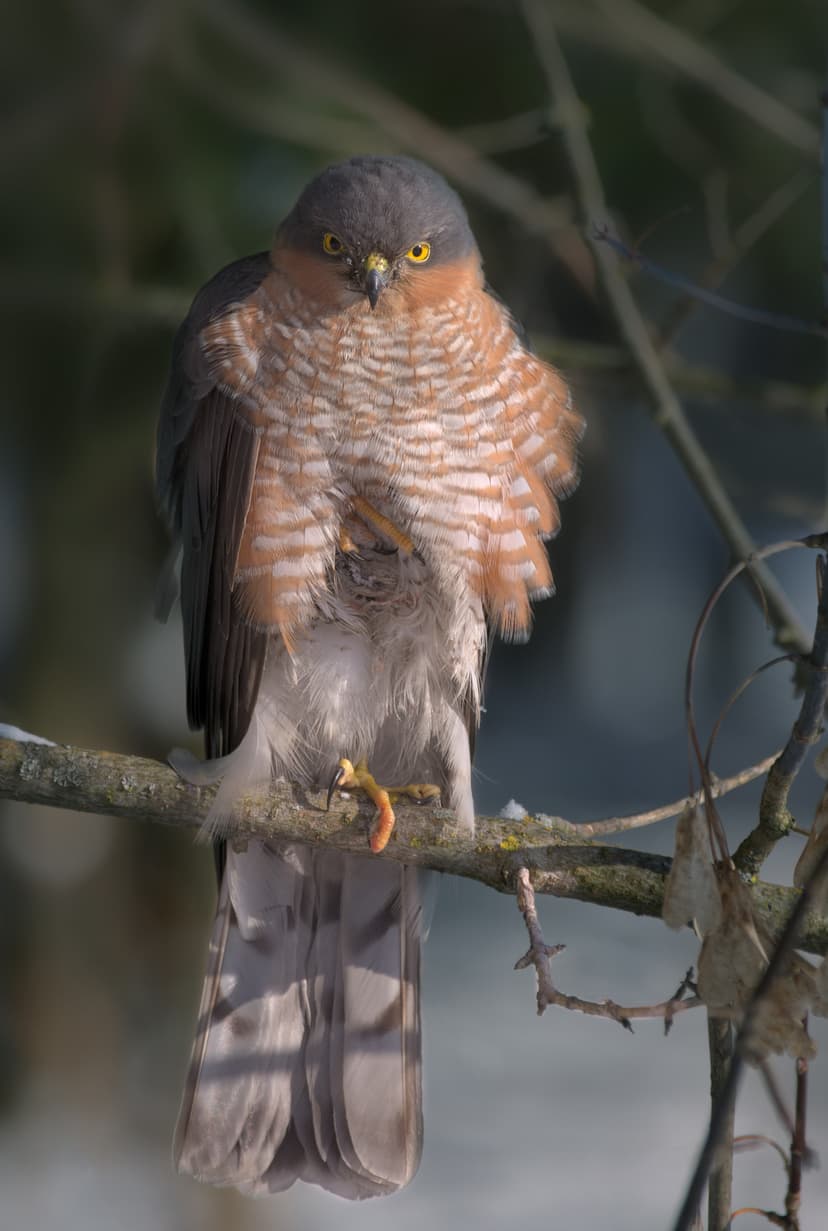
Accipiter nisus
The Eurasian sparrowhawk (Accipiter nisus) is a small bird of prey found across the temperate and subtropical regions of the Old World. It is distinctive for the significant size difference between sexes, with females being much larger than males, and for its specialized hunting of woodland birds, though it also adapts to urban environments. Once threatened by organochlorine insecticides, its populations have recovered and it is now considered of least concern.
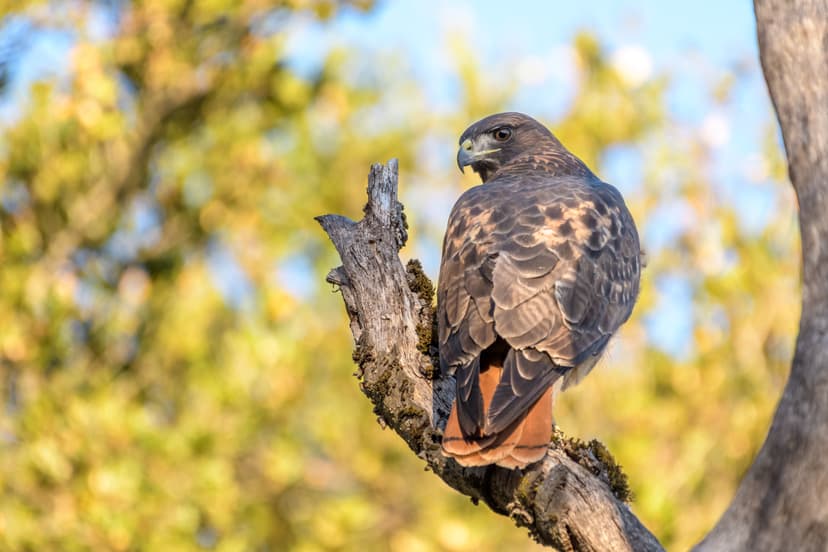
Buteo jamaicensis
The red-tailed hawk (Buteo jamaicensis) is a common and widespread bird of prey found throughout North America, from Alaska to Panama. It is known for its distinctive brick-red tail and adaptable nature, thriving in diverse habitats including deserts, forests, and urban areas. This hawk is legally protected across Canada, Mexico, and the United States.
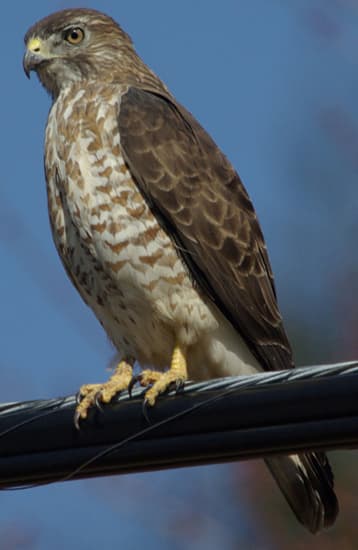
Buteo platypterus
The broad-winged hawk (Buteo platypterus) is a medium-sized hawk found in North and South America, migrating south to the Neotropics during winter. They are distinctive for their relatively short, broad wings with a tapered, pointed appearance, and exhibit two color morphs: dark and light. While their overall population is increasing, some breeding populations are declining due to habitat fragmentation.