
Buteo platypterus
The broad-winged hawk (Buteo platypterus) is a medium-sized hawk found in North and South America, migrating south to the Neotropics during winter. They are distinctive for their relatively short, broad wings with a tapered, pointed appearance, and exhibit two color morphs: dark and light. While their overall population is increasing, some breeding populations are declining due to habitat fragmentation.
Key Facts
- ›Medium-sized hawk belonging to the genus Buteo.
- ›Migrates from North America to winter in the Neotropics, with some subspecies year-round residents in the Caribbean.
- ›Females are slightly larger than males.
- ›Possesses relatively short, broad, and tapered wings, unique to the species.
- ›Exhibits two color morphs: a dark morph with fewer white areas and a light morph that is paler.
- ›Breeds in deciduous forests and forages in wetlands and meadows.
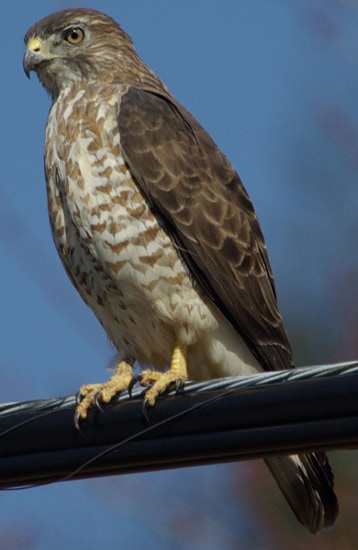
Broad-Winged Hawk
Deciduous Forests, Wetlands, Meadows, Mixed Forests
North America, South America, Neotropics, Caribbean Islands
- Medium-sized hawk, 32-44 cm in length.
- Weight ranges from 265 to 560 g.
- Females are slightly larger than males.
- Wings are relatively short, broad, and tapered with a pointed appearance.
- Adults have dark brown bodies with white barred bellies and chests.
- Tail is dark grey-black with white bands.
- Juveniles have more white and longitudinal barring.
- Two color morphs: dark and light.
Insects, Amphibians, Reptiles, Mammals, Birds, Frogs, Lizards, Snakes, Crabs, Earthworms
- Perching on low branches and watching for prey.
- Short, fast glide to capture prey.
- Skinning frogs and snakes.
- Plucking feathers from prey birds.
Chipmunks, Shrews, Voles, Frogs, Lizards, Grasshoppers, Dragonflies, Saturniid Moth Caterpillars, Grouse, New World Quails
Forest Fragmentation
About Buteo platypterus
Broad-winged Hawk (Buteo platypterus)
The broad-winged hawk, scientifically known as Buteo platypterus, is a medium-sized hawk native to the Americas. During the summer months, it inhabits eastern North America, ranging westward to British Columbia and Texas, before migrating south to winter in the Neotropics, from Mexico down to southern Brazil. A notable characteristic of this species, shared with most raptors, is that females are slightly larger than males.
Physical Characteristics and Identification
Broad-winged hawks are relatively small members of the Buteo genus, measuring between 32 to 44 cm (13 to 17 inches) in length and weighing 265 to 560 grams (9.3 to 19.8 ounces). Their wings are a distinctive feature: they are relatively short and broad, tapering to a somewhat pointed appearance, a trait unique to this species. The wingspan can extend from 74 to 100 cm (29 to 39 inches). Adult plumage typically consists of a dark brown body with a white belly and chest marked by horizontal barring. The tail is usually dark grey-black with white bands. Juveniles display a slightly different coloration, with more white and longitudinal barring. The species exhibits two primary color morphs: a dark morph with fewer white areas and a light morph that appears paler overall. Distinguishing it from similar species like the red-shouldered hawk, the broad-winged hawk has a shorter tail and wings that are more pointed.
Habitat and Distribution
These hawks occupy a broad range across North and South America. Their breeding grounds are located in the northern and eastern parts of North America. While many migrate to warmer climates for the winter, five subspecies are endemic to the Caribbean islands and remain resident year-round. They prefer to breed in deciduous forests, which provide suitable nesting sites, and forage in areas such as wetlands and meadows. Migrating individuals are known to travel in large flocks, soaring on thermals for thousands of kilometers. Even birds that have adapted to living near humans tend to avoid direct human settlements and interactions.
Diet and Hunting Behavior
As carnivores, the diet of the broad-winged hawk is varied and depends on seasonal availability. Their prey includes insects, amphibians, reptiles, small mammals like mice and voles, and birds. During the nesting season, they focus on smaller prey such as chipmunks, frogs, and lizards. Their hunting strategy involves perching on low, concealed branches and launching into a short, swift glide to capture prey. They are known for their meticulous preparation of food, often skinning prey like frogs and snakes or plucking feathers from birds before consumption.
Reproduction and Life Cycle
Broad-winged hawks typically form monogamous pairs for the breeding season, which occurs between April and August. Males attract females through elaborate courtship aerial displays. A successful pair will usually raise one brood per season, consisting of one to four eggs. Both parents contribute to nest building, which is done in deciduous trees using sticks and twigs. The female incubates the eggs for about 28 days, and the hatchlings are semialtricial, born with open eyes and covered in down. Both parents care for the young, with the female providing the majority of protection and feeding until the chicks are capable of independent flight, which occurs about 5 to 6 weeks after hatching.
Conservation Status
Despite facing challenges such as habitat fragmentation, which is causing population declines in certain breeding areas, the overall population of the broad-winged hawk is increasing. Consequently, it is listed as Least Concern on the IUCN Red List, indicating a relatively stable and widespread status.
Source: Wikipedia ↗
Frequently Asked Questions
What is the scientific name for the broad-winged hawk?
The scientific name for the broad-winged hawk is Buteo platypterus. This binomial name places it within the genus Buteo and the family Accipitridae.
Where do broad-winged hawks live?
Broad-winged hawks have a wide distribution across North and South America, from southern Canada to southern Brazil. Their breeding range is primarily in eastern and northern North America, while wintering grounds extend to the Neotropics. Several subspecies are endemic to Caribbean islands.
What do broad-winged hawks eat?
These hawks are carnivores and their diet varies seasonally. They consume insects, amphibians, reptiles, mammals, and birds. During the nesting season, they focus on small animals like chipmunks and voles, as well as frogs and lizards. In winter, their diet can include grasshoppers, snakes, and small crabs.
How do broad-winged hawks hunt?
Broad-winged hawks hunt by perching on low branches, concealed by foliage, and watching for prey. Once a target is spotted, they launch into a short, fast glide to capture it. They are meticulous about preparing their food, skinning amphibians and plucking birds before consumption.
What is the conservation status of the broad-winged hawk?
The broad-winged hawk is assessed as Least Concern on the IUCN Red List. Despite a decline in some breeding areas due to forest fragmentation, its overall population is increasing.
How do broad-winged hawks communicate?
Broad-winged hawks use vocalizations for communication with mates and offspring, as well as for territorial displays. Their primary call is a high-pitched whistle, described as 'kee-ee'. When threatened, they emit an alarm call consisting of stuttered, squealing whistles.
Related Raptor species
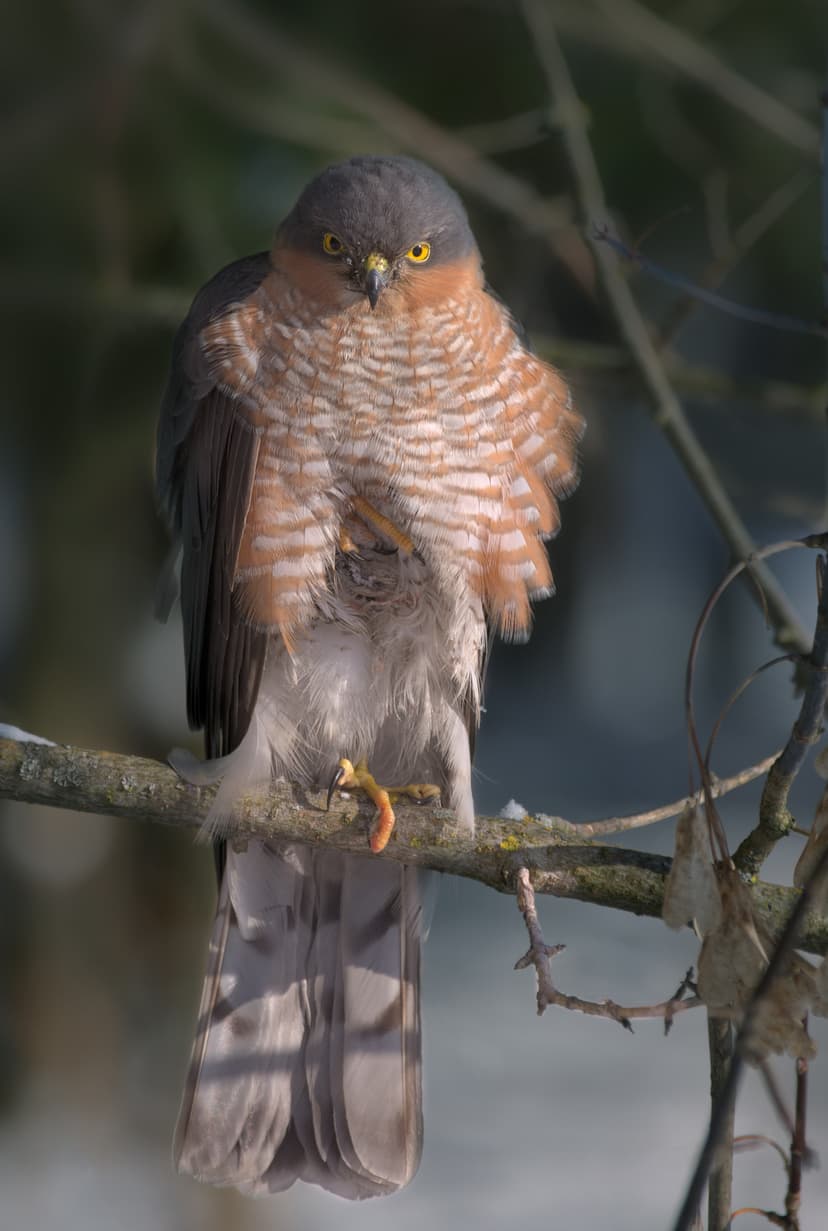
Accipiter nisus
The Eurasian sparrowhawk (Accipiter nisus) is a small bird of prey found across the temperate and subtropical regions of the Old World. It is distinctive for the significant size difference between sexes, with females being much larger than males, and for its specialized hunting of woodland birds, though it also adapts to urban environments. Once threatened by organochlorine insecticides, its populations have recovered and it is now considered of least concern.
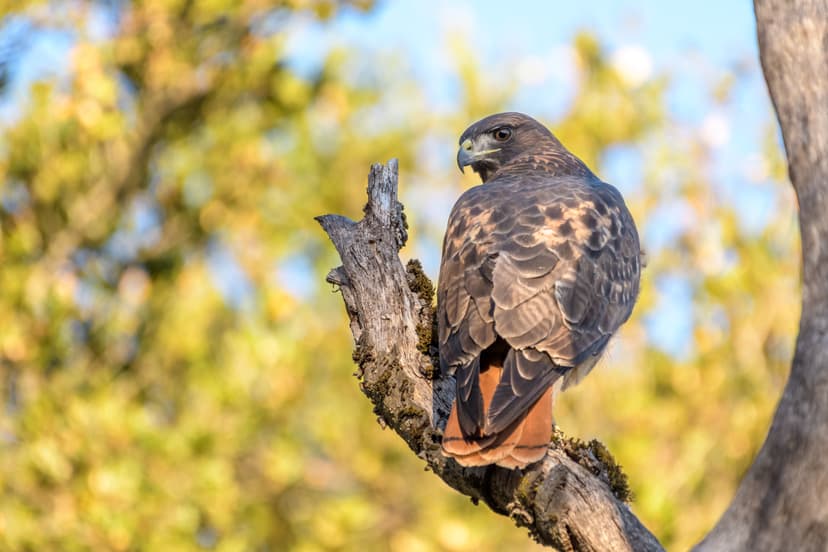
Buteo jamaicensis
The red-tailed hawk (Buteo jamaicensis) is a common and widespread bird of prey found throughout North America, from Alaska to Panama. It is known for its distinctive brick-red tail and adaptable nature, thriving in diverse habitats including deserts, forests, and urban areas. This hawk is legally protected across Canada, Mexico, and the United States.
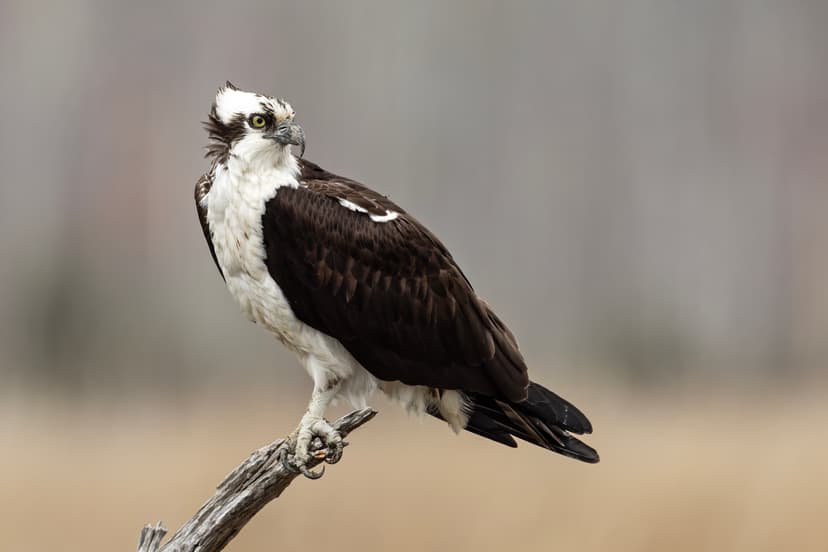
Pandion haliaetus
The osprey (Pandion haliaetus), also known as the sea hawk or fish hawk, is a large bird of prey found on every continent except Antarctica, distinguished by its specialized fish-eating diet and unique hunting techniques. It possesses physical adaptations such as reversible outer toes and sharp spicules on its feet to better grasp slippery prey. Ospreys are often found near bodies of water where they hunt fish, making up nearly their entire diet.