
Stephanoaetus coronatus
The crowned eagle (Stephanoaetus coronatus) is a large and powerful bird of prey found in sub-Saharan Africa, primarily inhabiting riparian woodlands and various forests. It is distinguished by its exceptionally large talons, strong legs, and a bold, ferocious disposition, making it Africa's most powerful eagle relative to its prey's size. This species is known for its conspicuous behavior and striking plumage, though it is currently listed as Near Threatened due to habitat destruction.
Key Facts
- ›It is the only extant member of the genus Stephanoaetus, with a second species, the Malagasy crowned eagle, having gone extinct.
- ›Mammals, including monkeys, antelopes, rodents, and hyraxes, form the majority of its diet.
- ›The crowned eagle is considered Africa's most powerful eagle in proportion to its prey's size, capable of killing prey by crushing its skull.
- ›It possesses unusually large talons, with the hallux-claw of females measuring up to 6.2 cm.
- ›Adults have striking plumage featuring a double crest, blackish bars on their underside, and strongly barred outer wings and tail.
- ›The species is non-migratory and largely sedentary, typically inhabiting a fixed territory throughout its adult life.
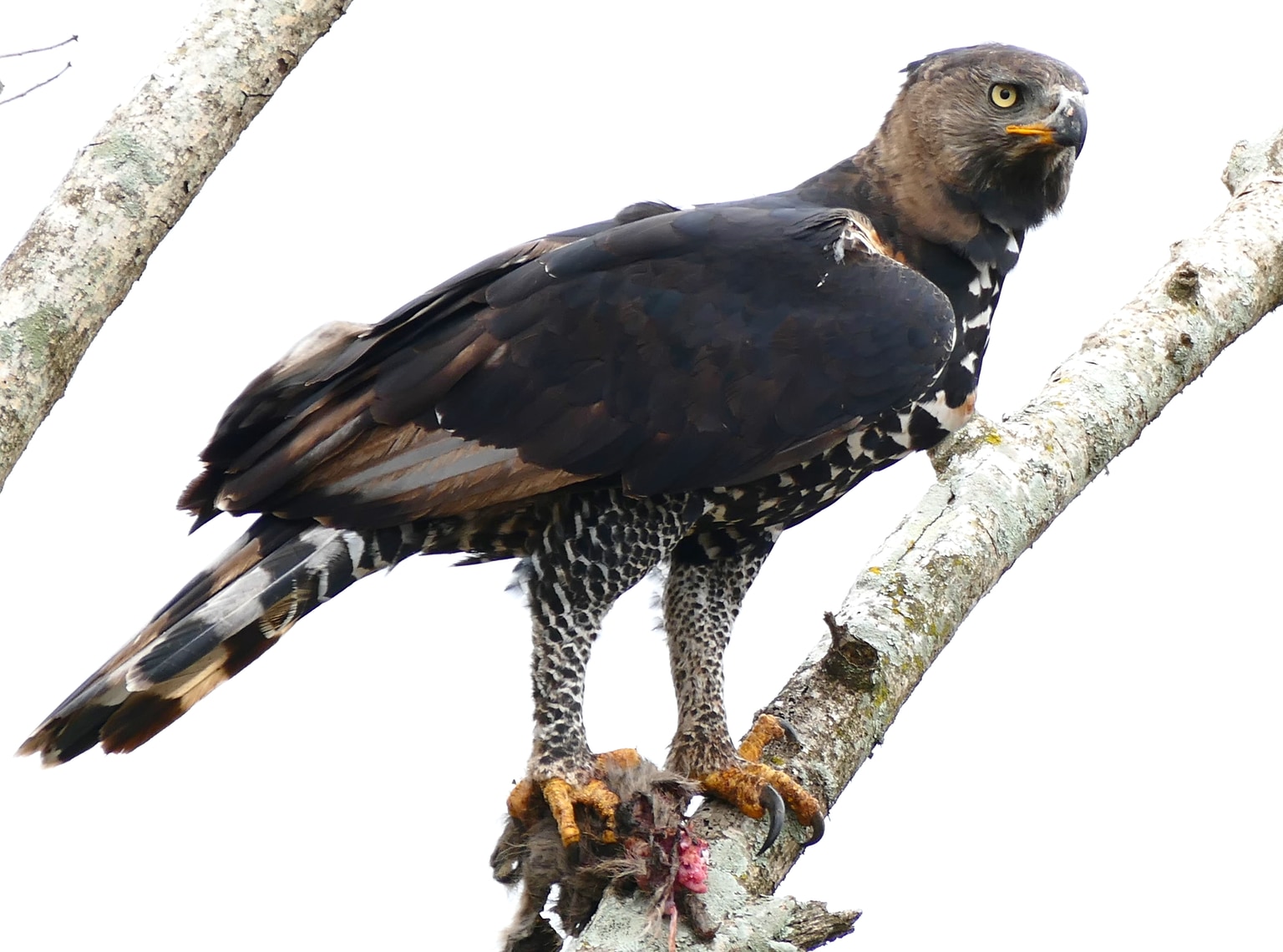
African Crowned Eagle, Crowned Hawk-Eagle
Riparian Woodlands, Forests, Dense Woodlands, Rainforests, Wooded Escarpments, Wooded Hillsides, Rocky Outcrops, Montane Forest, Plantations, Forested Ravines and Gorges
Sub-Saharan Africa, East Africa, Southern Africa, West Africa, Central Africa
- Large eagle, 80-99 cm in length.
- Wingspan typically 1.51-1.81 m.
- Females larger than males.
- Short, broad, rounded wings adapted for maneuverability in wooded environments.
- Long tail.
- Unusually large talons and thick, heavy legs.
- Adult plumage: Dark to rufous-tinged brown crown with a prominent black-tipped double crest, blackish brown-grey upperparts, white and black-barred underparts, black tail with brownish-grey bands.
- Juvenile plumage: White head and underside, contrasting black-spotted thighs and legs, light brown or grayish-brown back with pale feather edgings.
- Eyes range from yellow to almost white in adults, grey in juveniles.
- Cere and feet are ochre-yellow in adults, dull yellow in juveniles.
- Black talons.
Mammals, Monkeys, Antelopes, Rodents, Hyraxes, Viverrids, Bushpigs, Pangolins, Bats, Birds, Hadada Ibis Juveniles, Trumpeter Hornbills, Reptiles, Carrion, Domesticated Cats, Domesticated Dogs, Domesticated Sheep, Domesticated Goats, Domesticated Chickens
- Can kill by crushing prey's skull with powerful talons and legs.
Monkeys, Antelopes, Rodents, Hyraxes, Viverrids, Bushbuck, Bushpigs, Pangolins, Bats, Hadada Ibis Juveniles, Trumpeter Hornbills
Habitat Loss
About Stephanoaetus coronatus
The Crowned Eagle: Africa's Powerful Forest Raptor
The crowned eagle, scientifically known as Stephanoaetus coronatus, is a formidable bird of prey native to sub-Saharan Africa. Primarily found in riparian woodlands and various forests, this species is the sole surviving member of its genus. It is renowned for its immense power relative to its prey's size, possessing exceptionally large talons and strong legs that can crush the skulls of its quarry. Its striking appearance, characterized by a prominent double crest and boldly barred underparts, makes it easily recognizable.
Diet and Hunting
Mammals form the bulk of the crowned eagle's diet, with prey ranging from monkeys and antelopes to smaller animals like rodents and hyraxes. In some regions, birds also constitute a significant portion of their meals. The eagle's powerful build allows it to tackle prey as large as bushbuck, weighing up to 30 kg, though smaller prey is more commonly taken. Its hunting strategy often involves ambushing prey from concealed perches within its dense forest habitat.
Distribution and Habitat
The crowned eagle's range spans across Africa, from East Africa down to South Africa, and through much of the rainforests of West and Central Africa. Its preferred habitat consists of dense woodlands and forests, but it can also adapt to wooded escarpments, riverine strips, and wooded hillsides. While adaptable, the species is highly dependent on the presence of intact forest cover, which is increasingly under threat.
Physical Characteristics and Behavior
Measuring up to 99 cm in length with a wingspan of up to 1.81 meters, the crowned eagle is a substantial raptor. Females are typically larger than males. Their wings are relatively short and broad, providing excellent maneuverability within their wooded environment. The crowned eagle is largely sedentary, maintaining a fixed territory throughout the year. It is a vocal species, known for its loud, whistling calls, and performs elaborate display flights, particularly during the breeding season.
Conservation Status
Despite its power and adaptability, the crowned eagle faces significant threats, primarily from the widespread destruction of its forest habitat. Consequently, it is currently listed as Near Threatened by the IUCN, highlighting the urgent need for conservation efforts to protect its remaining strongholds.
Source: Wikipedia ↗
Frequently Asked Questions
What is the scientific name for the crowned eagle?
The scientific name for the crowned eagle is Stephanoaetus coronatus. It is the sole living representative of the genus Stephanoaetus.
What is the typical habitat of the crowned eagle?
Crowned eagles primarily inhabit dense woodlands, including deep rainforests, as well as wooded escarpments, riparian strips, and heavily wooded hillsides. They can be found from sea-level up to altitudes of 3,000 meters.
What does the crowned eagle eat?
Mammals constitute the majority of the crowned eagle's diet, with prey including monkeys, antelopes, rodents, hyraxes, and viverrids. Birds are also a significant part of the diet in some areas, and occasionally reptiles and carrion are consumed.
How large is a crowned eagle?
Crowned eagles measure between 80 to 99 cm in length, with a wingspan typically ranging from 1.51 to 1.81 meters. Females are generally 10-15% larger than males, weighing between 3.2–4.7 kg, while males weigh 2.55–4.12 kg.
What makes the crowned eagle so powerful?
The crowned eagle is considered Africa's most powerful eagle relative to its prey's body size due to its exceptionally large talons and strong legs. It is capable of killing prey by crushing its skull.
What is the conservation status of the crowned eagle?
The crowned eagle is currently listed by the IUCN as Near Threatened. This status is primarily due to the widespread destruction of its native tropical African forest habitat.
Related Raptor species
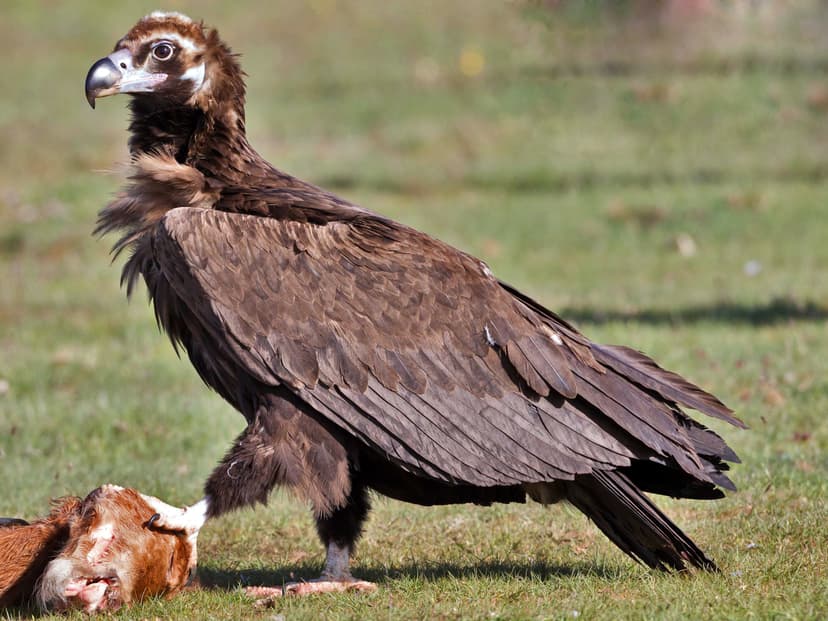
Aegypius monachus
The cinereous vulture (Aegypius monachus), also known as the monk vulture, is a massive Old World vulture native to temperate Eurasia. It is the largest member of its family, Accipitridae, distinguished by its dark plumage, bald head, and a ruff of neck feathers resembling a monk's cowl. This species plays a vital role in its ecosystems by consuming carcasses, which helps prevent the spread of disease.
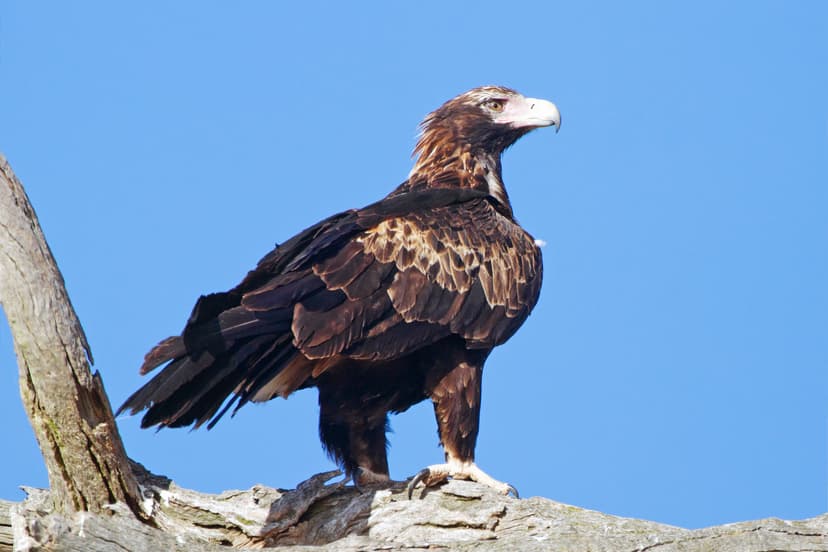
Aquila audax
The wedge-tailed eagle (Aquila audax) is Australia's largest bird of prey, also found in southern New Guinea and Tasmania. It is characterized by its long, broad wings, fully feathered legs, and distinctive wedge-shaped tail. As one of the most powerful avian predators, it is a generalist hunter, preying on mammals, birds, and reptiles, and is known for its resilience and adaptability to various habitats.
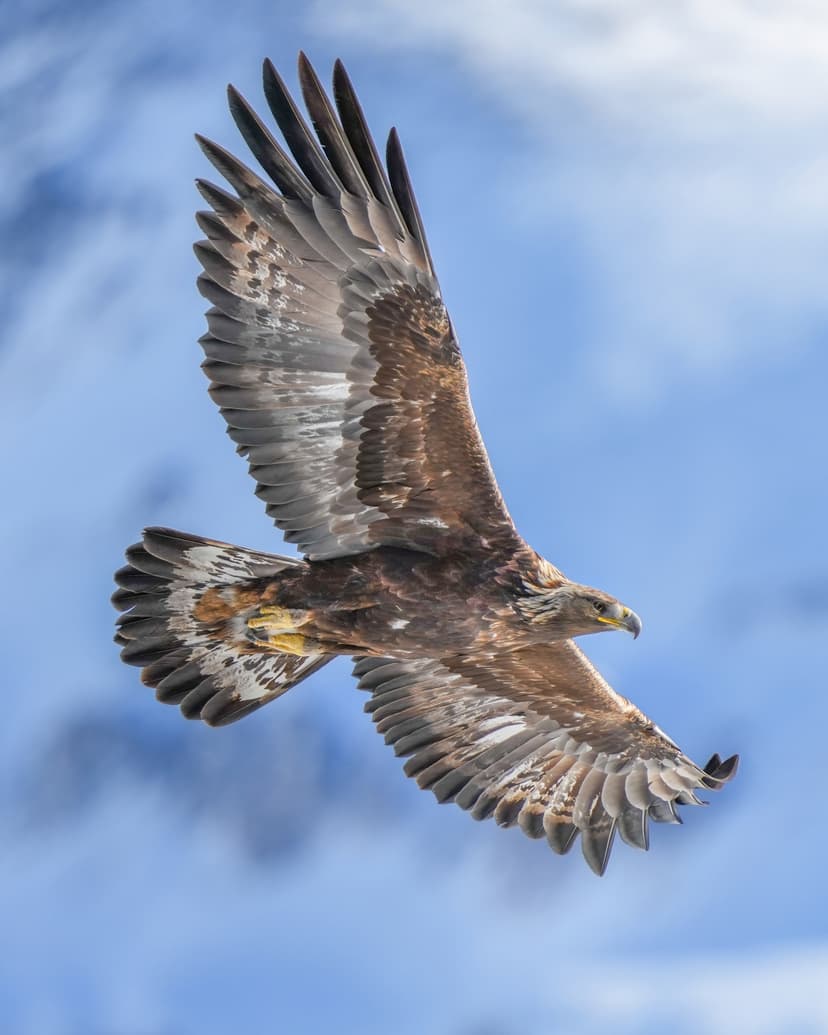
Aquila chrysaetos
The golden eagle (Aquila chrysaetos) is a large bird of prey found across the Northern Hemisphere, known for its powerful hunt and widespread distribution. It is characterized by its dark brown plumage with golden-brown feathers on its nape and is a prominent species in falconry and various ancient cultures. This eagle is the most widely distributed eagle species and is a member of the Accipitridae family.