
Aquila audax
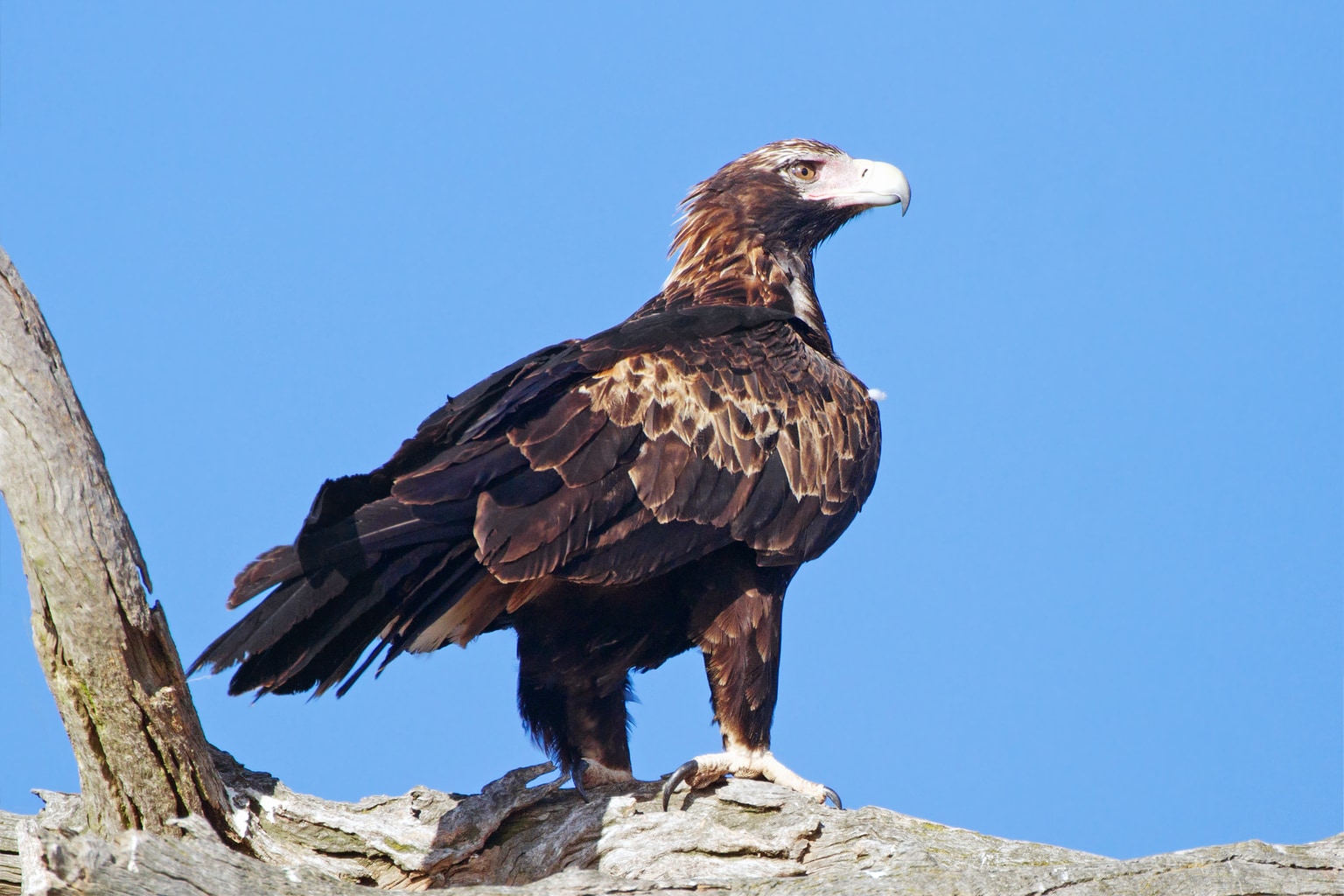
The wedge-tailed eagle (Aquila audax) is Australia's largest bird of prey, also found in southern New Guinea and Tasmania. It is characterized by its long, broad wings, fully feathered legs, and distinctive wedge-shaped tail. As one of the most powerful avian predators, it is a generalist hunter, preying on mammals, birds, and reptiles, and is known for its resilience and adaptability to various habitats.
Key Facts
- ›Australia's largest bird of prey, found also in southern New Guinea and Tasmania.
- ›Possesses long, broad wings, fully feathered legs, and a distinctive wedge-shaped tail.
- ›A powerful generalist predator, with a diet including mammals, birds, and reptiles.
- ›Known to consume introduced species like European rabbits and also scavenge on carrion.
- ›Forms pairs that may mate for life, typically nesting in large trees.
- ›Highly resilient to past persecution, with populations rebounding significantly.
Wedge-Tailed Eagle
Desert, Semi-Desert, Plains, Mountainous Areas, Forest, Tropical Rainforests, Rocky Areas, Open Terrain, Eucalyptus Stands
Australia, New Guinea, Tasmania
Large Size, Long, Broad Wings, Fully Feathered Legs, Unmistakable Wedge-Shaped Tail, Elongated Upper Mandible, Strong Beak, Powerful Feet, Dark Brown To Black Plumage, Tawny-Rufous Hackles On the Neck, Bare Facial Skin
Mammals, Birds, Reptiles, Carrion
European Rabbit, Marsupials, Macropods
Poisoning, Shooting, Habitat Degradation, Human Interference At the Nest, Logging Activity
About Aquila audax
Aquila audax: The Wedge-Tailed Eagle
The wedge-tailed eagle, scientifically known as Aquila audax, is the largest bird of prey found on the Australian continent. Its range extends to southern New Guinea and the island of Tasmania. This impressive raptor is characterized by its long, broad wings, legs fully covered in feathers, and a distinctive wedge-shaped tail, setting it apart from other eagles.
Classification and Relatives
As a member of the genus Aquila, the wedge-tailed eagle is part of a group of large, predominantly dark-colored booted eagles found worldwide. Genetic studies indicate a close relationship with other large Aquila species, particularly the Verreaux's eagle and Gurney's eagle, forming a species complex with the golden eagle. Historically, it was once classified in its own genus, Uroaetus, due to its unique form.
Physical Characteristics
Adult wedge-tailed eagles are large, with a dark brown to black appearance that can vary with lighting and individual variation. They possess large bills, relatively small and flat heads, and long necks. A notable feature is their prominent carpals and the feathering on their legs, often described as 'baggy feathered trousers.' While sexes are indistinguishable by plumage, females are generally larger than males. Juveniles are darker brown with extensive rufous feather edging and a paler head, gradually darkening and maturing over several years.
Habitat and Distribution
The wedge-tailed eagle is a highly adaptable species, inhabiting most terrestrial environments across Australia. These habitats range from arid deserts and semi-deserts to open plains, mountainous regions, and forests, including occasional tropical rainforests. Preferred areas often feature varied topography with rocky outcrops, open terrain, and native woodlots.
Diet and Hunting
This eagle is considered one of the world's most powerful avian predators and a true generalist. Its diet is broad, encompassing birds, reptiles, and, most significantly, mammals. The introduction of European rabbits has provided a substantial food source, though native marsupials, including large macropods, are also a primary prey. Wedge-tailed eagles are also known to scavenge carrion, particularly when young.
Reproduction and Lifespan
Wedge-tailed eagles typically form pairs and may mate for life. They construct large stick nests, usually in the largest available tree within a stand. A clutch usually consists of one to four eggs, with two being most common. Breeding efforts typically result in one or two fledglings, which disperse after a few months. Nesting success can be compromised by human activities such as logging and other habitat disturbances, as the species is highly sensitive to human presence near the nest.
Conservation and Threats
Historically, the wedge-tailed eagle faced significant persecution from humans through poisoning and shooting, largely due to perceived threats to livestock. Despite these pressures, the species has proven exceptionally resilient. Their numbers have rebounded, in part due to human activities inadvertently providing abundant food sources like introduced rabbits and an increase in roadkill. While habitat degradation and disturbance at nest sites remain concerns, the species is currently listed as Least Concern.
Source: Wikipedia ↗
Frequently Asked Questions
What is the scientific name of the wedge-tailed eagle?
The scientific name for the wedge-tailed eagle is Aquila audax. The specific name 'audax' is derived from the Latin word meaning 'bold'.
Where does the wedge-tailed eagle live?
The wedge-tailed eagle is found throughout the continent of Australia, extending into southern New Guinea and as far south as Tasmania. They inhabit a wide range of environments, from deserts and plains to mountainous areas and forests.
What does a wedge-tailed eagle eat?
This species is a generalist predator with a diverse diet. While they hunt a wide range of prey including birds and reptiles, they are primarily mammal predators. They readily consume introduced species like the European rabbit and also frequently eat carrion, especially when young.
How large is a wedge-tailed eagle?
Wedge-tailed eagles are large birds of prey. Adult females are typically larger than males, with a maximum reported wingspan of up to 2.84 meters and a length of up to 1.06 meters. Weights can range from 2 to 5.8 kg depending on sex and individual variation.
What are the nesting habits of the wedge-tailed eagle?
Wedge-tailed eagles usually build large stick nests in prominent trees, often the largest in a stand. They typically lay one to four eggs, with two being the most common number. Breeding success can be affected by human interference and habitat disturbance.
What are the threats to the wedge-tailed eagle?
Historically, wedge-tailed eagles faced persecution through poisoning and shooting due to perceived predation on livestock. While these threats persist to some degree, their resilience and adaptation to human-provided food sources have allowed populations to rebound.
Related Raptor species
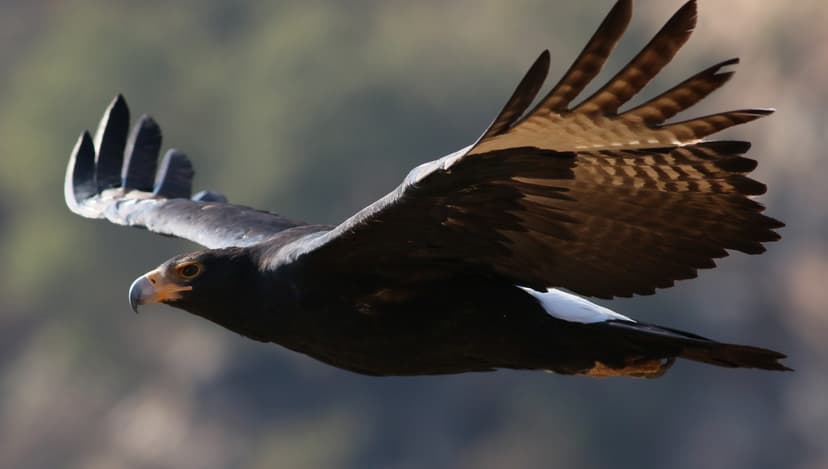
Aquila verreauxii
Verreaux's eagle (Aquila verreauxii) is a large bird of prey predominantly found in the hilly and mountainous regions of southern and eastern Africa, with a limited presence in the Middle East. It is highly specialized in its diet, primarily hunting rock hyraxes, which distinguishes it from many other raptor species.
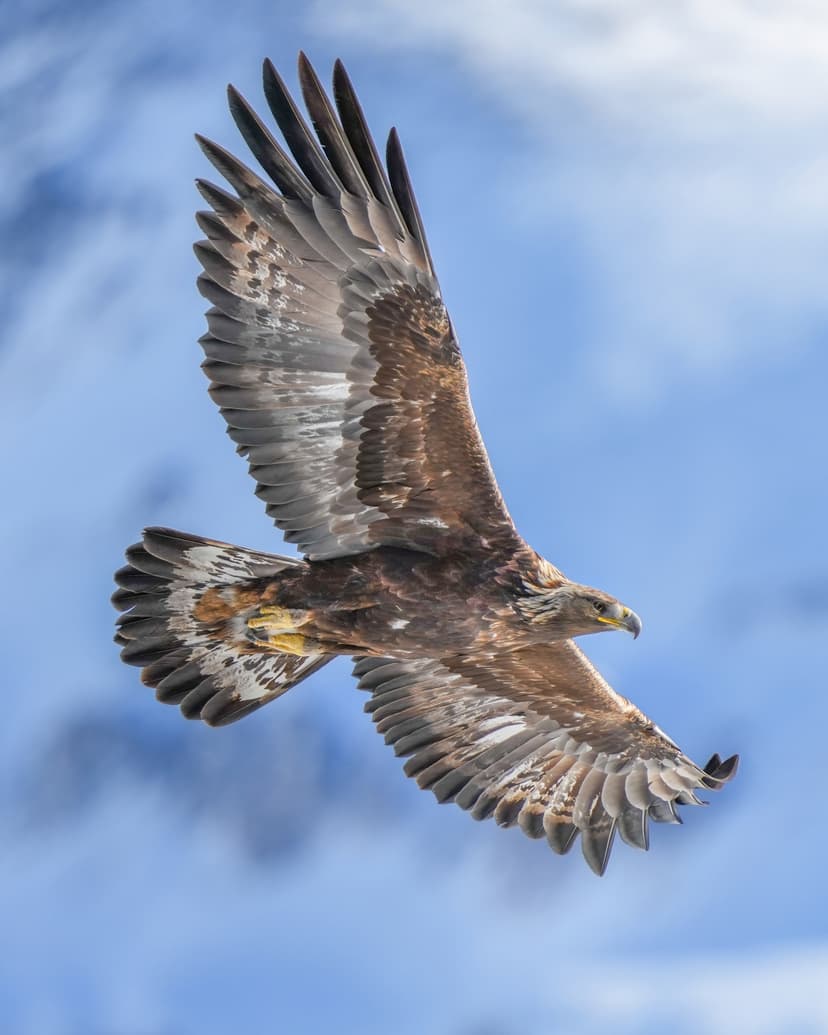
Aquila chrysaetos
The golden eagle (Aquila chrysaetos) is a large bird of prey found across the Northern Hemisphere, known for its powerful hunt and widespread distribution. It is characterized by its dark brown plumage with golden-brown feathers on its nape and is a prominent species in falconry and various ancient cultures. This eagle is the most widely distributed eagle species and is a member of the Accipitridae family.
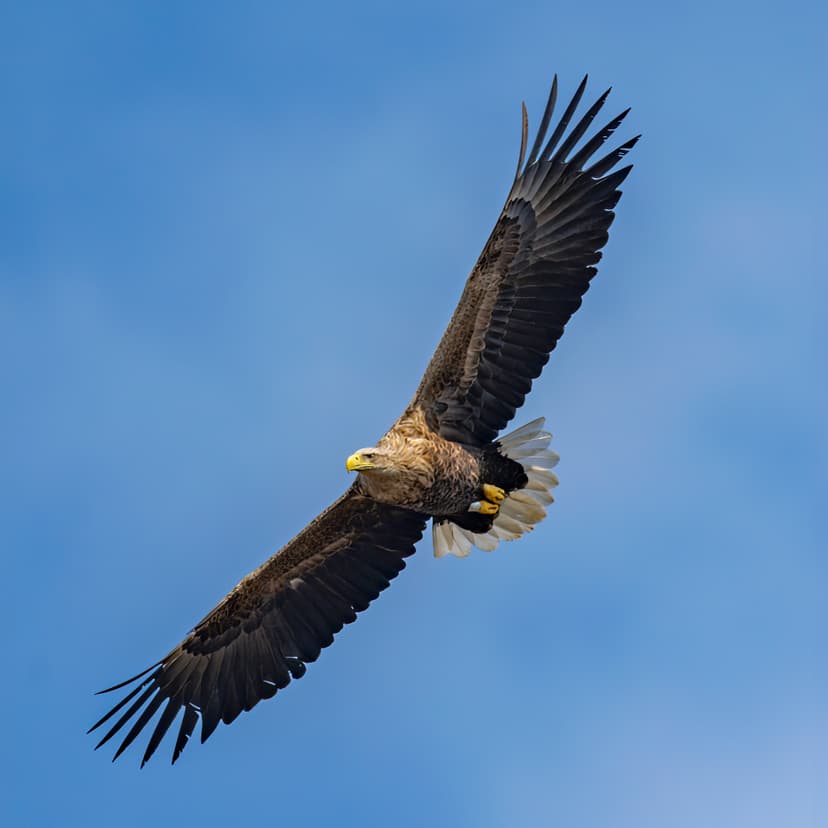
Haliaeetus albicilla
The white-tailed eagle (Haliaeetus albicilla) is a large bird of prey found across temperate Eurasia. It is characterized by its broad wingspan, predominantly greyish-brown plumage, and its distinctive white tail in adulthood. This species is a powerful apex predator and an opportunistic scavenger, often found near large bodies of open water.