
Aquila verreauxii
Verreaux's eagle (Aquila verreauxii) is a large bird of prey predominantly found in the hilly and mountainous regions of southern and eastern Africa, with a limited presence in the Middle East. It is highly specialized in its diet, primarily hunting rock hyraxes, which distinguishes it from many other raptor species.
Key Facts
- ›Primarily inhabits rocky hills and mountains across southern and eastern Africa, and parts of the Middle East.
- ›Its diet is heavily specialized, with rock hyraxes making up the vast majority of its prey.
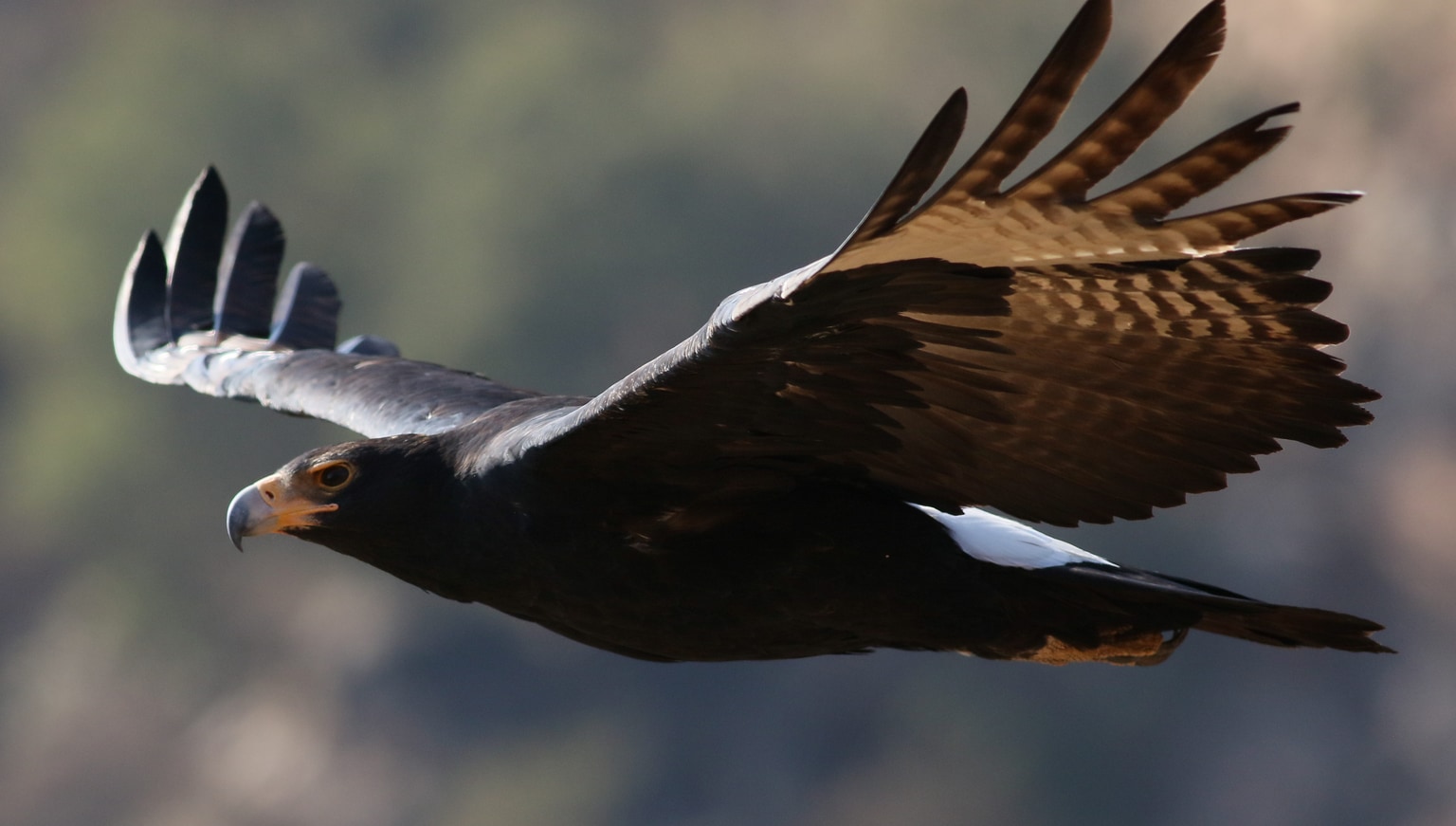
- ›Adults are striking jet-black with contrasting yellow eye-rings and prominent white markings on their back and wings.
- ›Juveniles have a distinct dark brown plumage with golden crowns and rufous napes.
- ›It is one of the largest booted eagles, rivaling the martial and golden eagles in size.
- ›Known for its distinctive soaring flight, holding its wings in a slight dihedral.
Black Eagle
Dry, Rocky Environments, Kopjes, Rocky Hills, High Mountains, Cliffs, Gorges, Inselbergs, Savanna, Thornbush, Sub-Desert
Africa, Chad, Mali, Niger, Middle East, Lebanon, Israel, Oman, Saudi Arabia, Yemen, Sudan, Eritrea, Somalia, Ethiopia, Uganda, Kenya, Democratic Republic of the Congo, Tanzania, Malawi, Zambia, Zimbabwe, Mozambique, Eswatini, Lesotho, South Africa, Botswana, Namibia, Angola, Cameroon
- Very large eagle
- Males weigh 3 to 4.2 kg, females 3.1 to 7 kg
- Length 75 to 96 cm
- Wingspan 1.81 to 2.3 m
- Adults are mostly jet-black
- Yellow cere, eye-ring, and "eye-brows"
- White V-shaped patch on back, rump, and upper-tail coverts
- White "windows" on wing quills at the carpal joint
- Stout bill
- Prominent head on a relatively long neck
- Legs fully feathered
- Juveniles are dark brown with contrasting golden crown and rufous nape/mantle
- Juveniles have whitish mottling on underwings
- Adult males and females are physically indistinguishable except for female's slight size advantage
Rock Hyraxes, Small Antelopes, Gamebirds, Hares, Monkeys, Other Assorted Vertebrates, Squirrels, Cane Rats, Bushbabies, Lambs, Kids
- Low-level quartering flight
- Rapid, twisting dives after surprising prey
- Using natural contours of the ground for surprise
- Hunting from a perch
- Cooperative hunting
- Knocking hyraxes off cliffs
- Taking arboreal prey from treetops
- Killing usually occurs on the ground
Cape Hyrax, Yellow-Spotted Rock Hyrax, Small Antelopes, Hares, Monkeys
About Aquila verreauxii
Verreaux's Eagle (Aquila verreauxii)
Verreaux's eagle, scientifically known as Aquila verreauxii, is a large bird of prey predominantly found in the hilly and mountainous regions of southern and eastern Africa, with a very limited presence in the Middle East. This species is remarkable for its highly specialized diet, which centers almost exclusively on rock hyraxes, a trait that closely links its distribution and life history to these prey animals.
Description and Identification
Adult Verreaux's eagles are characterized by their striking jet-black plumage, contrasted by bright yellow cere, eye-rings, and "eye-brows." Distinctive white markings are visible on their back, rump, and upper-tail coverts, forming a V-shaped pattern when viewed from above, though this can be obscured when the bird is perched. In flight, prominent white "windows" appear on their wings at the carpal joint, visible from both above and below. They are very large eagles, with males typically weighing between 3 to 4.2 kg and larger females weighing 3.1 to 7 kg, and possess a wingspan ranging from 1.81 to 2.3 meters. Juvenile plumages differ significantly, being dark brown with a golden crown and rufous nape and mantle, gradually transitioning to adult coloration over several years.
Habitat and Distribution
This eagle has specific habitat requirements, preferring dry, rocky environments such as kopjes, rocky hills, high mountains, cliffs, and gorges, often surrounded by savanna or sub-desert. Their range spans across southern and eastern Africa, from Sudan southward through Ethiopia, Kenya, Tanzania, and down to South Africa, including countries like Zimbabwe, Zambia, and Malawi. They are also found in parts of Botswana, Namibia, and Angola. In the Middle East, they are a rare breeder in areas like Lebanon, Israel, Oman, Saudi Arabia, and Yemen.
Diet and Hunting
The Verreaux's eagle is one of the most specialized accipitrids, with rock hyraxes (both Cape and yellow-spotted species) constituting over 90% of its diet in many areas. They are known to hunt using a low-level quartering flight, often employing rapid dives to surprise their prey, utilizing the natural contours of the rocky terrain. While they primarily catch hyraxes on the ground, they are capable of knocking them off cliffs and have been observed taking arboreal prey. In regions where hyrax populations have declined, they may prey on smaller antelopes, gamebirds, hares, and monkeys.
Behavior and Conservation
Verreaux's eagles are largely silent birds, though they can produce various chirping and ringing calls. Despite their specialized diet, the species has fared relatively well historically and is classified as Least Concern by the IUCN. However, their survival is intrinsically linked to the health of rock hyrax populations and their specialized rocky habitats.
Source: Wikipedia ↗
Frequently Asked Questions
What is Verreaux's eagle's scientific name?
The scientific name for Verreaux's eagle is Aquila verreauxii. It was first described by René Primevère Lesson in 1830 and named in honor of the French naturalist Jules Verreaux.
Where does Verreaux's eagle live?
Verreaux's eagle is primarily found in the hilly and mountainous regions of southern and eastern Africa, extending into parts of Chad, Mali, and Niger. It also occurs very locally in the Middle East, including countries like Lebanon, Israel, Oman, Saudi Arabia, and Yemen.
What does Verreaux's eagle eat?
The diet of Verreaux's eagle is highly specialized, with rock hyraxes (both Cape hyrax and yellow-spotted rock hyrax) comprising over 90% of its food. In areas with declining hyrax populations, they may prey on smaller antelopes, gamebirds, hares, and monkeys.
How can I identify an adult Verreaux's eagle?
Adult Verreaux's eagles are predominantly jet-black with striking yellow eye-rings and prominent white V-shaped patches on their back and upper-tail coverts. When flying, conspicuous white "windows" are visible on their wings at the carpal joint.
What makes Verreaux's eagle unique among raptors?
Its extreme dietary specialization on rock hyraxes is a key distinguishing feature, making its distribution and life history closely tied to this prey species. Additionally, its specific soaring flight pattern, with wings held in a dihedral, is characteristic.
Are juvenile Verreaux's eagles different from adults?
Yes, juvenile Verreaux's eagles have a markedly different plumage. They are dark brown overall, with a contrasting golden crown, rufous nape and mantle, and streaking on the head and chest. They gradually attain adult plumage over several years.
Related Raptor species
Aquila audax
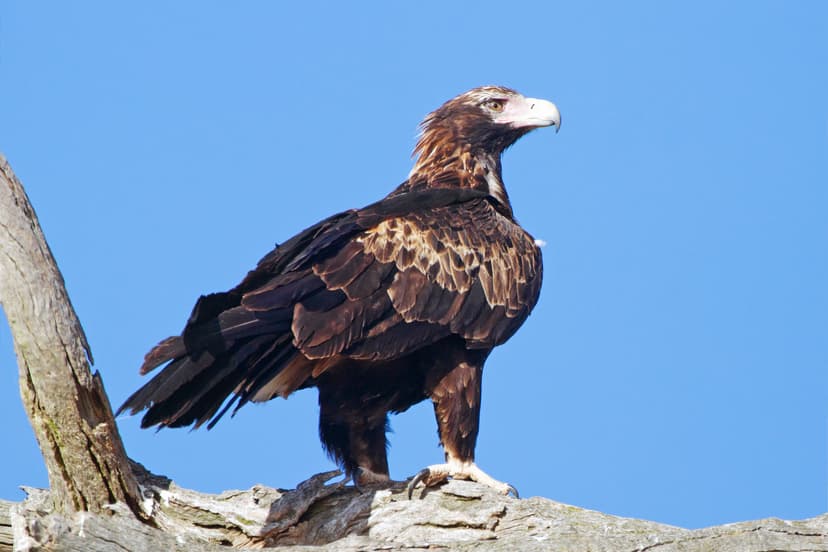
The wedge-tailed eagle (Aquila audax) is Australia's largest bird of prey, also found in southern New Guinea and Tasmania. It is characterized by its long, broad wings, fully feathered legs, and distinctive wedge-shaped tail. As one of the most powerful avian predators, it is a generalist hunter, preying on mammals, birds, and reptiles, and is known for its resilience and adaptability to various habitats.
Aquila chrysaetos
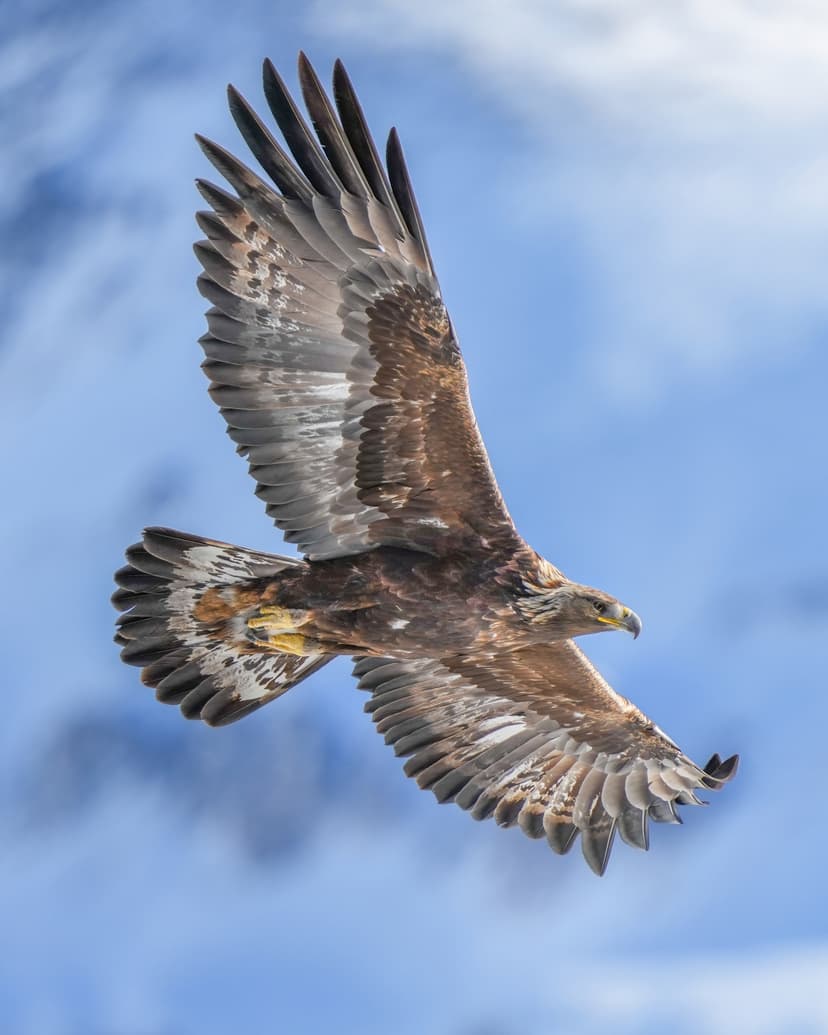
The golden eagle (Aquila chrysaetos) is a large bird of prey found across the Northern Hemisphere, known for its powerful hunt and widespread distribution. It is characterized by its dark brown plumage with golden-brown feathers on its nape and is a prominent species in falconry and various ancient cultures. This eagle is the most widely distributed eagle species and is a member of the Accipitridae family.
Haliaeetus albicilla
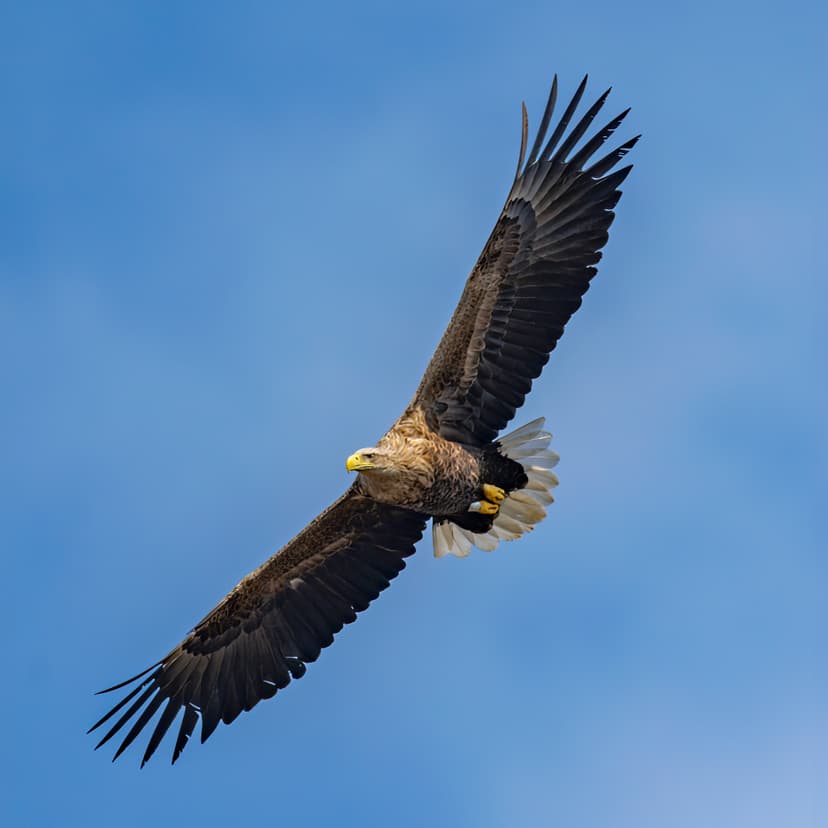
The white-tailed eagle (Haliaeetus albicilla) is a large bird of prey found across temperate Eurasia. It is characterized by its broad wingspan, predominantly greyish-brown plumage, and its distinctive white tail in adulthood. This species is a powerful apex predator and an opportunistic scavenger, often found near large bodies of open water.