
Haliaeetus albicilla
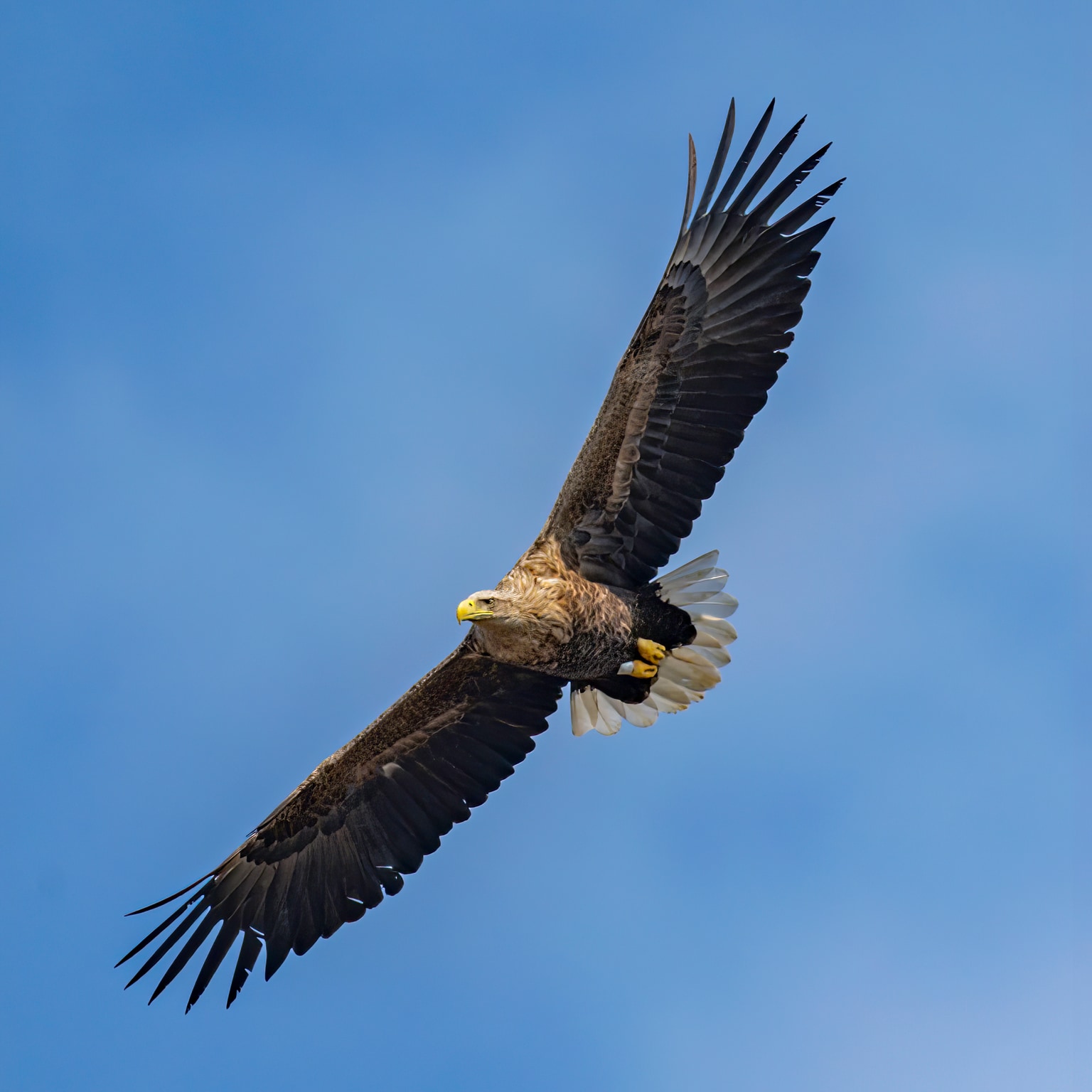
The white-tailed eagle (Haliaeetus albicilla) is a large bird of prey found across temperate Eurasia. It is characterized by its broad wingspan, predominantly greyish-brown plumage, and its distinctive white tail in adulthood. This species is a powerful apex predator and an opportunistic scavenger, often found near large bodies of open water.
Key Facts
- ›One of the largest birds of prey, with a wingspan up to 2.53 meters.
- ›Adults have a greyish-brown body and a distinctive white tail.
- ›Found across temperate Eurasia, from Greenland and Iceland to Japan.
- ›Primarily feeds on fish and water birds, but also scavenges.
- ›Requires old-growth trees or sea cliffs for nesting.
- ›Was historically persecuted and threatened by pesticides, but populations are recovering in some areas.
Sea Eagle, White-Tailed Sea-Eagle, Ern, Erne, Gray Sea Eagle, Eurasian Sea Eagle
Coastal Saltwater Areas, Inland Freshwater Lakes, Wetlands, Bogs, Rivers
Eurasia, Greenland, Iceland
- Large bird of prey, one of the largest in Europe.
- Adults: Greyish mid-brown plumage, paler head/neck/upper breast, white tail.
- Bare parts are yellow in adults.
- Juveniles: Much darker brown, unevenly marked, with whitish feather edgings.
- Broad wings, deeply fingered flight feathers.
- Relatively short, wedge-shaped tail.
- Ample bill with a high culmen.
Fish, Water Birds, Carrion
Fish, Water Birds
Habitat Alteration, Destruction of Wetlands, Human Persecution, Inadvertent Poisoning, Epidemics of Nesting Failure
About Haliaeetus albicilla
White-tailed Eagle (Haliaeetus albicilla)
The white-tailed eagle, scientifically known as Haliaeetus albicilla, is a formidable bird of prey renowned for its impressive size and widespread distribution across temperate Eurasia. Its common names, including "sea eagle" and "ern," hint at its affinity for large bodies of water and its soaring flight. Adults are characterized by their predominantly greyish-brown plumage, a paler head and breast, and a striking white tail, which develops fully by their eighth year. This species is one of the largest eagles in the world, boasting a wingspan that can reach up to 2.53 meters.
Distribution and Habitat
This magnificent raptor inhabits a vast geographical range, breeding from as far west as Greenland and Iceland to as far east as Hokkaido, Japan. They are typically found near extensive open water, including coastal saltwater areas and inland freshwater lakes, wetlands, bogs, and rivers. Their nesting requirements include the presence of old-growth trees or substantial sea cliffs, providing essential platforms for their large nests.
Diet and Hunting
The white-tailed eagle is an apex predator with a diet primarily composed of fish and water birds. However, it is also an opportunistic scavenger, readily consuming carrion. Its powerful build and keen eyesight are crucial for locating and capturing prey. It shares a similar ecological niche in its range with the bald eagle in North America, with which it forms a species pair.
Conservation Status and Threats
Historically, the white-tailed eagle faced significant declines due to a combination of factors, including direct human persecution, habitat destruction, and poisoning from chemical pesticides. In many countries, it was considered endangered or even extinct. Fortunately, dedicated conservation efforts, including governmental protection, habitat preservation, regulation of poaching and pesticide use, and reintroduction programs, have led to notable population recoveries in several regions. Despite this progress, ongoing threats from habitat alteration and environmental contaminants continue to be a concern for the species' long-term survival.
Source: Wikipedia ↗
Frequently Asked Questions
What is the scientific name for the white-tailed eagle?
The scientific name for the white-tailed eagle is Haliaeetus albicilla. This name was first formally described by Carl Linnaeus in 1758.
Where does the white-tailed eagle live?
The white-tailed eagle has a wide distribution across temperate Eurasia. Its breeding range extends from Greenland and Iceland eastward to Hokkaido, Japan.
What does the white-tailed eagle eat?
The white-tailed eagle's diet primarily consists of fish and water birds. It is an apex predator but also an opportunistic scavenger, consuming carrion when available.
What are the physical characteristics of an adult white-tailed eagle?
Adult white-tailed eagles are predominantly greyish-brown with a paler head, neck, and upper breast. Their most distinctive feature is their bright white, wedge-shaped tail. All bare parts, including the bill, feet, and eyes, are yellow.
What are the conservation concerns for the white-tailed eagle?
Historically, white-tailed eagles faced threats from human persecution, habitat alteration, and poisoning from chemical pesticides. While some populations have recovered due to conservation efforts, these threats remain a concern in certain areas.
How large is a white-tailed eagle?
The white-tailed eagle is one of the largest birds of prey, measuring between 66 to 94 cm in length with a typical wingspan of 1.78 to 2.45 meters. Record wingspans have reached up to 2.53 meters.
Related Raptor species
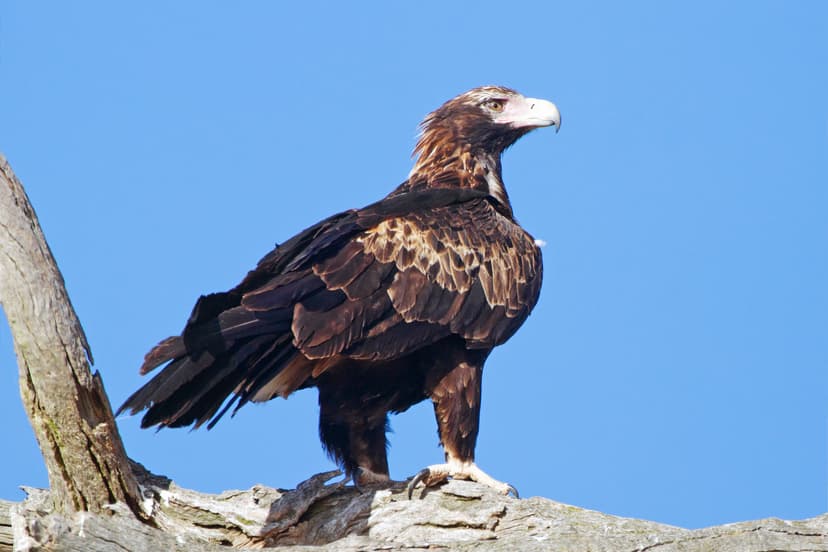
Aquila audax
The wedge-tailed eagle (Aquila audax) is Australia's largest bird of prey, also found in southern New Guinea and Tasmania. It is characterized by its long, broad wings, fully feathered legs, and distinctive wedge-shaped tail. As one of the most powerful avian predators, it is a generalist hunter, preying on mammals, birds, and reptiles, and is known for its resilience and adaptability to various habitats.

Aquila chrysaetos
The golden eagle (Aquila chrysaetos) is a large bird of prey found across the Northern Hemisphere, known for its powerful hunt and widespread distribution. It is characterized by its dark brown plumage with golden-brown feathers on its nape and is a prominent species in falconry and various ancient cultures. This eagle is the most widely distributed eagle species and is a member of the Accipitridae family.
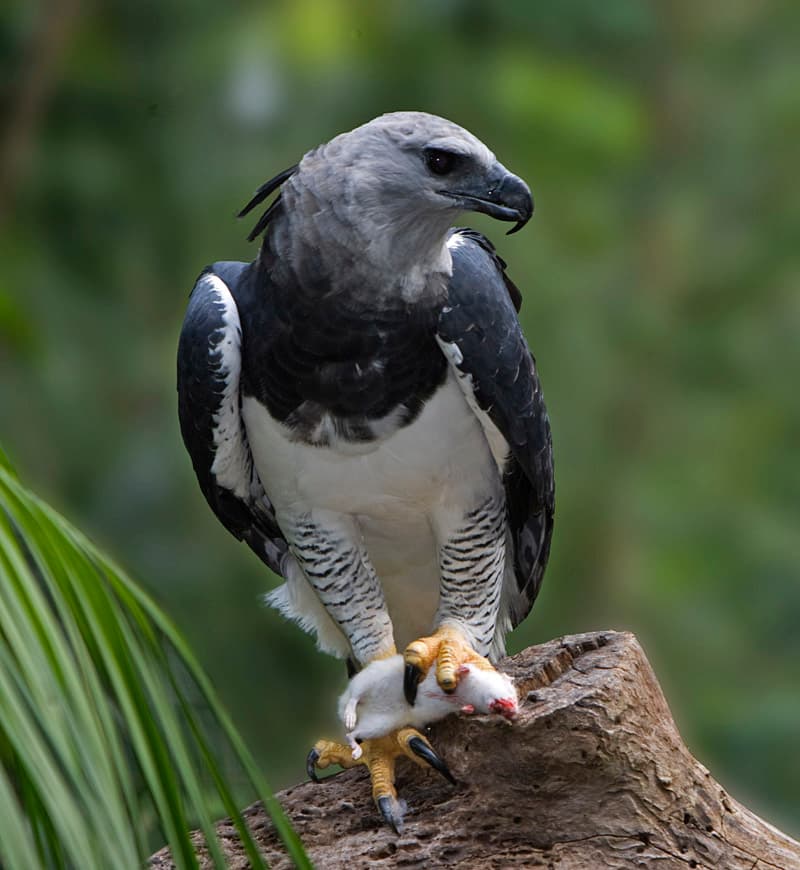
Harpia harpyja
The harpy eagle (Harpia harpyja) is a formidable, large neotropical eagle, renowned as the largest bird of prey in its range and one of the largest eagles globally. Primarily inhabiting the emergent canopy of tropical lowland rainforests, it is distinguished by its immense talons, powerful build, and a distinctive double crest on its head. Due to extensive habitat destruction, its populations have significantly declined across much of its historical territory.