
Aquila chrysaetos
The golden eagle (Aquila chrysaetos) is a large bird of prey found across the Northern Hemisphere, known for its powerful hunt and widespread distribution. It is characterized by its dark brown plumage with golden-brown feathers on its nape and is a prominent species in falconry and various ancient cultures. This eagle is the most widely distributed eagle species and is a member of the Accipitridae family.
Key Facts
- ›The golden eagle is the most widely distributed eagle species in the world, inhabiting the Northern Hemisphere.
- ›Adults are dark brown with distinctive golden-brown plumage on their napes, while juveniles often have white on their tails and wings.
- ›They are powerful hunters, utilizing agility and speed to prey primarily on hares, rabbits, and marmots.
- ›Golden eagles build large nests in high places like cliffs and maintain territories that can span up to 200 km².
- ›The species has been highly valued in falconry for centuries and holds cultural significance in some ancient tribal societies.
- ›There are six recognized subspecies, differing slightly in size and plumage, with Aquila chrysaetos canadensis being the North American subspecies.

Berkut
Cliffs, High Places, Open Land
Eurasia, North America, North Africa, Holarctic
Dark brown plumage, Golden-brown feathers on nape, White on tail and wings in immatures, Broad wings, Powerful feet, Large, sharp talons, Tarsal feathers often paler than body plumage
Hares, Rabbits, Marmots, Ground Squirrels
Agility, Speed, Powerful Feet, Sharp Talons
Hares, Rabbits, Marmots, Ground Squirrels
Habitat loss due to human population increase
About Aquila chrysaetos
The Golden Eagle (Aquila chrysaetos)
The golden eagle (Aquila chrysaetos) is a majestic bird of prey renowned for its widespread distribution across the Northern Hemisphere and its formidable hunting prowess. As one of the most widely recognized eagles, it belongs to the Accipitridae family and is distinguished by its dark brown plumage, accented by lighter, golden-brown feathers on its nape, which gives the species its name.
Distribution and Habitat
Once prevalent throughout the Holarctic region, the golden eagle's range has contracted in areas with high human population density. Nevertheless, it remains a common sight across substantial portions of Eurasia, North America, and parts of North Africa. These eagles favor habitats that offer open spaces for hunting and elevated locations, such as cliffs, for constructing their large nests. They are known to maintain home ranges or territories that can be quite extensive, sometimes up to 200 km².
Physical Characteristics and Diet
Golden eagles are large raptors, characterized by their broad wings, powerful feet, and sharp talons. Adult birds are primarily dark brown, with a distinctive golden hue on the back of their crown and nape. Immature eagles often display white markings on their tails and wings. Their diet mainly consists of mammals, with hares, rabbits, and marmots being common prey items, which they pursue with remarkable agility and speed.
Breeding and Life Cycle
These eagles are monogamous, often forming pair bonds that last for many years or even for life. Breeding activities typically commence in the spring. Females lay up to four eggs, which are incubated for approximately six weeks. Usually, one or two young survive to fledge, a process that takes about three months. Juvenile eagles achieve full independence in the fall and will wander extensively before establishing their own territories, a process that can take four to five years.
Cultural Significance and Study
For centuries, the golden eagle has been highly regarded in falconry due to its hunting capabilities. In some ancient and tribal cultures, it is revered with great mystic significance. The species is also one of the most extensively studied raptors globally, particularly in regions like the Western United States and the Western Palearctic, providing valuable insights into raptor biology and ecology.
Source: Wikipedia ↗
Frequently Asked Questions
What is the scientific name for the golden eagle?
The scientific name for the golden eagle is Aquila chrysaetos. This name was first given by Carl Linnaeus in 1758, with 'Aquila' being Latin for eagle and 'chrysaetos' derived from Ancient Greek for golden eagle.
Where do golden eagles live?
Golden eagles are found across the Northern Hemisphere, inhabiting large stretches of Eurasia, North America, and parts of North Africa. They prefer areas with open land for hunting and high places for nesting, such as cliffs.
What do golden eagles eat?
The diet of golden eagles primarily consists of mammals. They are known to hunt hares, rabbits, marmots, and other ground squirrels, using their agility and powerful talons.
How large are golden eagles?
Golden eagles are very large raptors, typically measuring between 66 to 102 centimeters (26 to 40 inches) in length with a wingspan of 1.8 to 2.34 meters (5 ft 11 in to 7 ft 8 in). Females are generally larger than males.
What are the distinctive features of a golden eagle?
Adult golden eagles are predominantly dark brown with a striking golden-brown plumage on the back of their crown and nape. Juvenile birds are identifiable by white patches on their tails and often on their wings.
How do golden eagles hunt?
Golden eagles use a combination of agility and speed, along with their powerful feet and sharp talons, to capture their prey. They often hunt smaller mammals from the air.
Do golden eagles migrate?
While they maintain home ranges, juvenile golden eagles are known to wander widely after gaining independence until they establish their own territories. The extent of seasonal migration for adults is not detailed in available records.
Related Raptor species
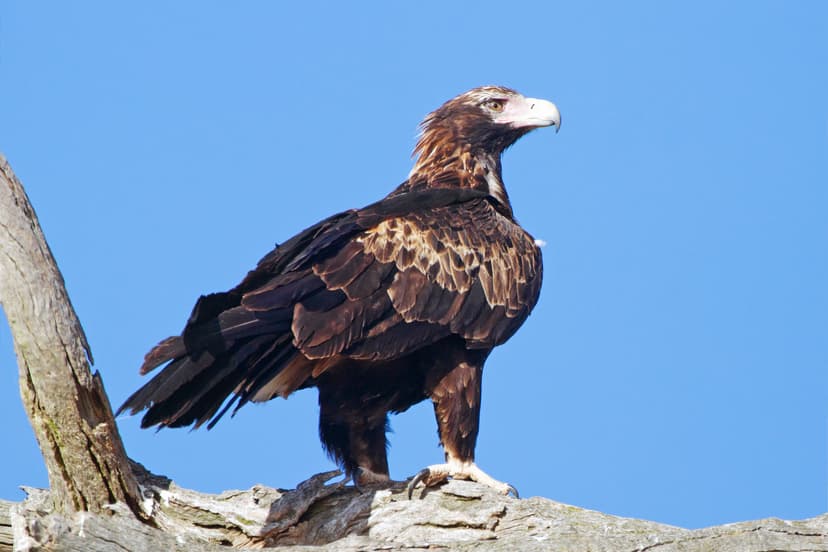
Aquila audax
The wedge-tailed eagle (Aquila audax) is Australia's largest bird of prey, also found in southern New Guinea and Tasmania. It is characterized by its long, broad wings, fully feathered legs, and distinctive wedge-shaped tail. As one of the most powerful avian predators, it is a generalist hunter, preying on mammals, birds, and reptiles, and is known for its resilience and adaptability to various habitats.
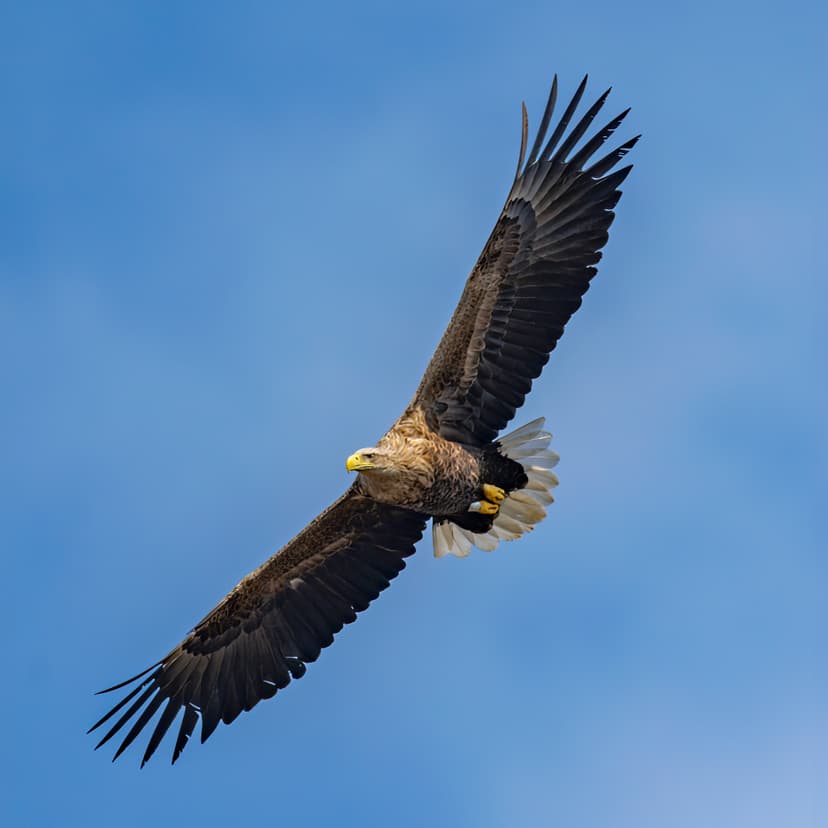
Haliaeetus albicilla
The white-tailed eagle (Haliaeetus albicilla) is a large bird of prey found across temperate Eurasia. It is characterized by its broad wingspan, predominantly greyish-brown plumage, and its distinctive white tail in adulthood. This species is a powerful apex predator and an opportunistic scavenger, often found near large bodies of open water.

Harpia harpyja
The harpy eagle (Harpia harpyja) is a formidable, large neotropical eagle, renowned as the largest bird of prey in its range and one of the largest eagles globally. Primarily inhabiting the emergent canopy of tropical lowland rainforests, it is distinguished by its immense talons, powerful build, and a distinctive double crest on its head. Due to extensive habitat destruction, its populations have significantly declined across much of its historical territory.